Capital allocated to artificial intelligence infrastructure faces mounting political and balance-sheet risks after Democratic midterm election victories sparked concerns over regulatory gridlock for terrestrial data centers. Ahead of Wednesday's market opening, shares in specialized computing operators slid immediately, with CoreWeave dropping approximately 3.3%, Applied Digital shedding 3%, and IREN falling 4.3%. For corporate decision-makers assessing computational pipelines, the immediate price erosion highlights vulnerabilities in debt-fueled infrastructure buildouts.
Broader equity valuations for AI compute vendors had already been eroding before the votes were tallied. Operators such as CoreWeave, Cipher Digital, IREN, and Nebius have declined nearly 50% to 60% from their respective peaks, a repricing driven by heightened scrutiny over heavy borrowing, surging capital expenditures, and unproven return on invested capital. This terrestrial energy impasse and mounting local regulatory friction have pushed tech executives toward extreme alternatives, revealing a widening strain in baseline unit economics.
Terrestrial Power Capacity Under Legislative Fire
The political shift directly targets the high-density grid interconnections that modern training facilities require. With Democrats securing control of both congressional chambers in Tuesday's midterm elections, regulatory oversight of power-intensive facilities is set to tighten. In March, Senator Bernie Sanders and Representative Alexandria Ocasio-Cortez introduced the Artificial Intelligence Data Center Moratorium Act, which proposed a formal pause on new construction until national safeguards are enacted. State-level initiatives are advancing similar constraints; New York implemented a one-year pause on permitting new hyperscale facilities, while CNBC reported that Gina Hinojosa's projected win in Texas injected fresh uncertainty because she endorses a moratorium on AI data hubs.
That Texas friction exposes a core operational bottleneck. Wells Fargo estimates that Texas accounts for 27% of all planned data center power capacity in the United States. While leaders push back against such curbs—President Donald Trump contends that restrictions weaken American technological competitiveness, and House Speaker Mike Johnson warned that the country cannot freeze development—the legislative threats directly imperil regional megawatts. How do operators expand compute footprints when local grids and lawmakers reject new transmission lines?
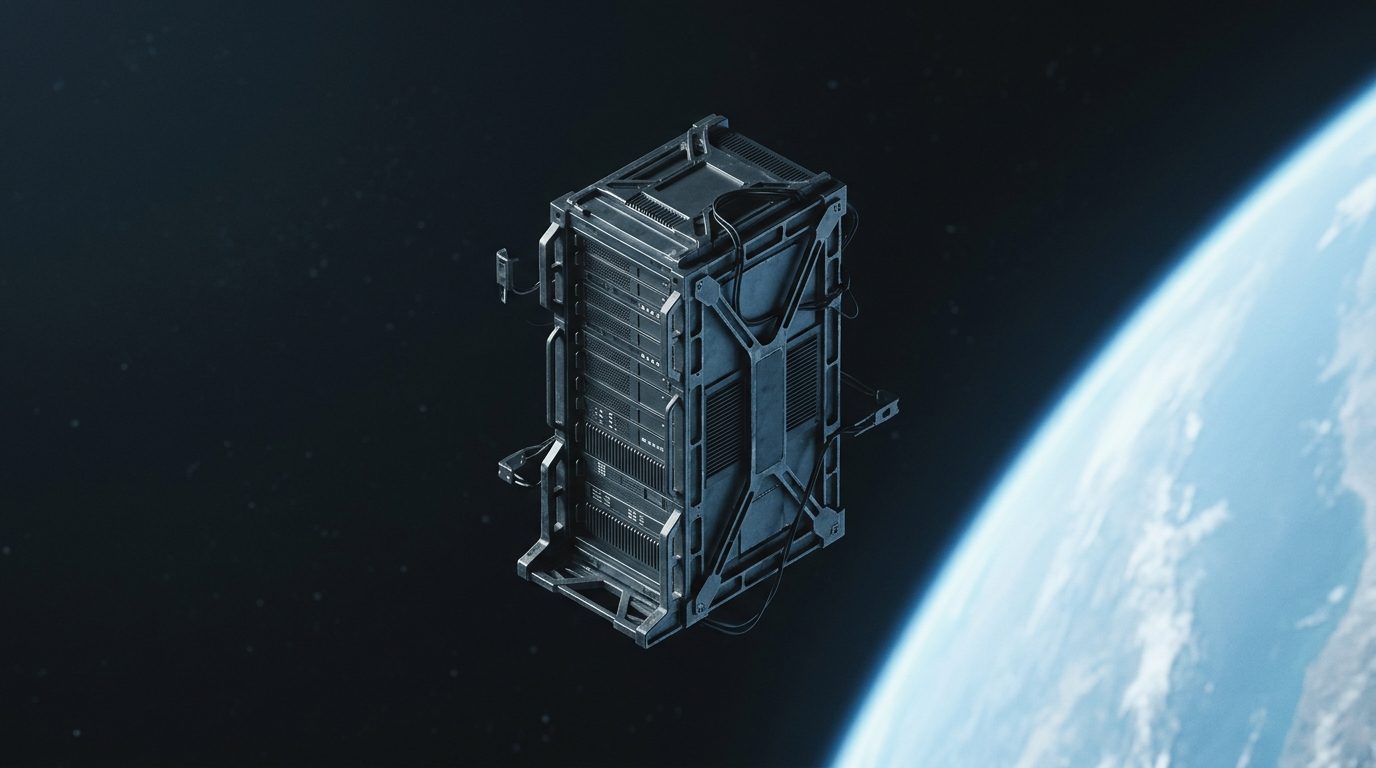
They attempt to route around terrestrial territory altogether. Following the election results, Elon Musk wrote on X that orbital facilities provide a compelling exit from local red tape:
"Data centers in space looking pretty appealing right now."
Musk's post reflects a broader strategic pivot to space-based compute as terrestrial developments encounter civic resistance. His AI company, xAI, already runs two Colossus supercomputers in Memphis and secured an additional Mississippi property that could expand total operational capacity to two gigawatts, alongside a separate Colossus 2 expansion filing totaling USD 659 million. Yet facing potential physical limitations on Earth, Musk proposed transferring workloads beyond atmospheric regulation.
The Economics of Orbit Versus Engineering Realities
Space hardware has attracted measurable balance-sheet support over the past decade. Investor Chamath Palihapitiya pointed to opportunities across space infrastructure, citing research showing that private investment in space hardware climbed from roughly USD 500 million in 2012 to USD 17 billion in 2025. SpaceX reinforced that narrative by requesting permission from the Federal Communications Commission to deploy up to one million solar-powered satellites intended to function as orbital data centers. Musk asserts that orbital AI computing could become cheaper than ground-based alternatives within 30 to 36 months.
[OUR EARLIER STORY of 2026-07-05 about centers, data, space] «SpaceX to Build Orbital AI Data Centers in Space».
Advocates maintain that massive corporate revenues and surging private investments demonstrate that alternative orbital architectures will eventually bypass ground cooling limits and regulatory freezes. Furthermore, broader market appetite has not collapsed uniformly: tech futures edged up 0.3% before Wednesday's trading session, and Bitcoin traded above USD 78,000.
Orbital compute nonetheless remains entirely speculative. Off-planet hardware encounters unsolved launch costs, severe cooling challenges in a vacuum where heat must radiate rather than dissipate via airflow or liquid chillers, and unmapped regulatory hurdles across international spectrum regimes. Planning to launch one million satellites to escape utility review boards makes for an eye-catching filing, yet deploying hundreds of billions of dollars to radiate heat in a vacuum remains an elaborate workaround for the simple inability to secure a power substation on Earth.
For comparison
Where can infrastructure operators turn when terrestrial data centers hit regulatory bans and grid bottlenecks? Directly into orbit: while shares of specialized operators like IREN dropped up to 60% from their peaks amid heavy debt and local pushback, Elon Musk is looking at space-based compute as an exit from bureaucratic gridlock. Indeed, in early July SpaceX moved to build orbital data centers, turning an extraterrestrial workaround for earthbound megawatts into an active operational hedge. Texas alone accounts for 27% of all planned data center capacity in the United States now facing moratorium threats.
Our stories: SpaceX to Build Orbital AI Data Centers in Space (July 5); SpaceX AI Revenue Reaches 52% as Data Center Buildout Accelerates (October 21).