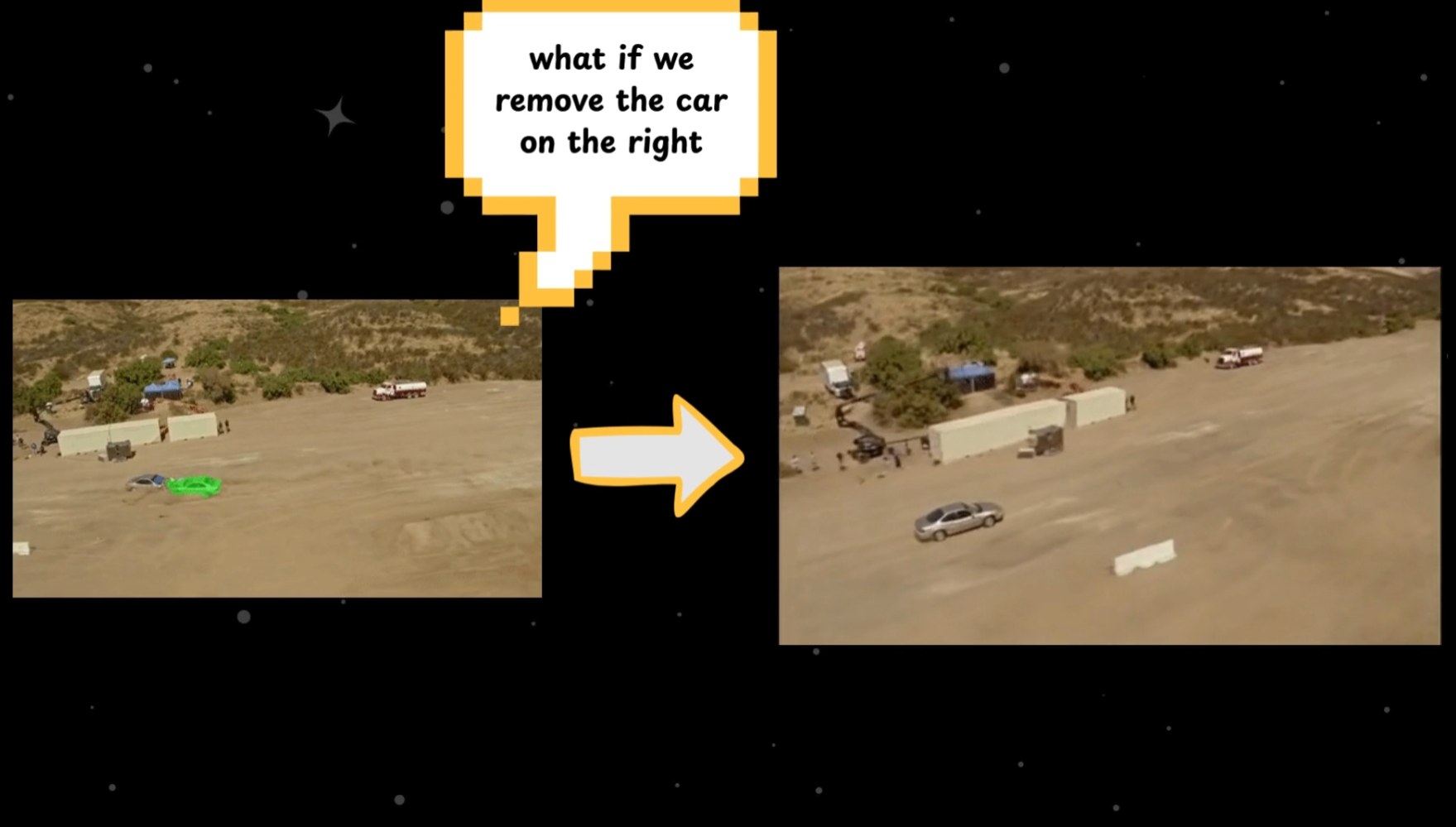
Netflix appears to be moving beyond entertainment and into assistance with the release of VOID, an open-source framework designed to remove unwanted objects from videos. The tool does more than simply erase; it also repairs the 'traces' left behind, correcting for disrupted visual physics within a frame. This suggests a significant advancement in video editing, potentially enabling the seamless removal of distracting elements without leaving visual inconsistencies.
At its core, VOID integrates technologies from Alibaba CogVideoX, Google Gemini 3 Pro, and Meta SAM2. Google's Gemini 3 Pro provides a comprehensive understanding of the scene, while Meta's SAM2 is responsible for precise object segmentation. The framework also incorporates optical flow estimation to correct for visual distortions. The result, according to its developers, is video that maintains coherence rather than appearing as if a section has been crudely removed.
The decision to release VOID under the Apache 2.0 license is a significant development for creative industries. Professionals in film, post-production, and special effects may find that their workflows become simpler and more cost-effective. However, this advancement is not without its risks. The same technology that facilitates realistic object removal could easily be repurposed by malicious actors for the creation of deepfakes. While some will leverage VOID for legitimate creative purposes, others may seek to exploit it for harmful ends.
This development means that companies in the film and advertising sectors now have access to a powerful AI tool for video manipulation. Simultaneously, individuals or groups intent on creating fabricated video content also stand to benefit. The immediate challenge will be to prevent this technology from becoming a widespread source of disinformation.
Netflix, perhaps without fully realizing the implications, has intensified the competitive landscape for video-related AI tools. The availability of such a sophisticated framework presents both opportunities and significant ethical considerations for the industry. Ensuring that VOID is used responsibly and mitigating its potential for misuse will be a critical task moving forward. The true impact of VOID will depend on the industry's ability to establish robust guidelines and safeguards against its exploitation.