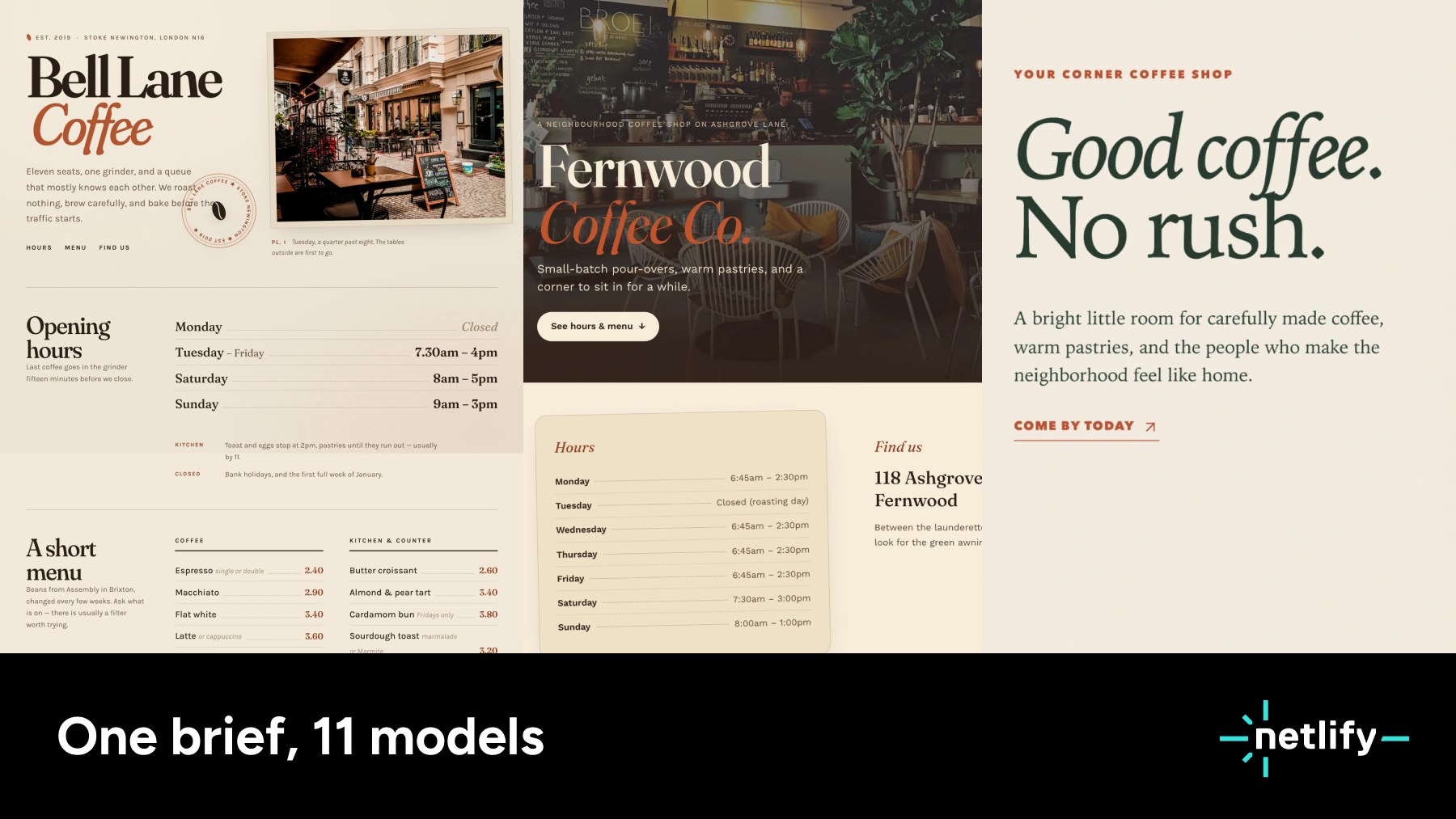
Netlify is effectively declaring war on the era of the monolithic AI provider. By partnering with OpenRouter, the platform has integrated 11 frontier models—including Chinese heavyweights like Kimi K3, GLM 5.2, and DeepSeek V4—directly into its development ecosystem. This isn't just another integration; it’s a strategic dismantling of the OpenAI and Anthropic duopoly in web deployment. Through the Netlify AI Gateway and Agent Runners, developers are finally being encouraged to treat Large Language Models as interchangeable parts rather than sacred tech stacks.
However, this newfound freedom exposes a messy technical reality: the 'identical prompt' fallacy. Netlify’s internal testing via AXIS—their automated evaluation tool—confirms what cynical architects already suspected: the same request yields wildly different results across these 11 models. One model might elegantly implement a Netlify Database, while another descends into expensive, over-engineered hallucinations or outright functional failure. The data shows significant variance in credit consumption and architectural logic, proving that brand loyalty is a poor substitute for rigorous, task-specific benchmarking.
The economic play here is a shift from provider-specific capture to dynamic cost-efficiency. By feeding project-specific context—like Identity and AI Gateway capabilities—directly to the models, Netlify allows CTOs to bypass the hype cycle. The selection process is becoming cold and transactional: models are chosen based on their ability to pass functional checks at the lowest credit cost. We are moving toward a multi-model architecture where the 'best' AI is simply the one that doesn't break the build or the budget on a Tuesday afternoon.