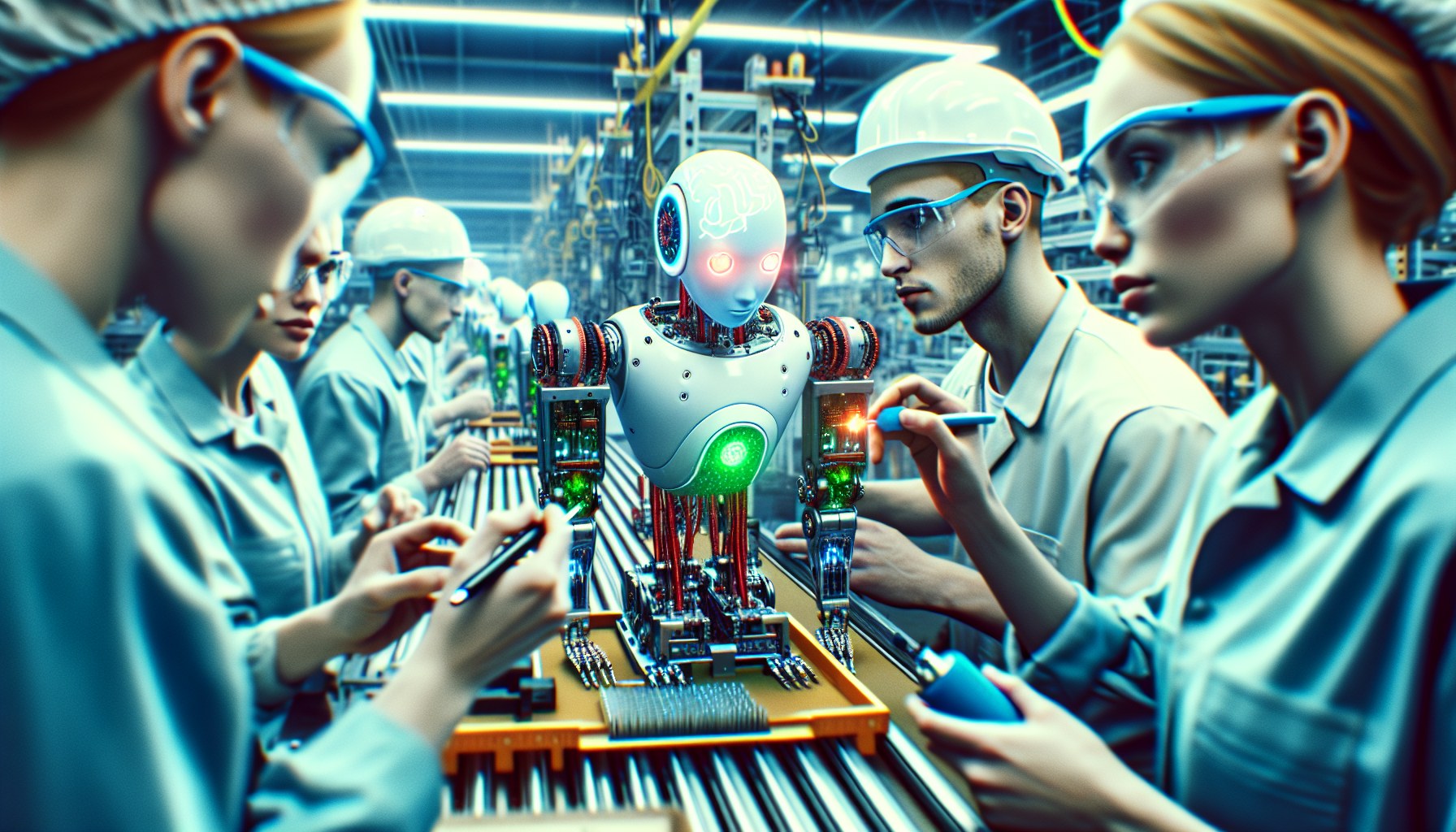
Rigid scripting and fixed spatial coordinates have long been the 'ball and chain' of modern manufacturing. For decades, robots have been trapped in fragile workflows that collapse at the slightest environmental change. However, the era of AI as a laboratory curiosity is ending. Researchers championing the concept of Learning-Augmented Robotic Automation (LARA) have introduced a hybrid architecture: trainable controllers working in tandem with neural-network-based 3D safety monitoring. This allows machines to adapt to physical variability without requiring an army of expensive programmers to rewrite code for every new component.
The viability of this approach was tested not on toy blocks, but on a real electric motor assembly line. Engineers successfully automated the routing of deformable cables and precision soldering—tasks previously considered 'too human' for machines. According to a report published in the arXiv preprint archive (cs.AI section), the system required less than 20 minutes of real-world data per task to become operational. The results are impressive: five hours of continuous operation and 108 finished motors produced without the use of physical safety barriers. The system demonstrated a 99.4% yield rate, maintaining a 'human-like' production pace and, more importantly, ensuring consistent soldering quality—an area where human performance often fluctuates.
For business leaders, this technology offers direct savings on labor costs and integration overhead. Instead of hiring elite engineers for endless script adjustments, manufacturers gain a system capable of learning from small data samples. The implementation of neural safety monitoring finally eliminates the need for costly fences and cages; AI can now function safely side-by-side with personnel on the shop floor. This is more than a software update; it is the dismantling of the barrier between the flexibility of manual labor and the speed of automation.
If your automation strategy still relies on fixed scripts, you are effectively overpaying for inflexibility. This successful deployment, with its 99.4% accuracy rate, proves that neuro-controllers have outgrown their status as risky experiments. They are now pragmatic tools for high-precision assembly, allowing complex manufacturing cells to be deployed at a fraction of the cost of traditional integration. In a market demanding instant reconfiguration for new products, clinging to rigid code is a conscious choice to lose operational efficiency.