Modern AI has hit a physical and economic dead end, and its name is the kilowatt. Today, the industry is held hostage by data centers packed with thousands of GPUs, each consuming up to 1,000 watts. This isn't just a line item on an electricity bill—it's the power of a continuously running dishwasher multiplied by the scale of a stadium. An absurd energy gap has emerged: while your smartphone operates on less than 1 watt, server farms simulating neural networks burn a million times more energy than the biological brain that served as their prototype. The problem lies in the architecture itself: we are forcing billions of transistors and complex software to simulate neuronal behavior, which requires a colossal expenditure for constant data movement.
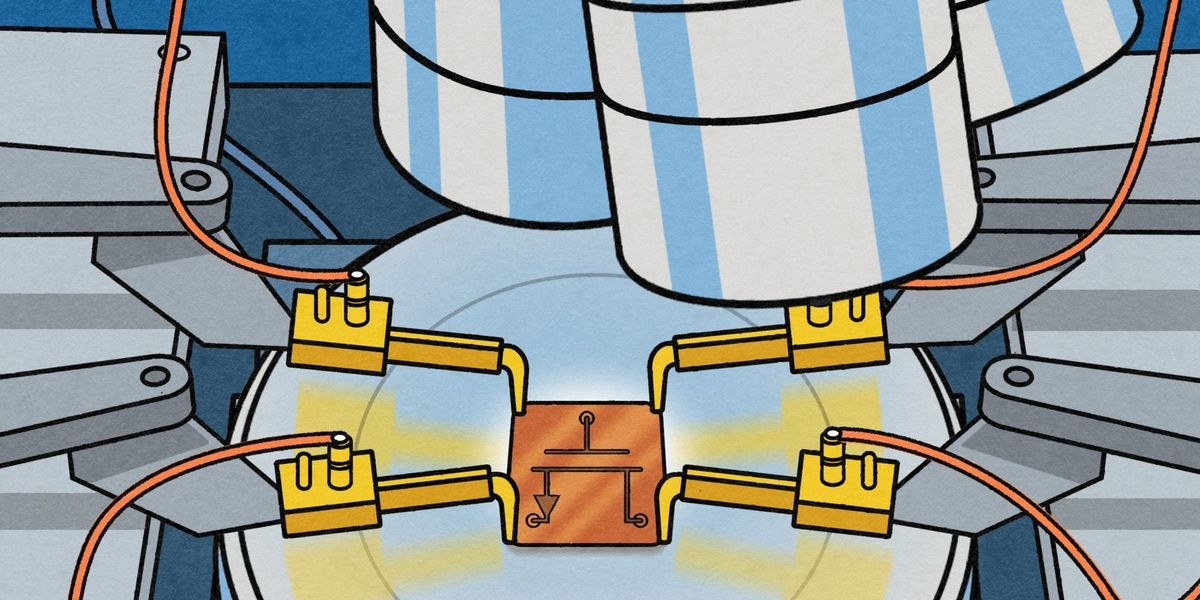
The transition to neuromorphic hardware—chips that physically replicate the brain's architecture—has stalled for years due to scaling difficulties and the bulky transistor clusters required to recreate even a single cell. However, the solution was apparently hiding in plain sight. An accidental discovery in standard CMOS transistors revealed that a single component can function simultaneously as both an artificial neuron and a synapse. Ironically, this breakthrough was achieved using a standard transistor that engineers previously didn't even consider "high quality." This discovery allows us to discard external capacitors and redundant transistor stages that previously made "brain-like" hardware commercially unviable.
Key Implications for the AI Industry
Radical reduction in energy consumption during complex model inference.
Ability to integrate neuromorphic functions into existing semiconductor manufacturing cycles.
Decreased reliance on expensive cooling infrastructure in data centers.
"We are moving from the extensive burning of resources to architectural elegance, where a single transistor replaces entire computing blocks."
For business, this represents a tectonic shift in Total Cost of Ownership (TCO). If these single-transistor neurons can be integrated into existing production lines, the era of centralized computing giants may be coming to an end. We will likely see a mass exodus of heavy inference from the cloud to edge devices. Instead of feeding energy monopolies and building new substations for data centers, companies will be able to run heavy models locally with efficiency approaching that of the human brain. This isn't just cost optimization; it's a total paradigm shift.