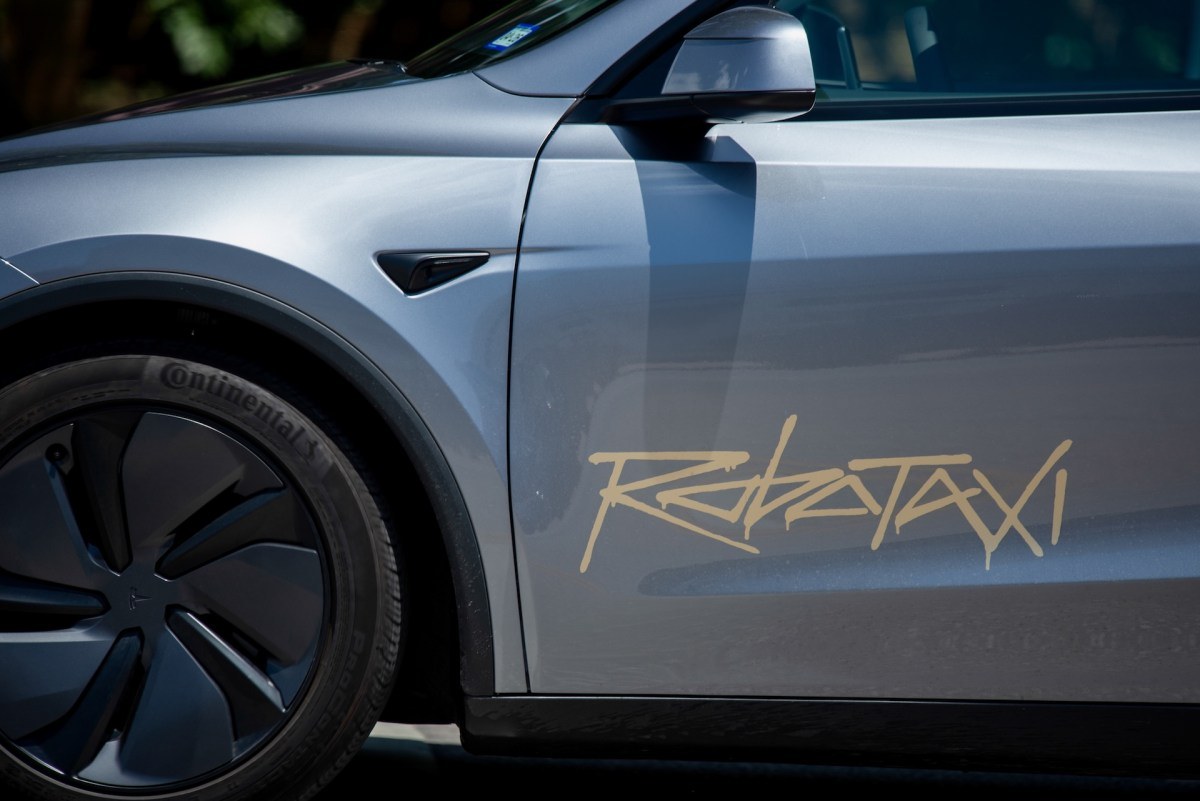
Commercial autonomous transit is finally graduating from single-operator PR stunts to dense, multi-fleet urban saturation. Regulators are no longer testing software in a vacuum; they are testing how competing capital structures and hardware architectures survive identical street grids and brutal unit economics. That shift crystallized when the Nevada Transportation Authority unanimously authorized up to 8,000 commercial autonomous vehicles across Clark County, turning the Las Vegas corridor into the primary scaling testbed for driverless mobility.
The Permitting Ceiling and Real Deployment Targets
The state's quota establishes clear operational parameters across three divergent playbooks: Tesla secured authorization for up to 5,000 robotaxis, Waymo locked in 1,000 dedicated vehicles, and Uber took an allocation of 1,000 units operated through its partnerships with Hyundai subsidiary Motional and Amazon-backed Zoox (which already holds a separate 100-vehicle permit). Yet the gap between regulatory permission and operational reality was exposed almost immediately.
“The 5,000 has always been a ceiling for us,” said Eric Early, Tesla’s Cybercab chief engineer, during the hearing. “I don’t think we’ll be in a position by this time next year to deploy 5,000 vehicles, and it’s not [because of] the technology. … I think we would be extremely happy and satisfied if we could get ourselves up to 2,500, maybe a bit higher than that in the next year.”
Early’s concession points to the unglamorous friction of real-world fleet expansion: building maintenance depots, securing commercial charging capacity, and running field operations present operational bottlenecks that software updates cannot solve. Even if operators deploy merely half of their authorized quotas over the next 12 months, Clark County will become an aggressive pressure test for three fundamentally incompatible commercial models fighting over the exact same passenger revenue.
Contrasting Operating Models and Local Opposition
The Nevada rollout pits distinct corporate theses against one another. Tesla is betting heavily on a vertically integrated, high-volume dedicated fleet anchored around its Cybercab architecture. Waymo is leaning into a disciplined, capital-intensive expansion of its sensor-dense hardware stack. Uber, meanwhile, is pursuing an asset-light aggregator play, plugging hardware from partners Motional and Zoox directly into its existing dispatch network alongside human gig drivers.
“These applications raise two grave concerns,” said Kimberly Maxson-Rushton, a lawyer representing the Livery Operators Association, at the hearing. “One deals with the oversaturation of the commercial transportation industry as a whole in Nevada,” she said. “And the second one deals with the overcrowding of the roadways, and specifically the Golden Triangle.”
Incumbent taxi and livery operators are pushing back hard against state regulators, arguing that hyper-concentrated autonomous operations will paralyze road infrastructure and decimate labor markets. Deployment is clustering heavily inside Las Vegas's high-yield "Golden Triangle"—the dense corridor connecting Harry Reid International Airport and the Strip—even as Motional expands validation runs into downtown. While autonomous fleet operators argue that driverless rollouts replace human drivers with specialized depot technicians, cleaners, and charging coordinators, incumbent carriers see an impending margin collapse driven by artificial fleet saturation.
Clark County has handed autonomous operators the keys to real scale, but regulatory caps are the easy part. The real trial for Tesla, Waymo, and Uber is proving that stripping out the driver actually delivers sustainable gross margins once depot overhead, vehicle depreciation, and urban congestion extract their toll.