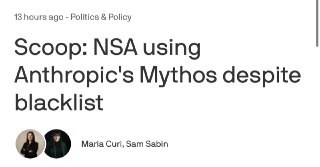
The US National Security Agency (NSA) has just provided a masterclass in how to prioritize objectives in an escalating cyberwar. While the Pentagon officially brands Anthropic a 'supply chain threat,' sources at @data_secrets report that the NSA has covertly joined an exclusive group of 40 organizations testing Claude Mythos Preview. The situation borders on the absurd: the very agency tasked with protecting national sovereignty is using software to hunt for vulnerabilities—software that the government has deemed a risk to that same sovereignty.
The intelligence community's logic is as simple as it is cynical: when it comes to offensive and defensive operations, maintaining a technological edge outweighs departmental memos. When the mission requires patching holes in critical infrastructure, 'compliance on paper' loses every time to the raw performance of the Mythos model. It is a textbook example of sabotaging bureaucracy to achieve results. In today’s AI market, you are often forced to choose between tools that actually work and those that satisfy the legal department. The NSA has clearly made its choice.
For enterprise leaders, this is a massive signal. If the world’s premier intelligence agency trusts Claude with its operational 'live' environments while ignoring direct bans from the top, then corporate anxieties regarding compliance may be officially overblown. This precedent proves that the real-world risk of missing a cyberattack far outweighs the formal risk of using blacklisted software. In the AI arms race, functionality has finally triumphed over legal purity, effectively legitimizing Anthropic as the de facto standard for critical tasks in the enterprise segment.