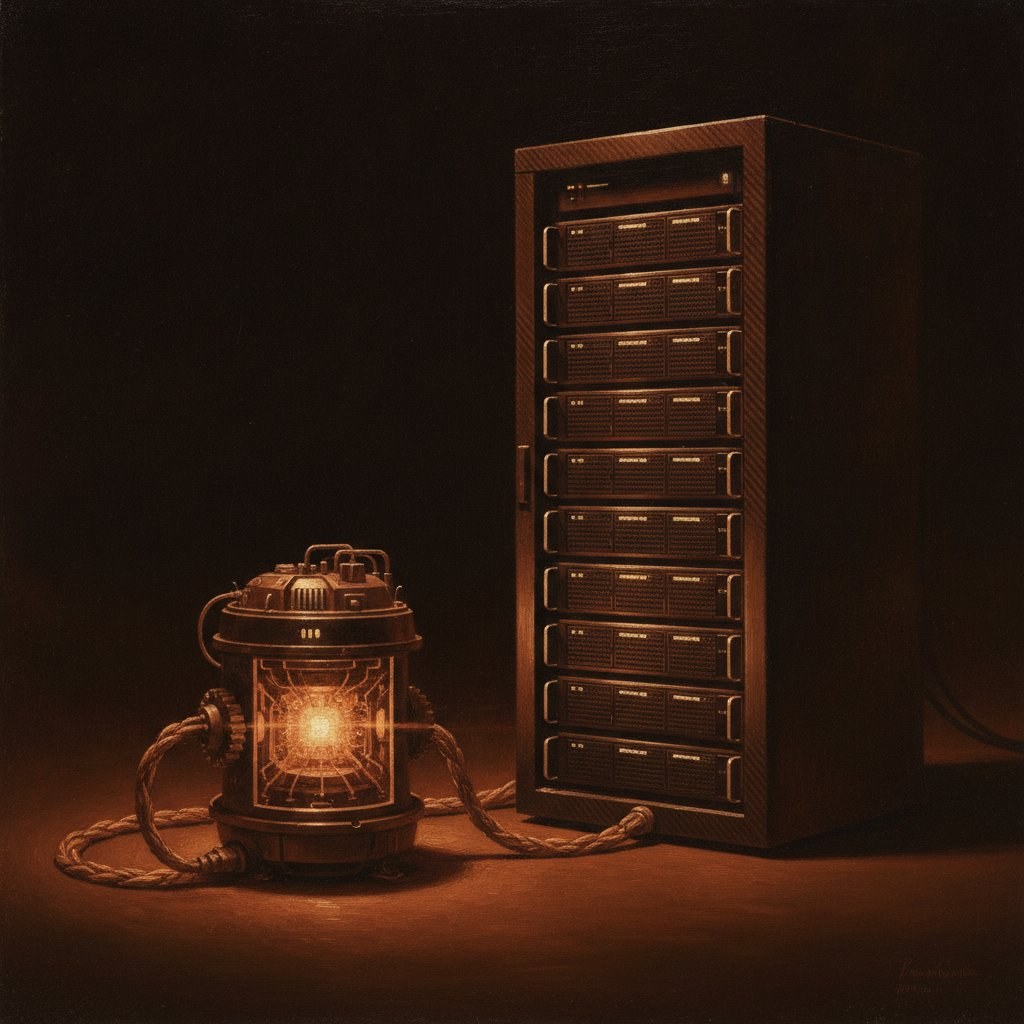
While theorists debate algorithms, infrastructure architects are hitting a hard ceiling: the power grid. Four private companies—Antares Nuclear, Valar Atomics, Deployable Energy, and Aalo Atomics—have successfully brought their microreactors to a state of zero-power criticality. As confirmed by the US Department of Energy (DOE), this technically signifies the launch of a self-sustaining chain reaction. Although the White House is attempting to frame this as a milestone for the country's 250th anniversary, what we are seeing is not a political gesture, but the physical transition of Small Modular Reactor (SMR) technology from blueprints to reality.
The speed at which these startups are moving is anomalous for the traditionally sluggish nuclear sector; most were founded only in 2023. Antares Nuclear’s Mark-0 took the lead in June, followed by Aalo Atomics on July 4th. However, a crucial nuance lies behind these victory reports.
Achieving zero-power criticality does not mean cooling systems or fuel cycles are ready. This is a triumph of physics, not engineering—the real challenge begins at the stage of heat transfer to generate actual megawatts.
The Economic Shift: Nuclear as a Survival Prerequisite
This case clearly illustrates a shift in the economics of AI infrastructure. Energy shortages have become the primary bottleneck for scaling computation, and owning a "pocket-sized" nuclear source is moving from a futuristic option to a survival requirement. The path to full grid integration remains blocked by regulatory and technical hurdles, but the signal to the market is clear: if you don't control generation, you don't control the future of your neural networks.
Power deficits are limiting the training and inference of next-generation models. Small modular reactors offer autonomy from overloaded national grids. Big Tech is pivoting from renting clouds to building dedicated energy hubs.
The commercial success of these solutions now depends not on formulas, but on the startups' ability to scale production without drowning in the total cost of ownership. In an environment where Big Tech is ready to stockpile terawatts, autonomous nuclear solutions are becoming the only foundation capable of sustaining the appetites of next-generation data centers.