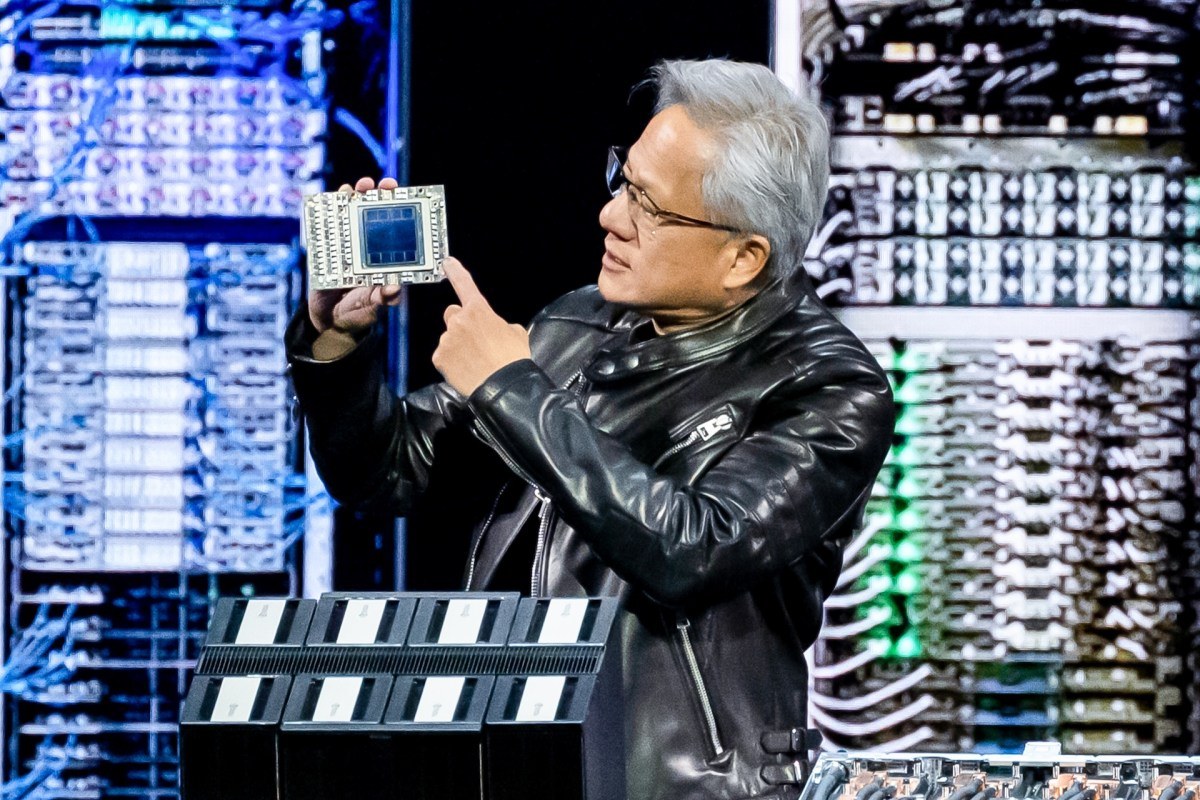
A syndicate of heavyweights—Apollo, BlackRock, Blackstone, Brookfield, Goldman Sachs, and KKR—has structured a credit pipeline of up to $500 billion to finance AI data center buildouts. To unlock this institutional liquidity, Nvidia agreed to back the residual value of its chips used as loan collateral directly with its own corporate balance sheet. As standard debt facilities hit capacity limits across the sector, Nvidia is effectively stepping into structured finance to ensure hyperscale capex marches forward unabated.
Under this framework, institutional lenders supply the primary capital pool, while Nvidia absorbs the downside liquidation risks.
The Mechanics of Residual Value Guarantees
The structure addresses the sharpest vulnerability in compute-backed lending: rapid silicon depreciation. If a data center operator defaults and the liquidated Nvidia accelerators fail to fetch their projected book value on the open market, Nvidia contractually covers up to 25% of the shortfall.
"This initiative is designed to address that concern. We are bringing independent, long-term institutional capital into the AI infrastructure market."
Nvidia CEO Jensen Huang framed the arrangement as a clean break from pure vendor financing, pushing back against market observers drawing uncomfortable parallels to Lucent Technologies—the telecom titan that imploded after underwriting its own buyers during the dotcom crash. Nvidia has already seeded the ecosystem heavily, backing frontier labs OpenAI and Anthropic alongside specialized neoclouds like CoreWeave—the pioneer of GPU-backed borrowing—as well as Nebius, Firmus, and Lambda. According to Bloomberg estimates, Nvidia participated in $750 billion worth of circular and strategic capital commitments over the summer alone.
Managing Wrong-Way Exposure in Used Silicon
This contractual backstop injects classic wrong-way counterparty risk directly into Nvidia’s balance sheet: payout obligations to lenders surge precisely when aggregate compute demand craters. If enterprise adoption plateaus or rapid architectural shifts render older clusters obsolete, secondary collateral values will tumble at the exact moment Nvidia’s primary chip sales face macro headwinds.
Nvidia's defense relies on actively propping up an orderly secondary market for aging silicon, steering depreciated clusters toward inference and fine-tuning workloads. By setting an artificial floor under residual hardware values, Nvidia aims to prevent fire sales and keep mid-tier enterprise buyers locked into its CUDA architecture. Yet, tethering up to 25% of collateral losses across a half-trillion-dollar credit facility remains a high-stakes balance sheet gamble that hinges entirely on perpetual compute consumption.