AI · This text was generated with artificial intelligence
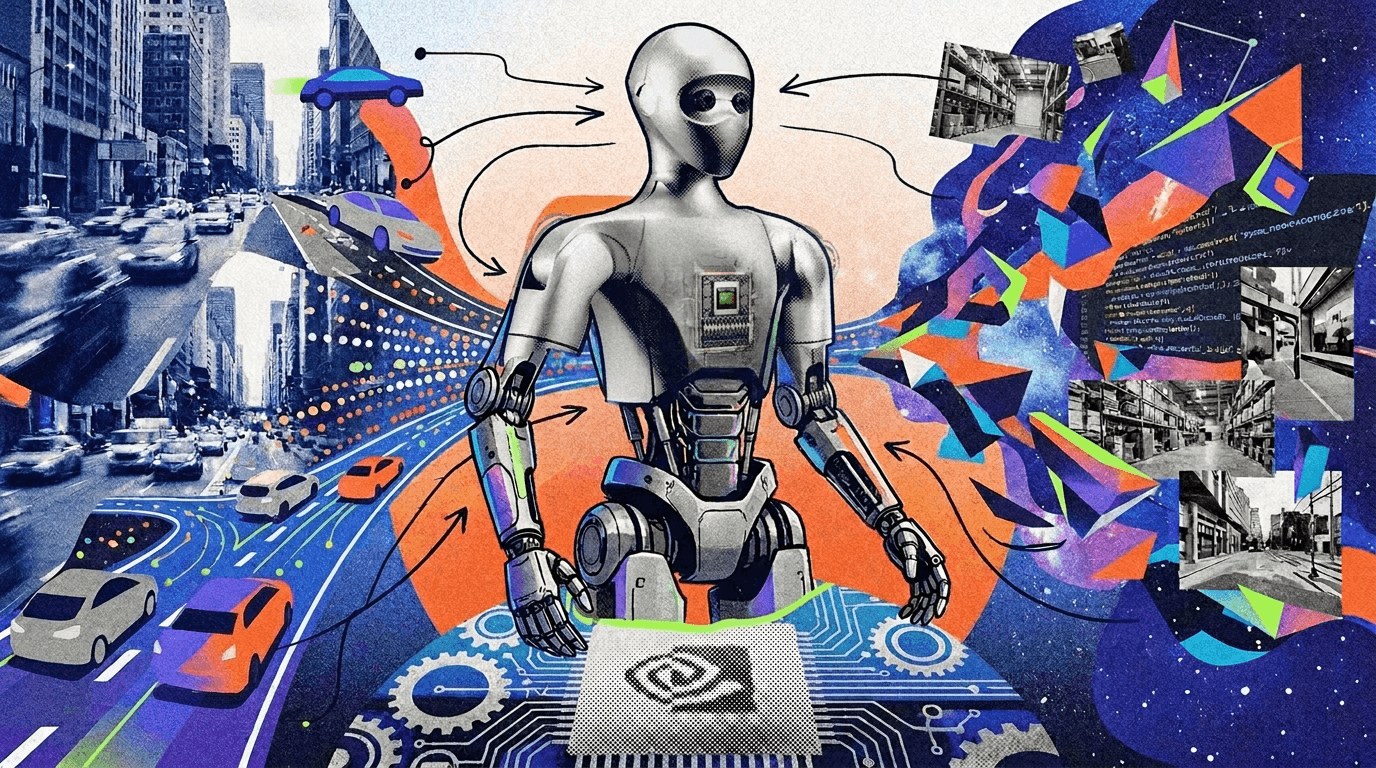
Jensen Huang is no longer satisfied with merely being the primary shovel-seller in the Large Language Model gold rush. At GTC Taipei, the company made its intentions clear: Nvidia is moving to conquer physical space. The launch of the Cosmos 3 "omnimodel" and the Alpamayo 2 Super driving system is not just another software update—it is a systematic commoditization of physical intelligence. By distributing open reference platforms and heavy-duty teacher models, Nvidia is turning every hardware manufacturer into a lifelong consumer of its DGX Cloud infrastructure and proprietary silicon.
The Omnimodel Foundation
Cosmos 3 marks a pivot away from text-centric AI toward a Mixture-of-Transformers architecture that processes text, video, audio, and action data in a single stream. The system consists of two parts: a reasoning transformer analyzes the scene, while a generative transformer produces the output—ranging from photorealistic video to specific movement trajectories. For industrial giants like Agile Robots, this means the direct conversion of digital predictions into robotic arm rotation angles. The primary value proposition here is solving the data scarcity problem. Cosmos 3 generates synthetic experience for edge-case scenarios, allowing robots to learn in simulation where thousands of hours of physical testing were previously required.
Cosmos 3 is Nvidia's attempt to impose a single "world model" standard on the industry, capable of predicting the state of reality before the first servo motor even twitches.
To capture the market, Nvidia is rolling out three versions simultaneously: the heavy-duty Super for data generation, Nano for fast on-device performance, and Edge for embedded systems. The OpenMDW-1.1 license has already unified a "Cosmos coalition" around the project, including Black Forest Labs and Runway. Essentially, Nvidia is building the foundation upon which every future autonomous system will stand, tightly binding developers to its frameworks.
Driving Decisions and Causation Chains
In the autonomous vehicle sector, Alpamayo 2 Super scales a car's "brain" to 32 billion parameters. This Level 4 autonomy model processes real-time video feeds from all cameras, outputting not just raw coordinates but meta-actions like "yield" or "change lanes." Nvidia positions Alpamayo 2 Super as a teacher model. The strategy is transparent: automakers lacking the resources to develop their own end-to-end architectures are offered a ready-made standard stack. It is an elegant way to hook the automotive industry on Nvidia’s ecosystem, offering turnkey expertise in exchange for total technological dependence.
The Open Humanoid Reference
To finalize its status as the architect of reality, Nvidia launched an open reference platform for humanoid robots. By handing out blueprints and software to partners, the company denies competitors the chance to establish alternative standards. If Nvidia succeeds in blurring the line between simulation and reality—making its world models the free entry point into the industry—hardware manufacturers will have no choice but to build their machines around Huang’s proprietary clouds. The only question is whether they will ever be able to unplug.
Nvidia is shifting from LLMs to "Physical AI" with the Cosmos 3 world model. The new architecture enables robots to learn via synthetic data, bypassing physical testing bottlenecks. Alpamayo 2 Super aims to become the default end-to-end stack for the automotive industry. Open-sourcing humanoid blueprints is a strategic move to lock manufacturers into the DGX Cloud ecosystem.