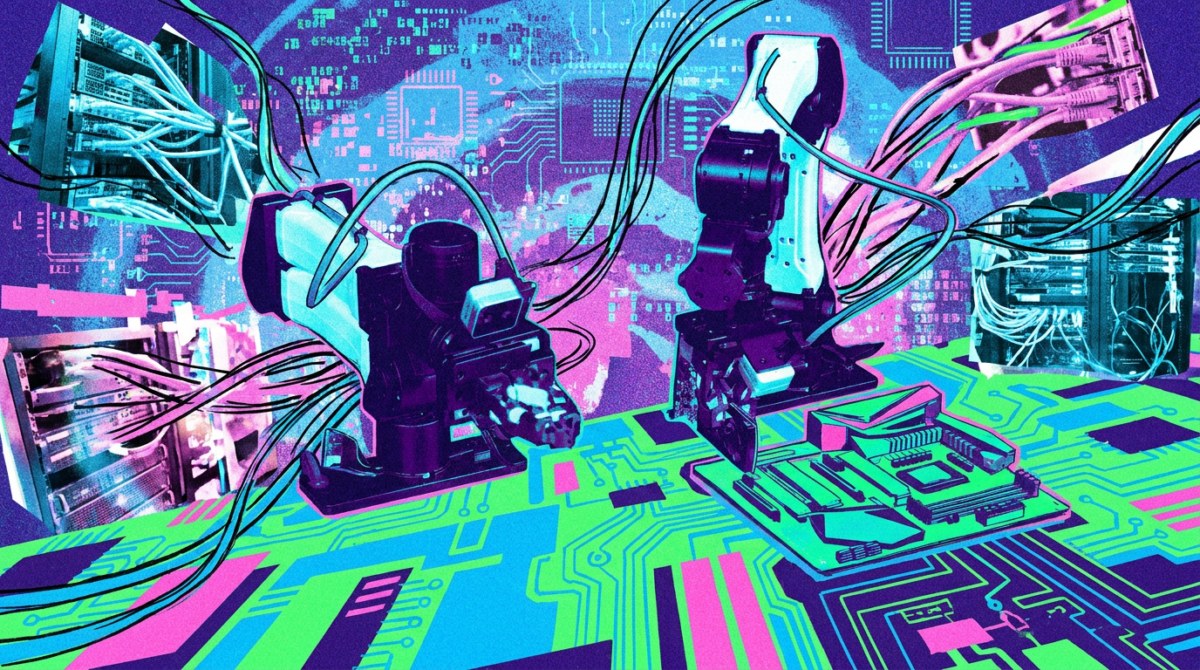
The primary bottleneck in industrial robotics has never been the hardware; it is the grueling manual labor required to teach machines basic movements. Researchers from Nvidia, Carnegie Mellon University, and UC Berkeley have addressed this inefficiency with ENPIRE. This system aims to replace human supervision with autonomous AI agents that write their own code for their robotic "bodies."
Traditionally, engineers were tethered to the test site: they collected data, manually reset the scene after every robotic failure, and endlessly tweaked reward functions to help the machine understand what constitutes "success." This operational barrier effectively capped the speed of robotic evolution. ENPIRE breaks the cycle by handing the entire feedback loop—from physically resetting the workspace to writing control algorithms—over to agents running on real hardware.
Automating the Controller
The transition to autonomous R&D begins with the agent building its own evaluation infrastructure. According to the developers' report, ENPIRE operates in two phases. First, the system deploys the environment using minimal input: a few minutes of video showing successful and failed attempts is enough. Based on this, the agent independently writes reward functions. For a pin-insertion task, for instance, the AI developed a verification method combining visual alignment, gripper height, and force estimation.
Instead of hiring a human to grade every attempt, the agent writes its own code to explain the difference between success and failure to the robot.
In the second phase, the agent achieves full autonomy. It literally reads scientific papers, forms hypotheses, and directly edits the training code. Whether using Behavior Cloning or Reinforcement Learning, the agent selects the method based on real-world success signals. The engineer’s role shifts from supervisor to high-level architect, simply defining safety boundaries.
Fleet Coordination via Git
The economic advantage of ENPIRE becomes clear during scaling. Experiments utilized a fleet of eight YAM dual-arm robots, each managed by its own AI agent. Crucially, they didn't just work in parallel; they coordinated via Git—the industry-standard version control tool. By sharing successful "recipes" and discarding failed hypotheses through a common repository, one robot taught the others. Data shows this collective approach drastically reduces R&D timelines. In the Push-T test (pushing a T-shaped block into a target), moving from one to eight agents slashed training time from five hours to two. For pin insertion, the time dropped from 90 minutes to mere moments.
Any breakthrough discovered by a single station is instantly replicated across the entire fleet.
Ultimately, the agents achieved a 99% success rate in operations like part sorting and cutting cable ties. This is the threshold where a laboratory toy begins to transform into an industrial standard.
The Friction of Reality
Despite the impressive figures, the path from the lab to the factory floor is still fraught with obstacles. The real world is significantly more complex than any simulation, and the primary risks lie in edge-case scenarios. For now, the ENPIRE system demonstrates that keeping a "human-in-the-loop" is no longer a technical necessity, but a financial choice and a matter of operational readiness. Using AI agents to write code and manage physical environments compresses R&D cycles from days to hours. The future of factories lies in self-correcting fleets that treat physical manipulation as a software problem to be solved via a repository update.