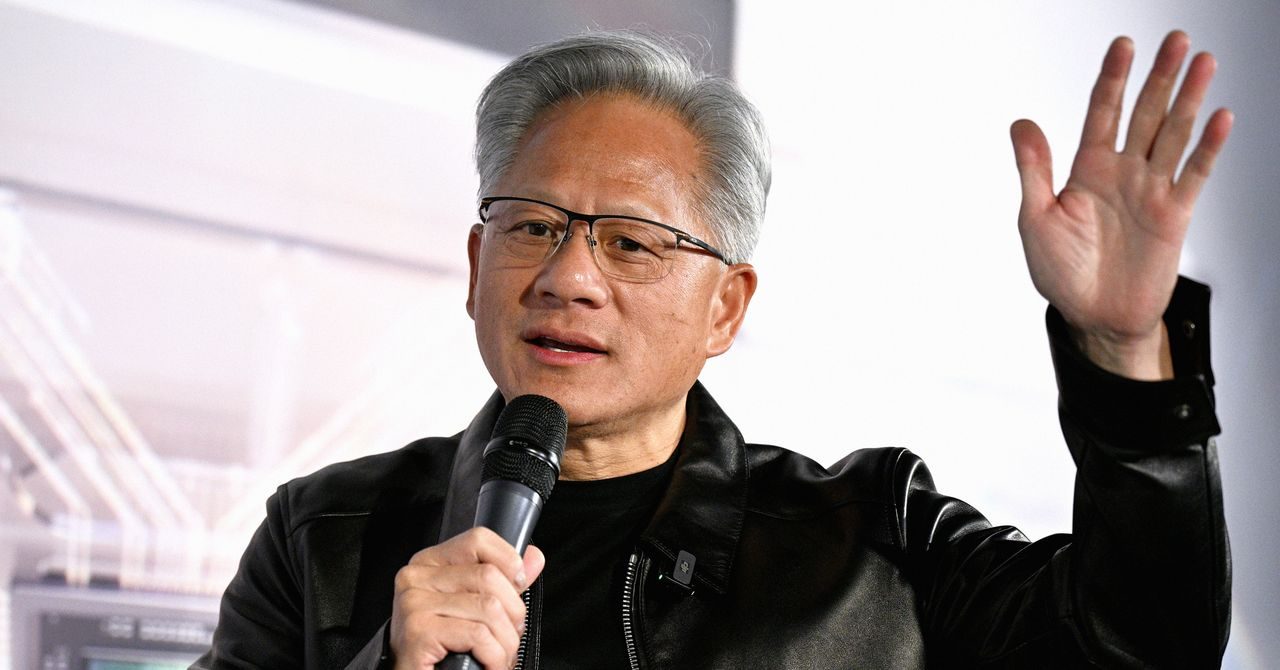
Now, the board's formal refusal to reinstate its founder shifts the Santa Clara supplier from founder-led momentum into a direct confrontation with federal scrutiny and severe corporate governance risks.
The leadership rupture puts enterprise procurement strategies and long-term accelerator commitments into question. As board chair Harvey Jones confirmed, the board announced on November 12 that Huang voluntarily resigned following disclosures of personal behavior inconsistent with the company's code of conduct, standards, and cultural norms. Despite high-profile pleas from external executives—including Elon Musk, Replit CEO Amjad Masad, and Y Combinator CEO Garry Tan, who signed a petition to bring Jensen back—the boardroom door remains shut.
"The board unanimously accepted his resignation and does not intend to reinstate Jensen as CEO."
As Harvey Jones stated directly during the company's earnings call, Nvidia will move forward under new leadership regardless of outside pressure. This absence of a visionary founder fundamentally alters the calculus for enterprise procurement and hyperscaler contract security. Without a dominant leader who historically drove aggressive, centralized R&D bets and long-term architectural visions, institutional risk models for multi-billion-dollar infrastructure commitments face unprecedented uncertainty. Enterprise buyers now confront potential shifts in R&D prioritization, as successor management teams typically favor conservative capital allocation and strict compliance frameworks over the high-stakes, founder-driven gambles that defined the rapid ascent of the AI silicon market.
Record Cash Flow Versus Governance Upheaval
The immediate financial health of the business presents a stark contrast to its operational turbulence. Less than a week after Huang stepped down, Nvidia reported $115.8 billion in revenue for the quarter that ended on October 25, 2026, beating analysts' expectations of roughly $109 billion and nearly doubling its performance from the prior year. The performance was anchored by the data center division, which surged 110 percent year over year to deliver $107.6 billion in sales.
Could surging infrastructure spend insulate the chipmaker from the fallout of an executive purge?
Operating results suggest enterprise demand remains aggressive despite the governance crisis. As interim CEO Colette Kress explained, Nvidia expects to keep growing throughout 2027 and into 2028, fueled by the rise of agentic AI. Kress also addressed internal stability across the company's workforce of roughly 60,000 employees, stating that personnel are instrumental and that Nvidia will protect its workforce during the leadership transition. Yet, the friction between stellar short-term cash flow and looming governance vulnerabilities exposes hyperscalers to severe operational risks, forcing procurement officers to re-evaluate whether current supply agreements account for potential leadership vacuums, shifts in product roadmaps, and tightening regulatory compliance standards.
Export Controls and Regulatory Entanglements
Financial returns, however, cannot erase systemic legal threats. Nvidia lost more than $1 trillion in market value over the past month as investigations intensified around Huang's conduct and international trade compliance. Earlier in November, The New York Times reported that Huang had an affair with an alleged Chinese intelligence asset who served as an executive at Megaspeed, a Singapore-based cloud provider. Reuters subsequently reported that Huang had an affair with a second employee following his resignation.
According to media reports, Huang's actions have drawn scrutiny from US regulatory agencies and law enforcement entities amid national security and export control concerns.
The federal scrutiny focuses heavily on export controls. Although Nvidia placed Megaspeed on its no-sell list in June 2025, third-party data reported by The New York Times revealed that a Megaspeed subsidiary received shipments of more than $800 million of export-controlled Nvidia AI technology, including Blackwell and H200 chips.
Huang released his first statement on Tuesday, admitting he failed to meet expected internal standards while adding he would be honored to return as CEO if the board decides it serves shareholders, employees, the company, and America. The board rejected that overture. As Jones noted, changing national security dynamics mean the incoming executive will have to navigate regulatory waters very carefully, confirming that the board is evaluating both internal and external candidates to install a permanent CEO as quickly as possible.
What changed
Nvidia used to run entirely on the founder’s bold gambles, but now the board prioritizes strict compliance and firmly bars Huang from returning to the boardroom. In mid-November, the vendor operated alongside cash invested into equity stakes across 229 startups and thirteen public firms to cement its market grip. The interim team now favors cautious capital allocation over founder-led architectural leaps, forcing hyperscalers to re-evaluate their long-term silicon contracts. Can Colette Kress preserve a $107.6 billion data-center run rate without Huang’s personal dealmaking across the industry?
Our stories: Jensen Huang Resigns Freezing $260B in Nvidia AI Commitments (November 14).