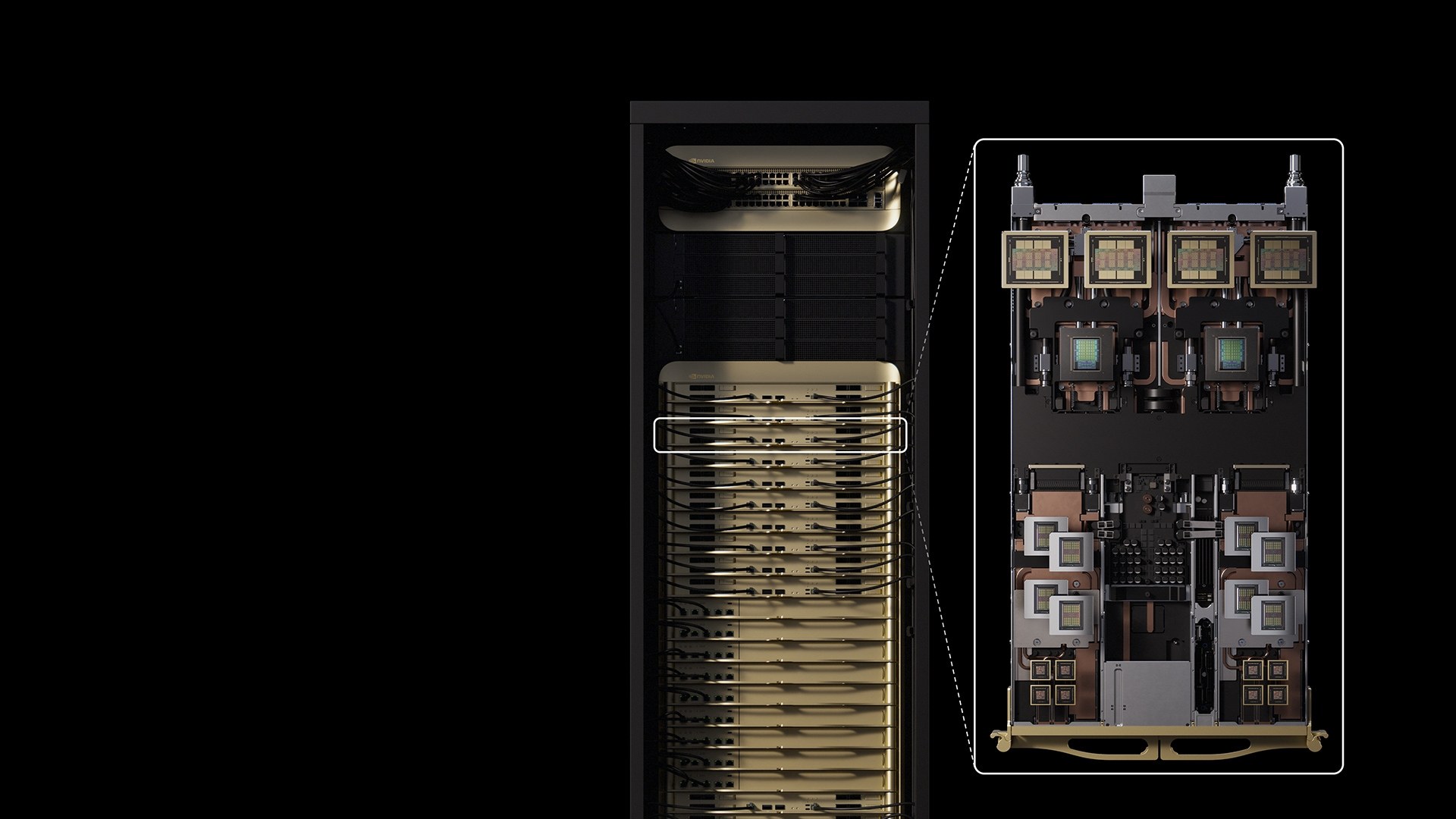
The race for inference performance has entered a new phase as agentic workflows demand faster generation cycles. Complex multi-agent setups execute hundreds or thousands of sequential reasoning steps, tool calls, and automated verifications within strict latency windows. Against this backdrop, Nvidia announced at the Hot Chips 2026 conference that its Groq 3 LPX accelerator has entered full production as an extension of the Vera Rubin platform, scheduled to go live later this year.
Benchmark Performance and Agent Workloads
Nvidia acquired the Groq license for roughly $20 billion in late December, bringing on Groq founder Jonathan Ross and president Sunny Madra to focus on hardware optimized strictly for inference. In agentic computing, throughput directly dictates system utility. Faster execution allows autonomous systems to iterate across files, draft and execute code, and validate outputs within acceptable user response times, which Nvidia claims compresses coding tasks to "minutes instead of hours."
In testing conducted by Artificial Analysis on the dense open model Gemma 4 31B, an LPX rack achieved 3,400 tokens per second across 50 back-to-back requests with a 100,000-token context window. Performance remained stable across input sequences ranging from 10,000 to 100,000 tokens, establishing a record for that specific model. Nvidia framed this benchmark as a 4x advantage over the Cerebras accelerator, which registered 882 tokens per second on the same workload.
Memory Constraints and Hardware Footprints
Behind these benchmark numbers lies a fundamental hardware divergence. Groq uses an SRAM-heavy dataflow architecture designed for ultra-low latency execution rather than bulk memory storage.
Each LPU has just 500 MB of memory, 576 times less than a Rubin GPU with 288 GB.
Because of this constrained memory footprint, models must be distributed across dozens or hundreds of chips connected over Ethernet within racks holding up to 256 units. In these deployments, GPUs handle the compute-intensive prefill phase while the LPUs process the bandwidth-intensive decode phase. As an analysis from The Register points out, hitting the 3,400 tokens per second benchmark required a cluster of at least 64 Nvidia LPX accelerators, whereas Cerebras executed the workload using only one or two chips.
Cluster Scaling for Large Models
The architectural math becomes steeper as model parameters grow. Gemma 4 31B represents an ideal scenario because the dense weights fit entirely inside a single physical rack. When applied to massive architectures, the hardware footprint multiplies rapidly: hosting DeepSeek V3 on this setup requires 1,342 accelerators, translating to just over five full racks.
For enterprise technical leads evaluating infrastructure TCO, extreme decode speed comes with a real physical footprint tax. Whether cloud operators and on-prem enterprise deployments will absorb the power, networking, and interconnect overhead of multi-rack SRAM clusters just to minimize sequential agent latency remains an unhedged operational gamble.