NVIDIA has reaffirmed its ambitions by setting new records on MLPerf Inference v6.0. The company reported achievements with the latest models, including DeepSeek-R1 and GPT-OSS-120B, on a system comprising 288 GPUs. NVIDIA claims that thanks to software innovations such as NVIDIA Dynamo and Multi-Token Prediction, throughput has nearly doubled, and the cost per generated token has decreased by over 60%. While independent verification of these impressive figures will take time, the numbers presented are striking.
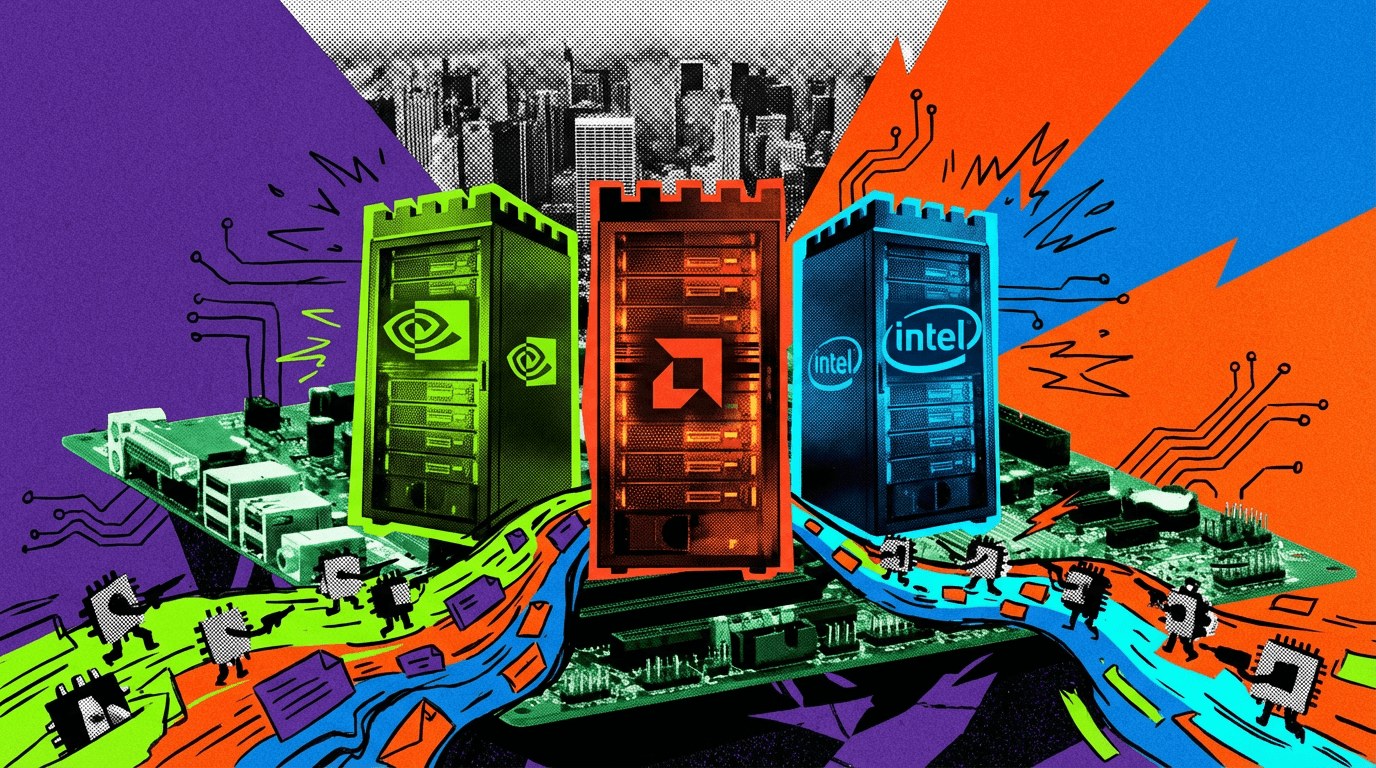
A direct comparison of these achievements with offerings from AMD and Intel is not straightforward. Manufacturers employ different testing approaches and metrics. AMD, for instance, focuses on its 8-GPU configurations and does not always disclose complete results across all models, unlike NVIDIA. Intel, meanwhile, concentrates on the workstation GPU market, demonstrating a commitment to this segment rather than direct competition in mass server solutions. It is also worth noting the absence of giants like Google with their TPUs, or specialized companies like Cerebras, in certain benchmark categories. This fragmentation underscores the need for you to independently assess each vendor's technological strategies.
AMD and Intel, despite NVIDIA's absolute lead in raw performance metrics, offer alternative paths. AMD is betting on the performance of its 8-GPU nodes, which could prove economically viable due to a lower cost per unit of computational power for specific workloads. Intel is strengthening its position in the workstation GPU segment, where its solutions may offer a more favorable price-to-performance ratio for engineers and data scientists working locally. The choice boils down to NVIDIA's universal, but expensive, solution, or more focused, potentially cost-effective offerings from competitors.
The era where simple benchmark superiority was the decisive factor in selecting AI hardware is fading. NVIDIA's MLPerf results are impressive, but the real value for your business will be determined by how well these solutions align with your specific tasks, models, and budget. Market fragmentation and differing vendor strategies mean that direct comparison on paper is no longer a sufficient tool. It is time for a more in-depth analysis and selection of solutions based on your own needs, not solely on advertised figures.