During the first phase of the enterprise AI buildout, Nvidia was priced as a merchant chip vendor whose market cap directly mirrored its ability to ship GPUs. That dynamic drove a 10x stock run between early 2023 and 2025. Today, with Google ramping TPUs and Amazon pushing custom Trainium silicon, public market enthusiasm has inevitably moderated amid fears of accelerator commoditization. Yet treating Nvidia simply as a silicon supplier misunderstands where enterprise margins actually live.
The Orchestration Bottleneck
As clusters scale toward gigawatt requirements, the primary bottleneck has shifted from raw FP8 compute cycles to interconnect bandwidth, latency management, and cluster-level data delivery. While rival merchant vendors and custom ASIC designers chase standalone FLOP benchmarks, Nvidia has anchored its pricing power in the surrounding networking stack and NVLink fabric.
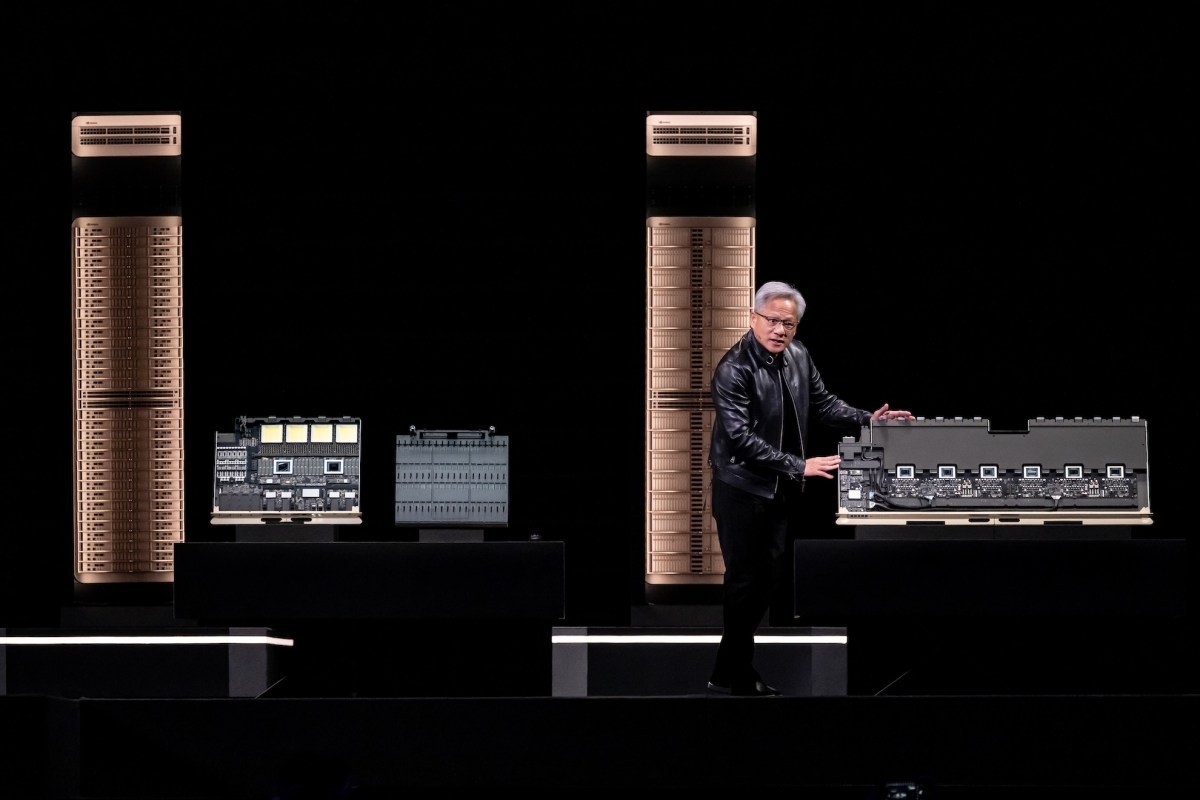
This transition defines Nvidia's Vera Rubin architecture. Instead of peddling discrete chips, the vendor sells fully integrated rack blueprints combining the Rubin GPU, Vera CPU, Groq 3 LPX inference engines, and dedicated networking tiers. The objective is operational throughput: minimizing idle processor time and maximizing tokens per watt across large-scale fabrics.
Jason Hardy, VP of storage technology at Nvidia, pointed out that legacy node architecture creates severe I/O starvation as storage capacity expands alongside compute density.
"We saw upwards of 3x improvement in these operations,"
By leveraging dedicated orchestration silicon to manage memory access patterns, the architecture feeds high-bandwidth compute arrays without letting enterprise infrastructure sit idle.
Competing Architectural Paths
For enterprise CIOs and infrastructure planners, the total cost of ownership equation is shifting. Hyperscaler ASICs promise relief from Nvidia's sticker shock, but they introduce non-trivial integration overhead, proprietary software friction, and networking fragmentation. Matching raw compute turns out to be the simplest part of the stack; matching cluster-wide interconnect efficiency is where alternative architectures stumble. Nvidia is effectively trading a fragile monopoly on silicon for an entrenched, high-margin moat on whole-cluster data transport.