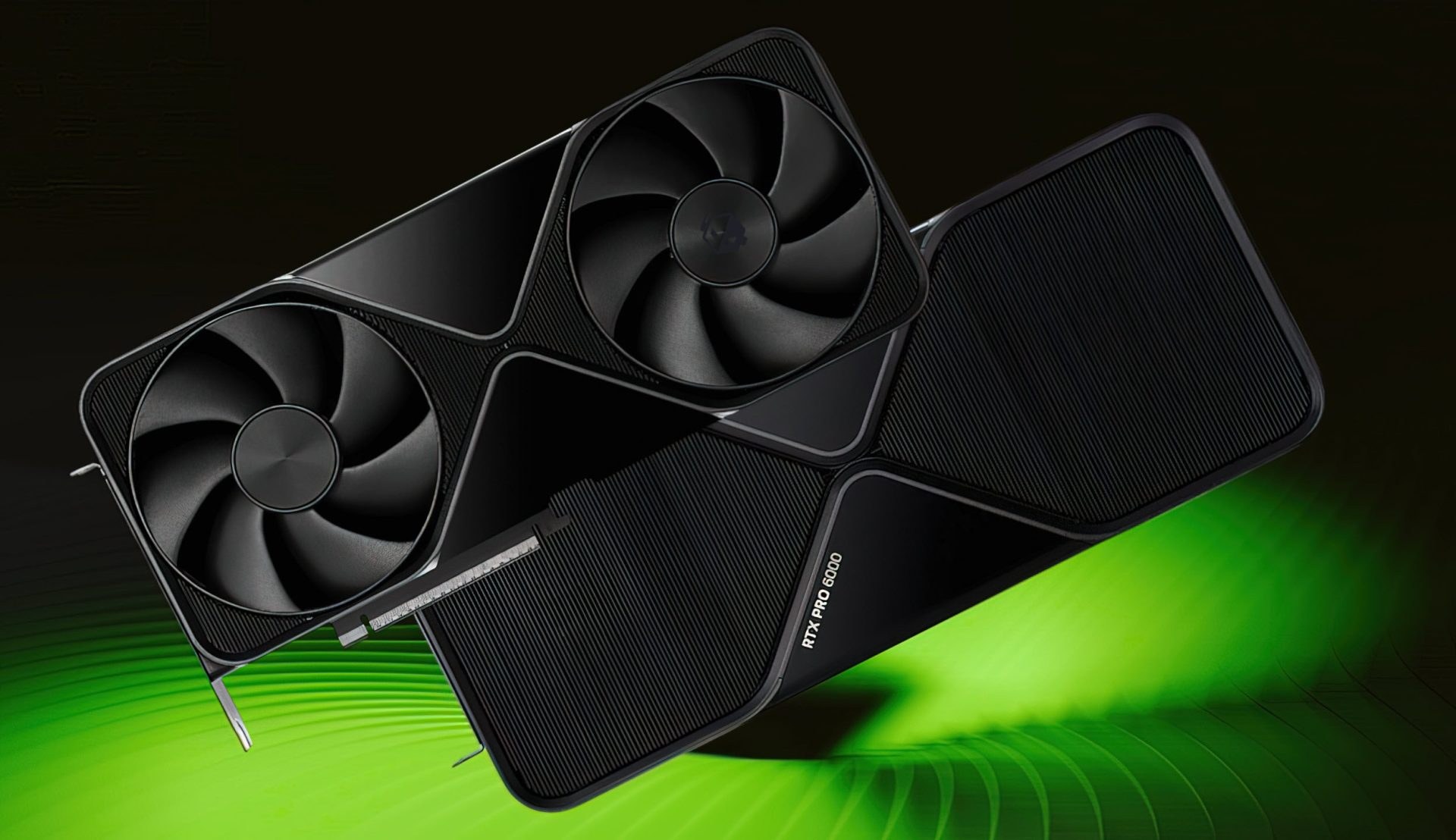
NVIDIA has officially rubber-stamped the price surge of the RTX PRO 6000 Blackwell, listing it at $16,000—a cynical doubling of its original $8,000 launch target. This isn't just retail gouging or a temporary spike; it is a formal recalibration by NVIDIA and its partner PNY. Only eight weeks ago, the card was changing hands for $13,000. Now, as the price trajectory mirrors the chaotic volatility of the consumer RTX 5090—which has ballooned from a $1,999 MSRP to a $4,500 reality—the financial barrier for local research has shifted from 'significant' to 'prohibitive.' For technical leads, the high-end workstation is no longer an investment; it is a capital leak.
The Memory Bottleneck and Hardware Strategy
The culprit behind this market distortion is a persistent, structural shortage of high-end memory. The RTX PRO 6000 Blackwell hinges on 96 GB of GDDR7, providing triple the capacity of the gaming-grade RTX 5090. However, this massive pool of VRAM has become a supply-chain choke point. DRAM manufacturers are already signaling that these constraints aren't a seasonal fluke but a long-term deficit that will likely haunt the industry for years.
With memory costs fluctuating wildly and further hikes looming, the RTX PRO 6000 is on a clear path to breach the $20,000 wall, making local compute a legacy luxury.
This scarcity fundamentally breaks the build-versus-rent equation for AI labs. While the Blackwell architecture offers superior core counts and enough memory to run substantial local models, the $16,000 price tag forces a brutal choice. Small and medium-sized enterprises must decide whether to sink their budget into depreciating silicon at peak prices or surrender to the subscription-based mercy of cloud-based inference and training environments.
Market Displacement and the New Normal
The pressure is systemic, dragging up the floor for the entire hardware ecosystem, from AMD’s Radeon RX 9000 series to the broader NVIDIA RTX 50 lineup. We are entering the 'new normal' that hardware vendors have quietly prepared us for: a world where the professional-grade premium is no longer a fee for stability or specialized drivers, but a tax on the sheer density of memory required for modern LLM development. As price tags trend toward the $20,000 mark, the era of the accessible high-end local AI workstation is effectively over. Organizations may find their procurement budgets now purchase significantly less compute than they did at the cycle's inception.
NVIDIA's updated pricing is a cold acknowledgment that 96 GB of VRAM is now a luxury good reserved for those whose workflows cannot survive the latency of the cloud. What was once a strategic choice based on flexibility has become a forced migration. At these price points, owning the hardware is a gamble on a supply chain that has already decided you should probably be renting instead.