AI · This text was generated with artificial intelligence
Nvidia is no longer content with being the primary supplier of "picks and shovels" for the AI gold rush. With the launch of the Vera Rubin architecture, Jensen Huang’s company is entering the final stage of its takeover of the entire server rack. This is more than a product refresh; it is a strategic pivot. Nvidia plans to control every compute cycle, transforming the data center into a closed, proprietary club. As Ian Buck, the company's VP of Accelerated Computing, put it, Nvidia now intends to churn out entire architectures because, in Silicon Valley, you either eat the market or you get eaten.
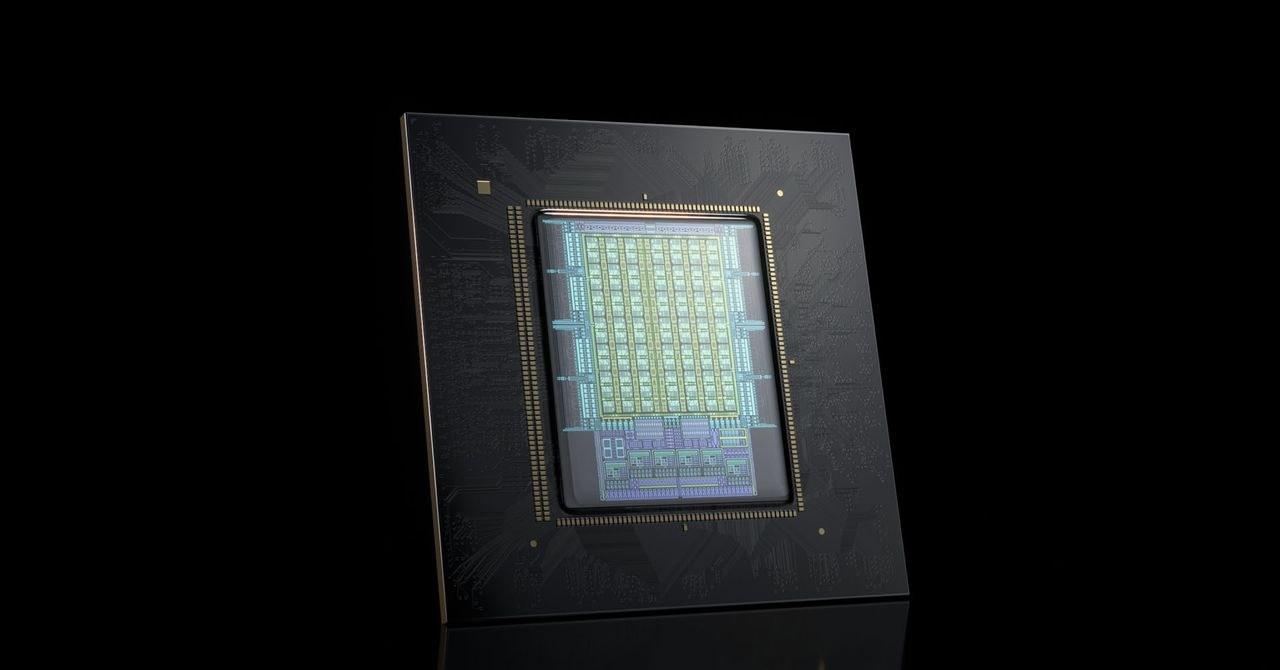
The Architecture of Monopoly The technical specifications of the Vera Rubin NVL72 system clearly demonstrate the company's ambitions. A combination of 36 Vera CPUs and 72 Rubin GPUs creates an environment where the CPU ceases to be a general-purpose node and becomes a mere appendage to the graphics stack. According to Nvidia's internal tests, the system delivers 10 times more tokens per watt compared to the Grace Blackwell generation. By launching the Vera processor as a standalone product—with Chinese customers expected to receive it as early as August—Huang is taking a direct shot at Intel and AMD’s strongholds. However, behind the ease of deployment and liquid cooling lies a rigid vendor lock-in: local memory subsystems are designed such that replacing any component with a competitor's solution would cause the entire system’s performance to collapse.
"We are on a path to building new full architectures, not just individual GPUs or CPUs."
Agentic AI as a Trojan Horse The rising trend of Agentic AI—autonomous systems capable of orchestrating data and software—has become the perfect commercial justification for Nvidia's expansion into the CPU segment. While GPUs handle the raw power of training and inference, CPUs manage the complex logic of agent orchestration. Nvidia claims that Vera handles these tasks faster than its rivals, though it is worth noting that benchmarks likely compared the new hardware against older generations from AMD and Intel. Nevertheless, industry heavyweights are already on board: Nvidia leadership confirmed that OpenAI is already operating its first Vera Rubin rack.
Paradigm Shift: From Chips to Compute Units The aggressive marketing of Vera Rubin serves as a preemptive strike against AMD’s annual event in San Francisco. While competitors try to sell individual hardware components, Huang is selling a ready-made "compute unit" for the data center. This turns data center infrastructure into a "black box" where everything—from the networking stack to the cooling—is owned by a single vendor. For businesses, this marks a radical change in procurement strategy for the next 3–5 years: a shift from flexible component selection to total dependence on the Santa Clara roadmap.
Nvidia is betting that in the heat of the AI race, companies simply won't have the time to consider diversification. The speed of achieving results here and now comes at the cost of long-term infrastructural flexibility. By the time businesses realize the weight of the Vera Rubin shackles, the cost of migrating to the open solutions AMD is attempting to offer will likely exceed any loyalty premium paid to Huang’s empire.