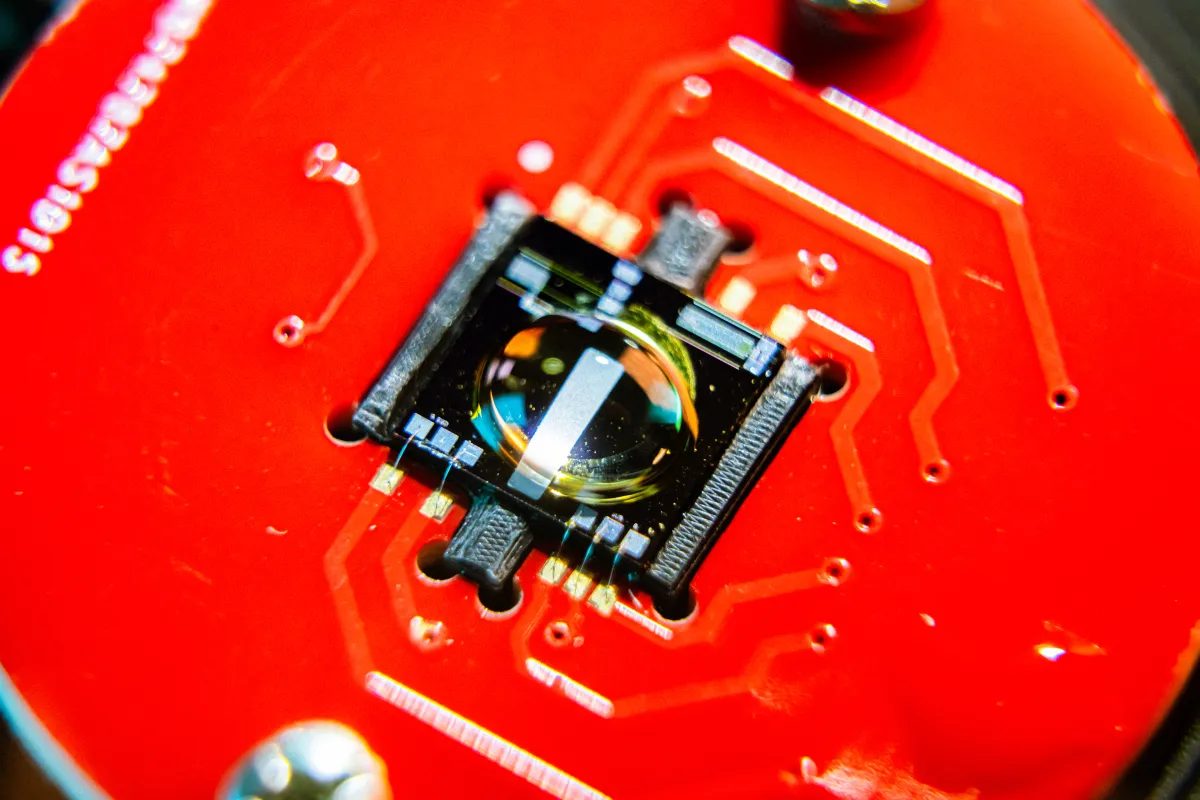
Putting those two technologies in the same sensor creates a much richer picture of the water and the fluid, as Allan Adams, chief science officer of Omen AI, stated to TechCrunch. Data centers across the United States consume 17 to 19 billion gallons of water annually to cool their hot-running chips. According to the Water Foundation, that volume is expected to triple in the next five years.
This physical reality creates severe operational risks for data center balance sheets. Monitoring cooling fluids has traditionally required sending samples away to a laboratory for tests in a multi-day process. When fluid chemistry drifts, operators face an expensive operational choice: dump the water rather than risk damage to their expensive equipment.
Sensors Over Lab Reports
Omen AI was founded in 2024 to solve that problem. After raising a $31 million Series A in June, the company is now acquiring competitor Aquatic Labs in a $16 million cash-and-stock deal. The transaction combines complementary sensing approaches into a single physical unit. Omen's sensors looked for elements in the water, while the Aquatic Labs sensor tests its alkalinity.
How do these technical measurements translate into asset protection on the balance sheet?
Real-time telemetry eliminates emergency shutdowns and unplanned water disposal. When a fluid system gets out of whack, data center operators typically choose to dump the water rather than risk damage to their expensive equipment, shutting down operations until the fluid system is restored. Integrating elemental and alkalinity tracking into one sensor allows facilities to use the same fluid for longer and minimize the costs of a clean up.
Putting those two technologies in the same sensor creates a “much richer picture of the water and the fluid,” Adams told TechCrunch, while uniting their vision of automating what had previously been a slow, manual process.
The combined leadership pairs distinct operational backgrounds. Omen founder Zach Laberge dropped out of high school to pursue his first company, which did similar fluid analysis for large construction machines that depend on hydraulics. Allan Adams was an academic, trained as a physicist, who spent much of his career developing advanced ocean sensing technology as an MIT professor and Woods Hole Oceanographic Institute researcher before starting his company.
Hardware Protection at Gigawatt Scale
As Zach Laberge stated to TechCrunch, the combined venture plans to bring the integrated sensor to market by early next year, and scale will ramp quickly as initial sensors will be monitoring chips pulling in 250 to 300 MW of power by the end of the year, worth about $5 to $7 billion. By the end of 2027, Omen aims to be installed on the equivalent of 1 GW of chips.
“We’re working customers on stuff they’re building today or have already built, and so it doesn’t really affect us because all of those projects were financed 12 months ago,” Laberge said.
Skeptics argue that cooling infrastructure startups remain vulnerable to shifting investor sentiment. AI companies once estimated as much as $4 trillion would be spent on AI infrastructure by 2030, but some investors have grown skeptical of the buildout, sending hyperscaler stocks plummeting in recent days. However, facilities entering service today rely on capital deployed a year ago, anchoring sensor adoption to physical hardware already on data center floors.
Hardware protection cannot depend on multi-day laboratory cycles when billions in silicon sit on cooling loops. Real-time telemetry transforms water chemistry from an unmanaged infrastructure bottleneck into a predictable operational cost.
Why it matters
The $16 million buyout spares operators the costly trade-off between multi-day lab testing and flushing entire cooling loops, merging two distinct analytical methods directly inside a single device. This integration gives Omen AI a clear path to monitor 1 GW of chip capacity by the end of 2027, backed by data center capital committed twelve months ago. While investors argue over when trillions in AI spending will pay off, sensor makers are quietly making money safeguarding the hardware already humming in machine rooms.