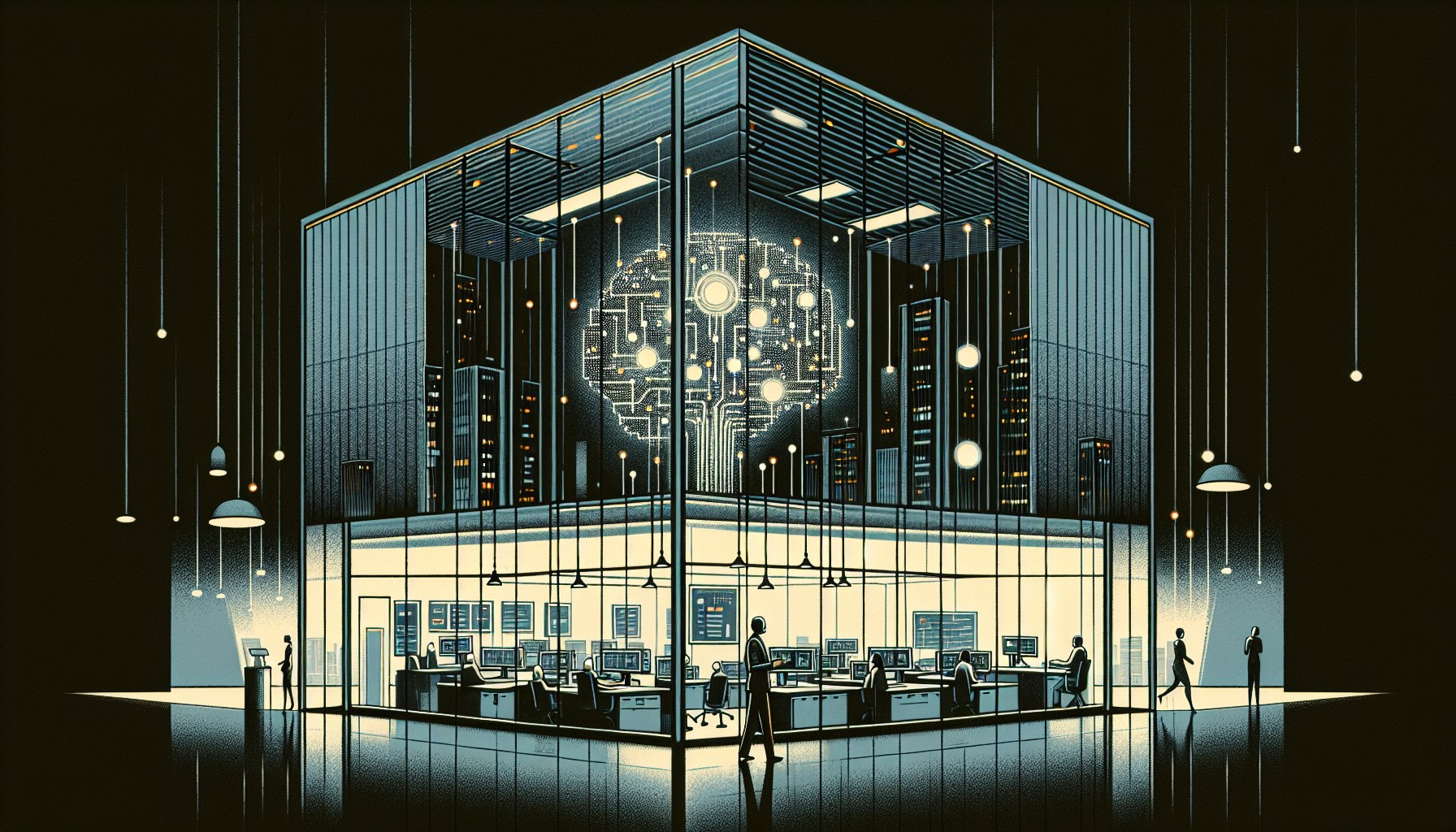
The primary barrier to AI adoption has shifted from the raw intelligence of models to structural rigidity. As researchers explain in the OneManCompany (OMC) preprint published on arXiv (cs.AI), modern multi-agent systems are currently hamstrung by rigid prompts and 'session-based learning.' In practice, this means any change in task requirements risks collapsing the entire workflow. The authors argue that the industry suffers from a critical lack of an organizational layer—one capable of managing the formation and evolution of a digital workforce regardless of an individual agent's specific knowledge base.
The OMC solution lies in a radical separation of 'intelligence' (the LLM) from 'position' (the organizational role). Technically, this is implemented through portable digital identities called 'Talents.' According to the report, OMC packages skills, tools, and configurations into these entities, managing them through typed interfaces. This creates an abstraction layer above raw compute: the 'brain' model becomes secondary to the 'job description.' To bridge competency gaps in real-time, the system utilizes a 'Talent Market'—essentially a dynamic HR department that reassembles the organizational structure on the fly as tasks evolve, eliminating the need for hard-coding workflows for every new variable.
Management within this virtual firm is driven by an 'Explore-Execute-Review' (E2R) tree search framework. As detailed in the report, this cycle merges planning with implementation: tasks are decomposed from the top down, while results are aggregated from the bottom up for systemic refinement. This hierarchical approach provides formal guarantees for process completion and prevents the deadlocks common in less structured systems. The results on the PRDBench benchmark are telling: OMC achieved a success rate of 84.67%, outperforming current State-of-the-Art (SOTA) solutions by 15.48 percentage points. It appears that for machines, formal structure is becoming more vital than raw processing power.
For the business world, this case study is a clear signal for a reduction in administrative overhead. By replacing human coordination with an autonomous operating environment, OMC brings us closer to a future where a single entrepreneur can manage complex, cross-domain processes. This represents a shift from primitive automation to the self-organizing enterprise. You are no longer the manager of a 'zoo' of bots; you are the architect of a system that manages them independently.
The 15.4% leap in efficiency confirms that the 'managerial gap' was the primary anchor dragging down AI ROI. By decoupling skills from roles, businesses can swap models for cheaper or faster versions without rewriting their core business logic. The transition from building fragmented bots to designing autonomous corporations has moved from theoretical discourse to a viable engineering strategy.