AI · This text was generated with artificial intelligence
The entry price for the world of "advanced intelligence" continues to shatter expectations. Sam Altman and the OpenAI team, according to The Wall Street Journal, plan to funnel $750 billion into infrastructure development by 2030. This figure is 25% higher than the company’s own projections from just six months ago. It seems OpenAI has realized that the path to AGI is paved not only with elegant code but with millions of tons of concrete and copper. As TechCrunch’s Tim De Chant notes, this financial blitz began just as the ambitious Stargate supercomputer project hit a standstill.
From Stargate to Camellias
Moving away from a single monolithic site, OpenAI is shifting toward a strategy of distributed mega-campuses. The first flagship is Project Camellia in Georgia, a $20 billion venture. Spanning 1,400 acres in Effingham County, the site is designed for 3.2 GW of capacity. To put that into perspective: this single deal accounts for one-third of all additional capacity that local regulators recently authorized Georgia Power to generate. To appease officials and avoid a backlash from residents over rising utility rates, OpenAI is footing the entire bill for the infrastructure. In exchange, the county is granting the company a 15-year tax holiday with a 50% discount on property taxes.
The deal with OpenAI covers approximately one-third of the 9,885 megawatts that Georgia Power recently received permission to generate.
The Natural Gas Paradox
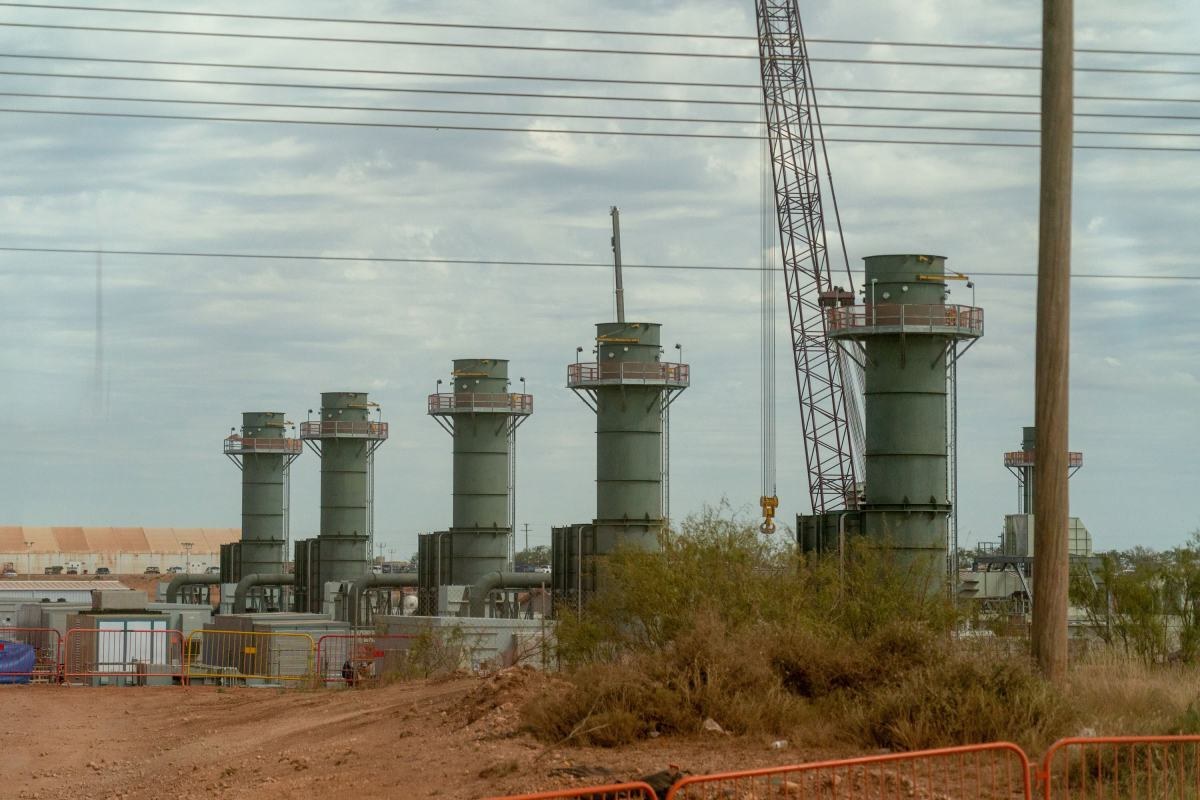
While Big Tech's official reports are filled with dreams of "green energy," OpenAI’s actual expansion is heavily reliant on fossil fuels. According to Georgia Power filings, the lion's share of energy for Project Camellia will come from natural gas. The utility plans to purchase or build 5.8 GW of gas-fired capacity, effectively doubling its gas fleet. Furthermore, a quarter of this capacity will be provided by simple-cycle turbines—cheap to install but notoriously dirty. Power is expected to flow in 2028, though OpenAI remains tactfully silent on exactly when the first GPUs will be slotted into the racks.
The first shot in OpenAI's investment race will be the $20 billion Project Camellia campus in Georgia.
OpenAI’s sense of urgency is further evidenced by the hiring of Brett Mayo as head of data centers. Mayo joins from Elon Musk’s xAI, where he oversaw the Colossus project in Memphis. However, Mayo's track record has already raised legal eyebrows: xAI was sued by the NAACP and the Southern Environmental Law Center for allegedly operating uncertified gas turbines. It appears OpenAI is willing to risk its reputation to maintain construction speed.
Energy as the Ultimate Moat
In this high-stakes game, the competitive edge comes not from transformer architectures, but from access to gigawatt-scale power outlets. Owning land and guaranteed generation is becoming the "moat" that shuts out competitors. OpenAI has even agreed to curtail consumption by 1 GW during peak grid loads—a clear sign that the U.S. power grid is straining under AI’s appetite. Altman’s strategy looks like an attempt to throw money at a structural power deficit. While others debate model parameters, OpenAI is essentially buying up the energy capacity of entire states, betting that the future belongs to whoever holds the biggest power switch.