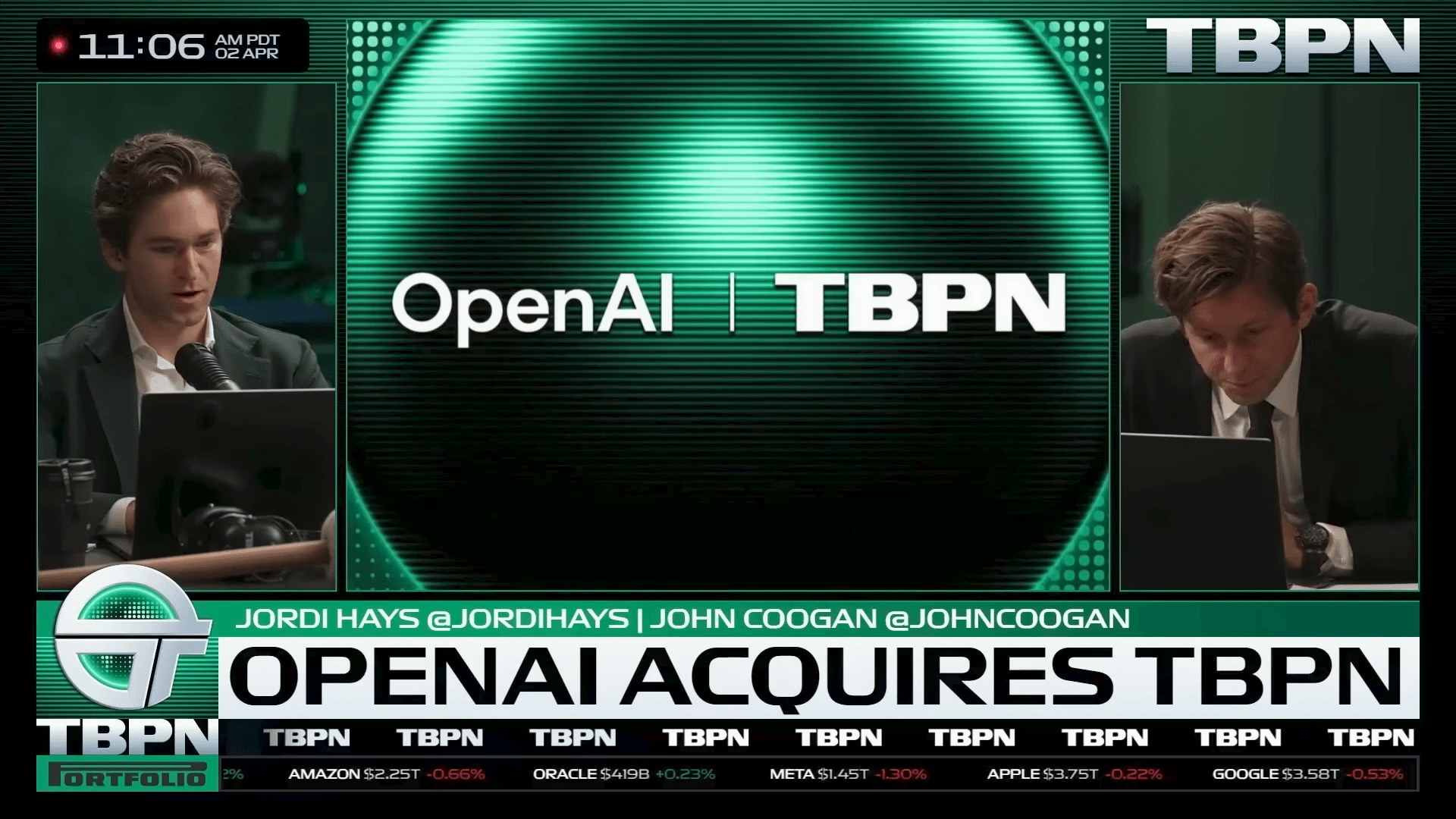
OpenAI, whose grand plans for the future of AI sometimes sound more convincing in presentations than in laboratory settings, has acquired the online talk show TBPN. As reported by The Wall Street Journal, the show, which attracts approximately 70,000 daily viewers and projected $5 million in advertising revenue for 2025, was not in a business OpenAI deemed essential. It has been immediately shut down. Financial considerations appear to have been secondary.
Fidji Simo, head of applications at OpenAI, asserts that TBPN will retain its "editorial independence." However, the show will now operate under the direct management of Chris Lehane, OpenAI's head of communications. This claim of independence, juxtaposed with oversight from OpenAI's PR department, strains credulity. Convincing anyone of the objectivity of a media outlet reporting to a corporate communications department is a task worthy of dedicated academic study.
Simo explains the acquisition by stating that traditional communication channels "don't work" for OpenAI, and the company supposedly craves "real, constructive dialogue" about AI. If dialogue were the sole objective, OpenAI could have sponsored independent platforms or built its own show from scratch. Acquiring an existing media resource, only to dismantle its previous business model, appears more like an attempt to purchase control and loyalty rather than genuine dialogue. When a company facing scrutiny buys a media outlet proclaiming independence, it breeds suspicion rather than trust. Even assurances from Sam Altman that criticism will not decrease sound disingenuous rather than a guarantee of objectivity.
This acquisition is more than just another transaction. It signals OpenAI's readiness to invest not only in AI technologies but also in shaping public opinion about them. For businesses whose effectiveness relies directly on transparency and objective information within the AI market, this means fewer independent voices will emerge. The "constructive dialogue" risks transforming into a carefully curated narrative. Ultimately, OpenAI is purchasing not so much a media outlet as a license for self-promotion. The rest of the market will observe the rising cost of information noise as objectivity declines.