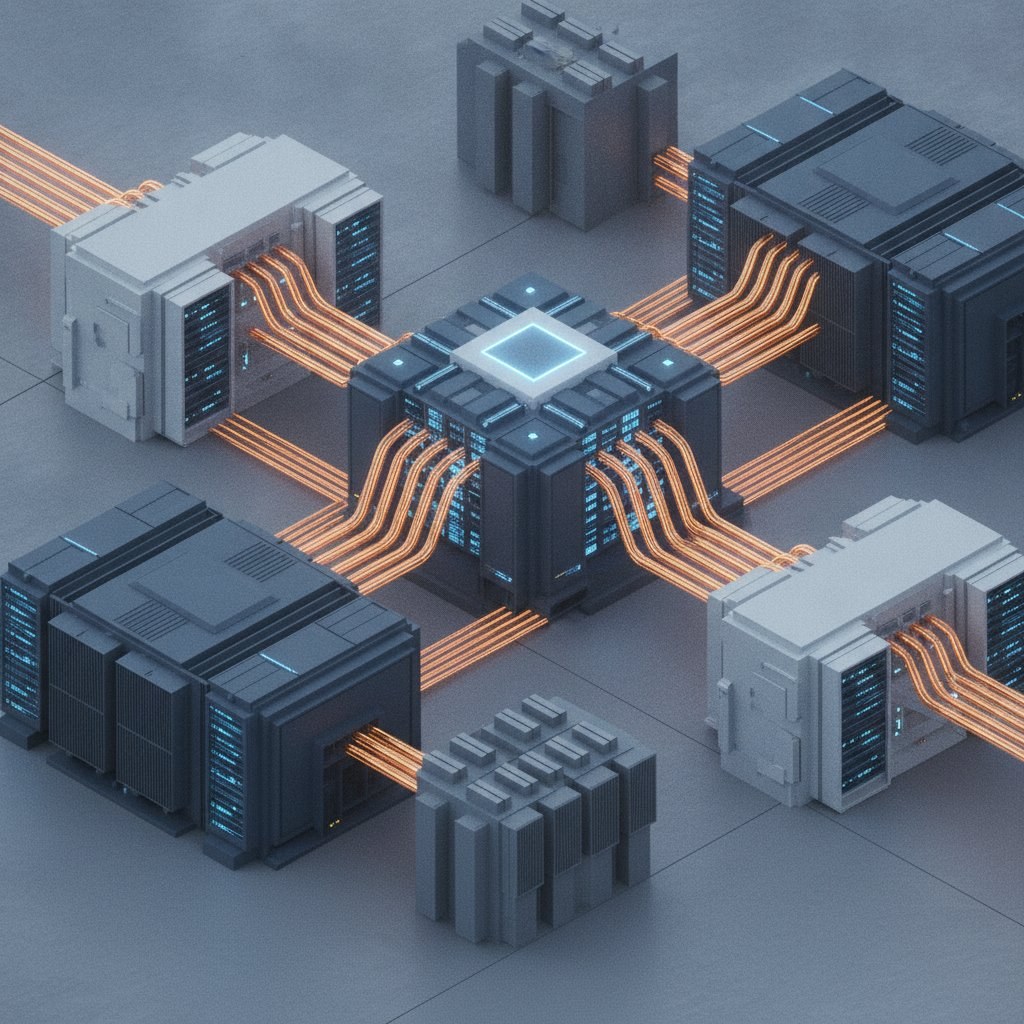
OpenAI is finally admitting that throwing more H100s at the problem won’t buy them a seat in the future of real-time AI. On January 14, 2026, the company announced a massive partnership with Cerebras to secure 750MW of ultra-low-latency compute. This isn't just a hedge against hardware shortages; it is a calculated bet that the next phase of the intelligence age—autonomous agents and ‘thought-speed’ reasoning—requires a clean break from traditional GPU clusters.
The Architecture of Immediacy
The move targets the structural rot in conventional AI infrastructure: the latency wall. While standard clusters are great for brute-force training, they stumble when an agent needs to execute complex, multi-step reasoning in milliseconds. Cerebras’ Wafer-Scale Engine (WSE) sidesteps this by consolidating compute and memory onto a single giant silicon plate, effectively killing the data-transfer delays that haunt discrete chip setups. For high-value workloads like interactive code generation, the bottleneck isn't raw FLOPS; it's the speed of the back-and-forth loop.
"Just as broadband transformed the internet, real-time inference will transform AI, enabling entirely new ways to build and interact with AI models," as Andrew Feldman, co-founder and CEO of Cerebras, put it.
By trading cables for a unified architecture, OpenAI intends to make long-form outputs feel natural rather than mechanical. Sachin Katti, representing OpenAI, framed the strategy as building a resilient portfolio by matching specific hardware to the right workloads. In this framework, Cerebras becomes the dedicated engine for low-latency tasks, while traditional setups are relegated to the heavy lifting of training.
Scaling Beyond the Latency Wall
The business logic behind the 750MW commitment is rooted in the economics of engagement. OpenAI’s internal data suggests that when latency drops, user retention and workload complexity spike. Integrating this capacity in phases through 2028 allows the company to move away from 'laggy chatbots' toward seamless autonomous systems where generation speed matches human thought. This transition is critical: as models move toward more demanding reasoning chains, the cost of moving data between memory and processor (SRAM vs. HBM) becomes the deciding factor in Total Cost of Ownership.
However, this isn't a plug-and-play victory. OpenAI now faces the monumental task of reconfiguring its software stack to play nice with a non-standard, heterogeneous compute environment. Claiming the world's fastest AI processor is a great headline for Cerebras, but the real test lies in whether OpenAI can actually migrate its production workloads to a giant silicon plate without breaking the very systems they aim to accelerate. The era of the GPU monopoly is showing its first real cracks, but the complexity of this integration suggests the transition will be anything but painless.