OpenAI Codex Record & Replay: The end of the prompt engineering era?
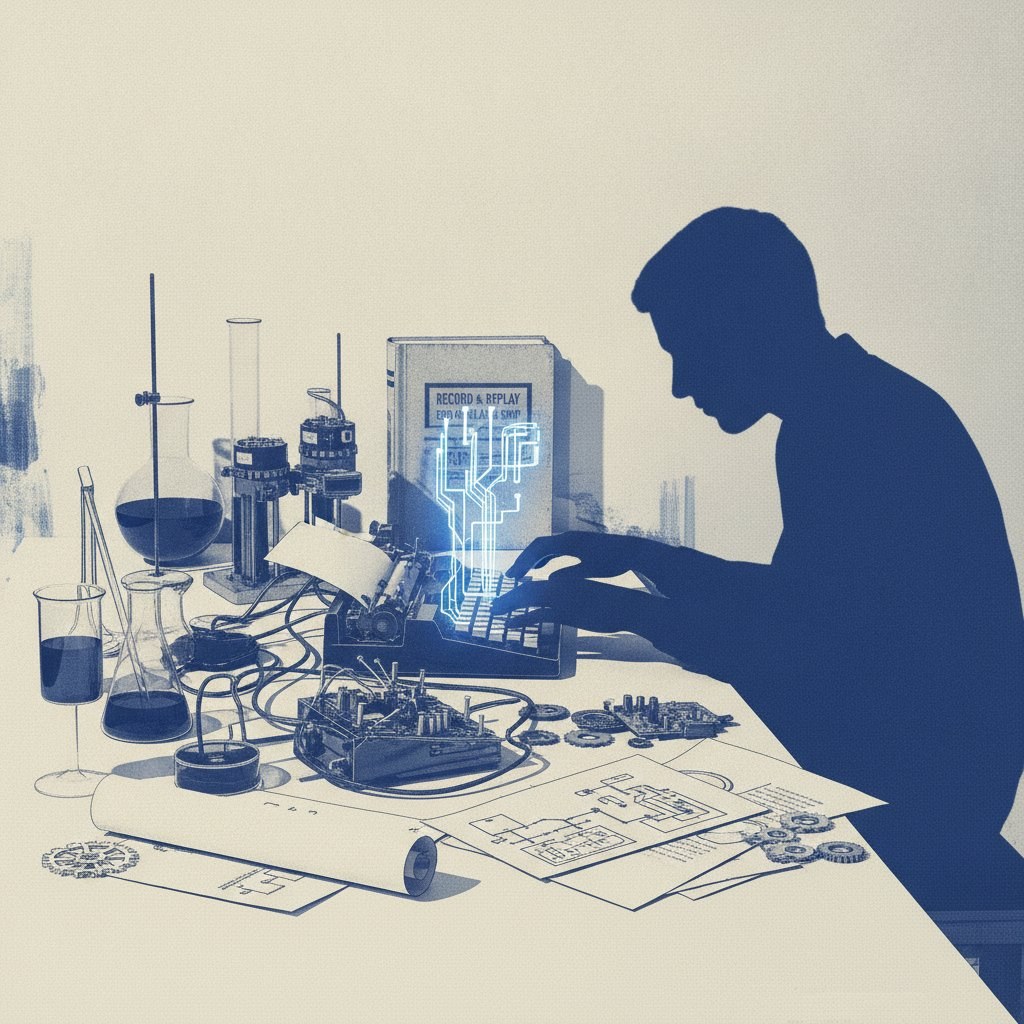
OpenAI is rolling out an update to its Codex macOS app featuring "Record & Replay," a move that signals the end of the road for tedious prompt-tuning. Artificial intelligence is now acquiring skills simply by observing user actions. Show the AI once how you upload a YouTube video—complete with metadata and subtitles—and that sequence transforms into an autonomous skill. This isn't just a software patch; it’s a pivot toward a "Computer Use" model where a "digital shadow" mimics human on-screen movements, eliminating the need to hard-code complex automation chains.
Technical foundation and scaling
Technically, version 26.616 lays the groundwork for scaling these skills across enterprises. The software now supports bulk actions for automation histories and, more importantly, allows active streams to be transferred between local and remote hosts. Essentially, your laptop becomes the "teacher," while a remote server acts as the tireless "executor."
Your operating system is turning into a training ground where every mouse click serves as training data for an AI agent.
However, geographic restrictions persist: while the broader Computer Use feature is available in the EU, the specific Record & Replay functionality remains locked for users in the European Union, the UK, and Switzerland.
A direct challenge to the RPA market
OpenAI’s business model here is transparent: while the Codex app is free, it requires a paid ChatGPT subscription to unlock real value. Sam Altman and his team are betting on white-collar professionals, offering a tool that bypasses traditional API integrations to work directly with user interfaces.
A shift from rigid scripts to flexible, mimetic agents. Lowering the barrier to entry for business process automation. Direct competition with established RPA platforms. Compatibility with any software, regardless of API support.
This is a frontal assault on the Robotic Process Automation (RPA) market. Instead of rigid, expensive-to-maintain scripts, we get a flexible agent that mirrors employee behavior. OpenAI is turning software proficiency into a transferable asset where the primary cost is simply the initial demonstration. Knowing which buttons to click in the right order is now the only prerequisite for building a custom automation stack. It seems the era of the prompt engineer is ending before it truly began, making way for operators whose actions the AI is ready to scale infinitely.