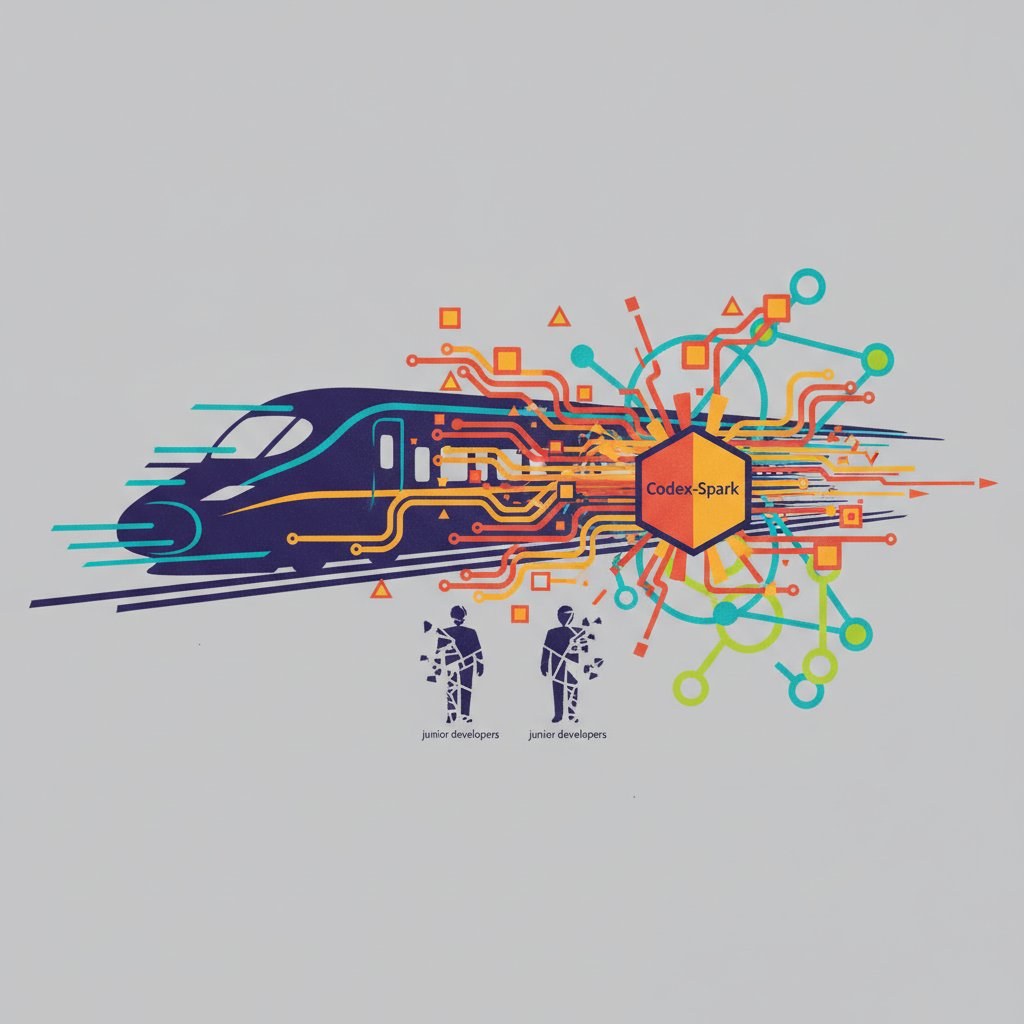
OpenAI has unveiled a research preview of GPT-5.3-Codex-Spark—an ultra-high-speed model designed specifically for instantaneous autocomplete within the Codex application. Partnering with Cerebras, Sam Altman’s company has pushed hardware performance to over 1,000 tokens per second. This isn’t just another incremental speed boost; it is a calculated attempt to create a total "presence effect," where the AI reacts faster than a developer can process their own thoughts.
A Technological Breakthrough Powered by Cerebras
This shift is driven not only by model architecture but by specialized hardware from Cerebras. While flagship heavyweight models spend seconds or even minutes deliberating on autonomous tasks, Codex-Spark acts as a pair of "smart hands" powered by specialized accelerators. It instantly corrects logic, refactors interfaces, and applies surgical edits directly as you type.
Essentially, this is the physical embodiment of a latency-first concept: delays have been reduced to the point where the AI ceases to be an external consultant and becomes an integrated part of the engineer's cognitive process.
Key Features of Codex-Spark
Generation speeds exceeding 1,000 tokens per second via Cerebras chips. A 128,000-token context window capable of analyzing an entire codebase at once. Real-time interruptibility, allowing users to redirect the model mid-stream. Seamless execution of routine edits and refactoring on the fly.
Labor Market Implications
The business impact of this rollout looks like a death sentence for low-skilled labor. Why maintain a junior developer on the payroll to spend time grasping basic fixes when Codex-Spark handles them flawlessly and instantly?
Currently, access to Spark is limited to ChatGPT Pro users, but large-scale deployment is bottlenecked by a shortage of Cerebras capacity. OpenAI admits that such responsiveness demands extreme data center resources that are still being built out. However, the trajectory is clear: the future of programming is not a dialogue with a chatbot, but a symbiosis where AI autonomously handles routine logic, finally pushing humans out of entry-level tasks.