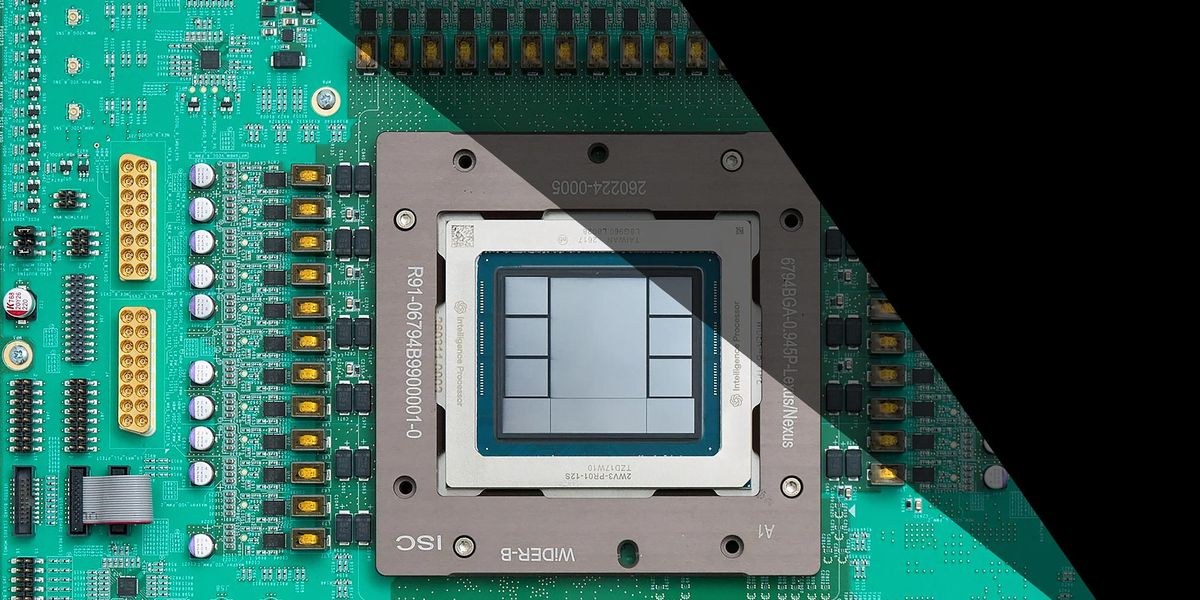
Designing custom semiconductor hardware historically demanded multi-year cycles and massive engineering organizations. As Matthew S. Smith reported on 14 Sep 2026, Jalapeño moved from first architecture concept to first silicon in under 20 months, with only nine months separating the first register-transfer level code from tape-out when the design entered manufacturing. By deploying its own large language models directly into Electronic Design Automation workflows, OpenAI has bypassed traditional software-only development boundaries to spin up custom silicon.
Hardware Performance and Team Footprint
The resulting hardware targets high-throughput AI workloads. Jalapeño delivers up to 13.4 petaflops of 4-bit compute and accesses 232 gigabytes of advanced memory, linking to it at 15.4 terabytes per second. According to benchmarks cited by OpenAI, the accelerator can reduce end-to-end latency by up to 3.6 times compared to Nvidia's GB300.
Richard Ho, vice president of hardware at OpenAI, noted that the core design group averaged fewer than 100 people across the project lifecycle. OpenAI used its own large language models to assist the engineering process throughout development, fundamentally shifting how infrastructure economics are calculated when big tech begins building its own silicon.
"The models are giving superpowers to our engineers," says Richard Ho, vice president of hardware at OpenAI.
Ho explained that human engineers continued to direct the work while utilizing model assistance. The reported headcount excludes staff at Broadcom, which partnered with OpenAI and handled physical design from the gates onward.
Real-World Verification
Whether the benchmark claims of a 3.6-fold latency advantage over Nvidia's GB300 hold up once Jalapeño enters widespread fleet deployment remains an open question for production infrastructure. The real test is not whether an LLM can write register-transfer code, but whether Big Tech can sever its dependence on traditional foundry ecosystems without breaking the bank.