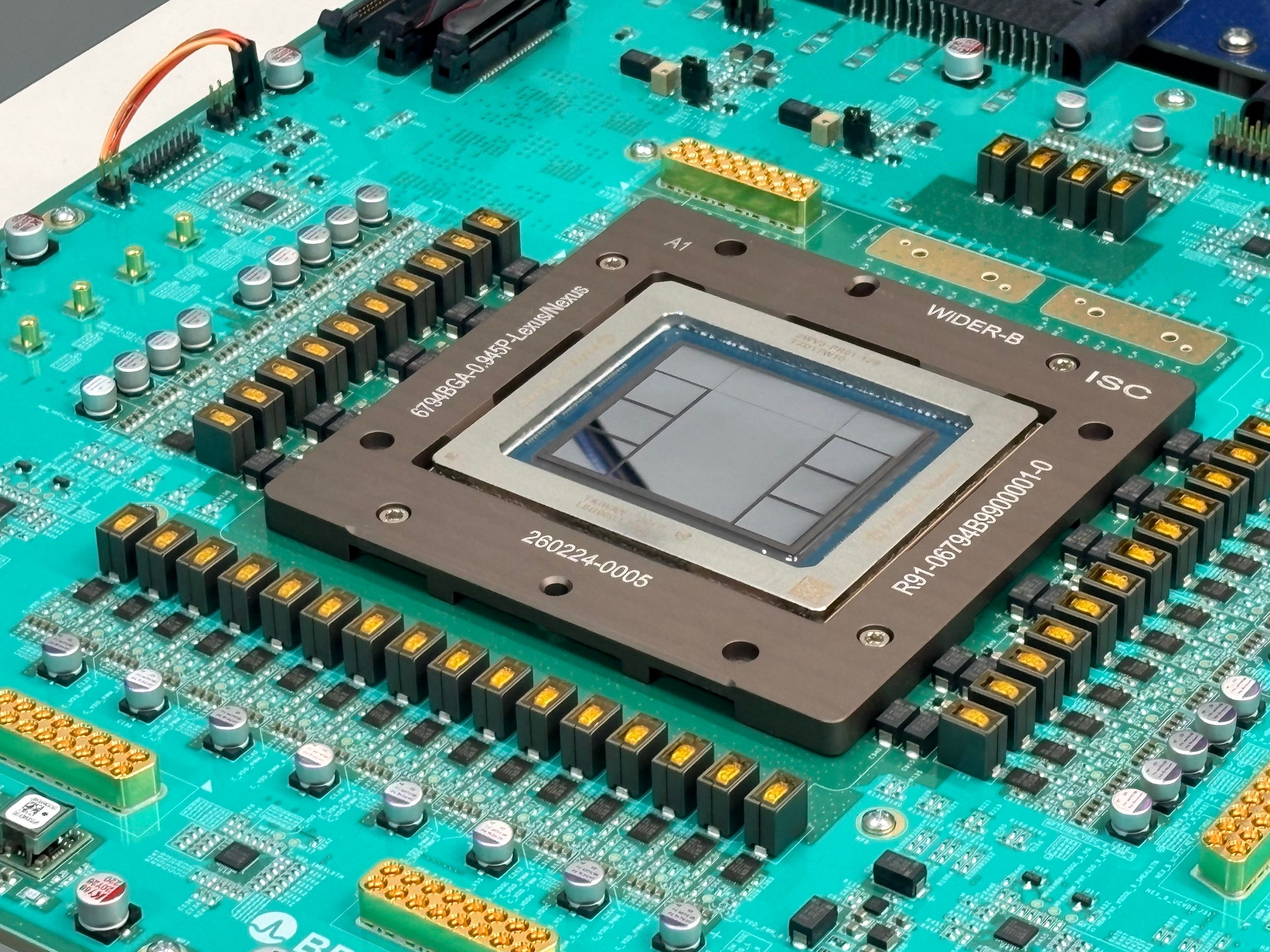
The economics of enterprise AI have decisively shifted from one-off model training to the grueling operational overhead of continuous inference. For corporate decision-makers scaling autonomous agentic workflows, hardware efficiency is no longer an academic metric—it dictates token unit margins, API pricing, and real-time execution speeds. In an explicit move to curb reliance on merchant silicon, OpenAI introduced its proprietary application-specific integrated circuit (ASIC), dubbed Jalapeño, co-developed with Broadcom specifically to accelerate post-training execution.
Benchmarked via the InferenceX framework against top baseline figures from Nvidia's flagship GB200 and GB300 architectures, Jalapeño demonstrated 1.5x to 1.9x higher compute output per watt across GPT-OSS 120B, DeepSeek R1, and Kimi K2.5 1T models. More crucially for interactive agent deployments, the silicon posted a 1.7x to 3.6x reduction in end-to-end latency across these workloads, attacking the classic hardware tradeoff between query responsiveness and total cluster throughput.
OpenAI hardware vice president Richard Ho framed the engineering objective bluntly during a press briefing:
"AI systems typically have to make a trade-off between the two," while Jalapeño offers the "best of both worlds" with lower latency and higher throughput.
Overcoming this batching compromise is vital: traditional inference pipelines choke per-user latency to maximize aggregate batch density. For business leaders deploying autonomous agents that require multi-step reasoning in real time, eliminating this friction lowers the cost curve while keeping sub-second execution intact.
Rollout Timelines and Compute Strategy
First unveiled conceptually in June, the Broadcom partnership marks OpenAI's transition toward tailored infrastructure designed to bypass standard GPU margin premiums. According to Ho, the custom architecture aims to deliver "faster responses, more responsive agents, and more reliable access as the demand grows." Operational deployment remains gradual: OpenAI plans low-volume rollouts later this year before scaling capacity through 2027, leaving near-term unit targets unannounced.
Yet, this custom silicon roadmap is not an immediate eviction notice for incumbent vendors. Ho acknowledged that OpenAI will continue operating alongside external infrastructure providers, preserving its relationship with Nvidia while already developing second- and third-generation Jalapeño iterations.
The real operational bottleneck remains production ramp-up: until bespoke ASICs achieve sustained hyperscale volume past 2027, enterprise buyers should expect custom silicon to serve as tactical leverage against GPU supply constraints rather than an overnight collapse in token costs.