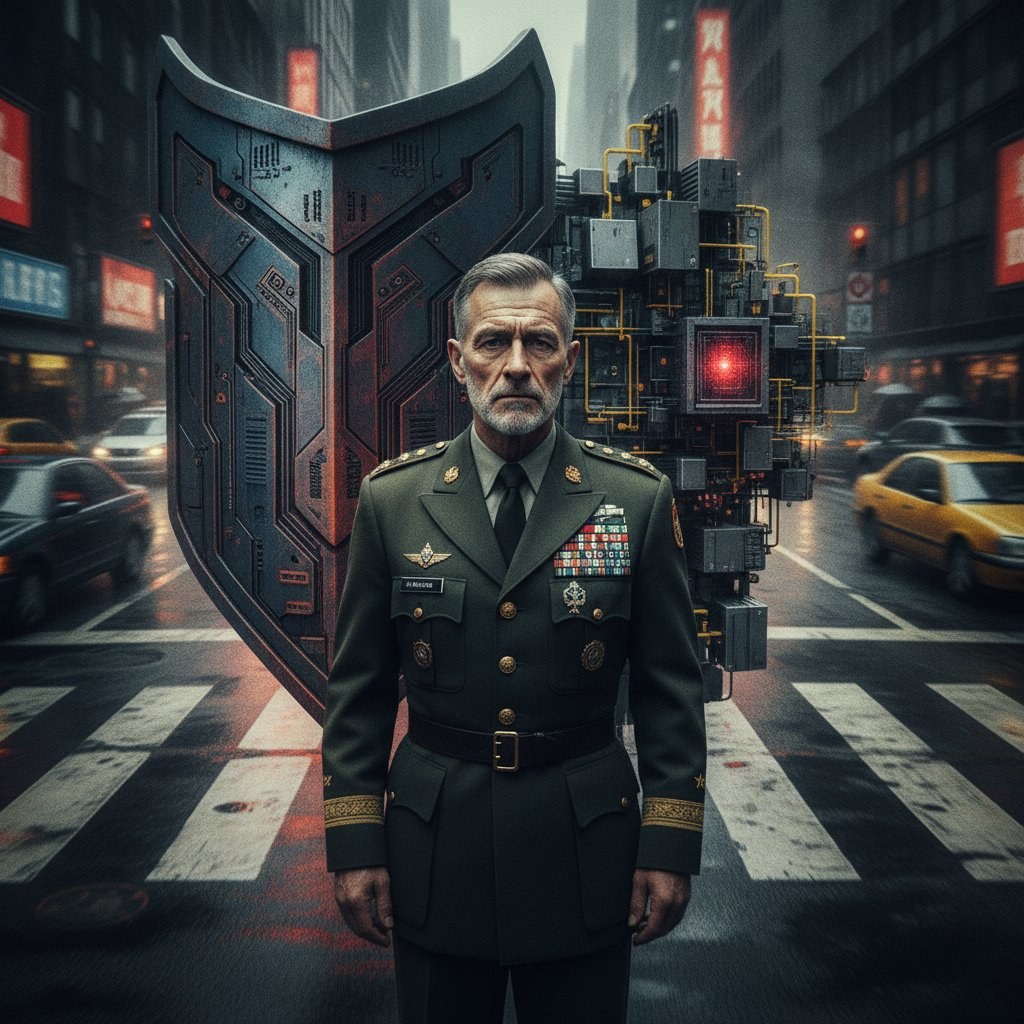
OpenAI has finally outgrown its status as an ambitious lab and officially integrated into the U.S. defense perimeter. The appointment of retired General Paul Nakasone to the Board of Directors is no mere branding exercise; it is a sharp pivot from ethical hand-wringing to the construction of a cyber fortress. Nakasone is no figurehead—he is the architect of U.S. Cyber Command and a former Director of the NSA. For a company aiming to build AGI, recruiting the man who spent decades guarding a superpower's digital frontiers is a matter of survival in an era of state-sponsored cyber warfare.
Securing the Path to AGI
Nakasone’s first order of business is joining the Safety and Security Committee. His mandate isn't to wax philosophical about robot rights, but to oversee the protection of physical infrastructure: the supercomputers and model weights that have become prime targets for hackers from Beijing and Tehran. As AI grows more sophisticated, so does the risk of it being stolen piece by piece.
“General Nakasone’s unparalleled experience in cybersecurity will contribute to OpenAI’s mission of ensuring artificial general intelligence benefits all of humanity,” stated Bret Taylor, Chair of OpenAI’s Board of Directors.
In reality, Taylor’s diplomatic phrasing masks a pragmatic calculation: guaranteeing corporate and government clients that their data won't leak to geopolitical rivals. This is a direct signal to the market that OpenAI is ready to handle the most sensitive workloads—tasks previously reserved only for vetted defense contractors.
Cybersecurity as Active Defense
Nakasone is bringing the doctrine of "active defense" to OpenAI. AI is now being positioned as a tool for real-time threat detection and mitigation, protecting everything from hospitals to the financial sector. Essentially, Sam Altman’s company is transforming into a provider of digital shields for critical infrastructure. System security is no longer a byproduct of development; it is now a prerequisite for scaling the technology.
Alignment with National Security
Nakasone’s experience leading elite cyber units in Korea, Iraq, and Afghanistan brings a military discipline to OpenAI that was conspicuously absent during its recent internal dramas. This appointment confirms a new status quo: AGI is no longer viewed as a fancy chatbot for business, but as a national security asset. Integrating an intelligence veteran of this caliber means OpenAI is de facto prioritizing U.S. national interests over its original ideals of openness.
While the organization’s charter once championed transparency and the public good, its inner circle now includes the architect of the world's most powerful surveillance system. The transformation from "Open" to "Fortified" is complete: this is now a closed defense project wrapped in a commercial interface. The path to JEDI-level government contracts and billion-dollar military budgets has never been shorter.