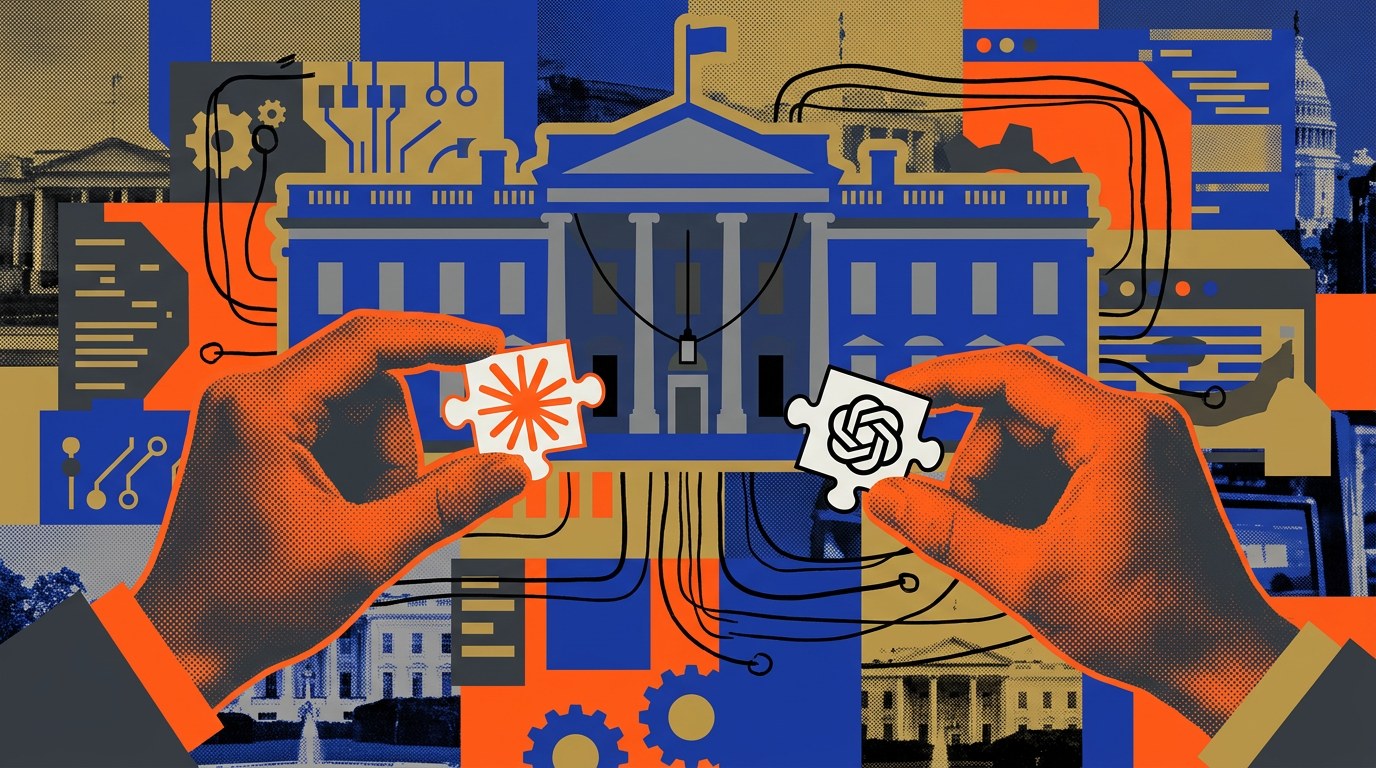
OpenAI is testing the waters at the White House, proposing a five percent equity stake in the company for the U.S. government. At a current valuation of $852 billion, this $40 billion "gift" looks less like a philanthropic gesture and more like Sam Altman’s attempt to buy an indulgence from the Trump administration. According to the Financial Times, Altman has already discussed the concept directly with the President, Commerce Secretary Howard Lutnick, and Treasury Secretary Scott Bessent. While the move is being framed to the public as "equitable distribution of AI wealth," the strategic subtext is clear: by turning the state into a shareholder, OpenAI transforms its primary overseer into its lead defender.
A National AI Cartel
This is not a solo act; it is an attempt to build a rigid industrial vertical. The plan suggests that all leading U.S. AI developers contribute 5% of their shares to a dedicated sovereign wealth fund. The Financial Times draws a comparison to the Alaska Permanent Fund, which pays dividends to residents from oil revenues. In practice, however, embedding the government into the industry’s equity structure creates an insurmountable barrier for startups. Any future regulation threatening the valuation of dominant players would now automatically hit a state asset, effectively turning Big Tech into an untouchable caste.
Implementation of this plan may require Congressional approval, as the negotiations—which have been ongoing for over a year—remain in the early conceptual stages.
Altman’s logic is simple: give voters a financial interest in OpenAI’s success to neutralize public backlash over the mass unemployment promised by automation. But for the labs themselves, the real benefit is risk insurance. If OpenAI’s financial model proves to be a loss-making venture or another bubble, having the government on the cap table makes a federal bailout almost inevitable. From our perspective, this is a classic move to become "too big to fail" before the technology has even proven its profitability.
Governance Risks and Legislative Deadlock
The timing of these leaks perfectly aligns with Trump’s infrastructure push, moving the discussion from theoretical frameworks to hard numbers. However, Altman is also playing the left flank: he has consulted with Senator Bernie Sanders, who predictably demands the state take up to 50% of every AI firm. Herein lies the trap for OpenAI: inviting the government into the boardroom is a door that only locks from the inside. Once officials become fiduciary stakeholders, product roadmaps and safety protocols become hostages to political convenience. In trying to shield himself from regulators today, Altman risks handing the keys to his servers over to Washington bureaucrats forever.