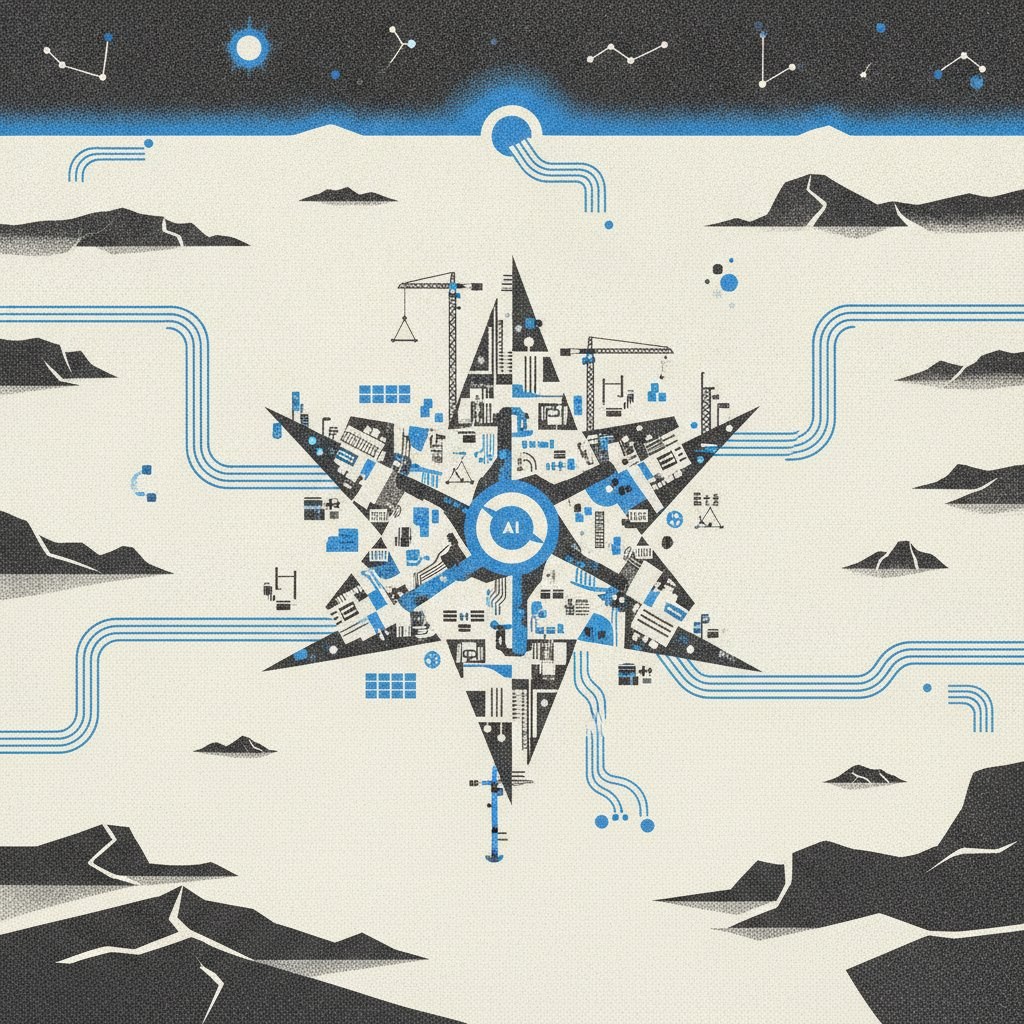
OpenAI has finally stopped pretending to be just a "software lab" and has begun its mutation into a heavy-industrial titan. The Stargate infrastructure initiative is not merely a data center expansion; it is an admission that the digital future has slammed into a brick wall of physical constraints at full speed. Sam Altman no longer wants to depend on intermediaries. The company is shifting toward direct control over the foundations of computing: land, energy, and EPC (engineering, procurement, and construction) contractors.
The Battle for Physical Resources
The bottleneck for training next-generation models like GPT-5 is no longer a shortage of datasets or brilliant minds. The problem lies in the primitive ability to plug into a power grid that is already on its last legs. OpenAI is going all-in, dealing directly with landowners, commercial real estate developers, and renewable energy providers. By attempting to control everything from general contractors to electrical equipment suppliers, Altman’s company is effectively building a parallel industrial infrastructure. The existing data center market simply cannot stomach the scale OpenAI has envisioned.
"OpenAI is excited about the scale of the challenges and the prospect of partnering with industrial giants to realize our ambitious mission," the company states, carefully masking a blatant grab for scarce resources under the guise of a "mission."
This maneuver transforms OpenAI into the primary driver of industrial demand in the United States. Establishing direct relationships with engineering firms and grid operators is an attempt to insulate the company from supply chain volatility that will soon bury less agile competitors. We are witnessing extreme vertical integration: from code to copper and concrete.
Infrastructure Monopoly and Market Shifts
This aggressive move into the real sector changes the rules of the game for everyone, from regulators to Silicon Valley. When a single entity begins to dictate energy consumption and land-use terms on a state-wide scale, a new type of infrastructure monopoly is born. Stargate is not about "faster computers"; it is about creating a closed ecosystem where transformers, cooling systems, and grid interconnection points become as much intellectual property as neural network weights.
We were promised an era of lean, efficient software that would democratize intelligence. Instead, we are getting a voracious industrial complex that demands more resources than an average European nation. OpenAI calls this the "future of intelligence," but for power engineers, it looks like an unprecedented strain on a grid the country is objectively unprepared for. While competitors polish their algorithms, Altman is cornering the market on copper and gigawatt-hours, realizing that in a world of scarcity, the winner isn't the one with the most elegant code, but the one who holds the power switch.