AI · This text was generated with artificial intelligence
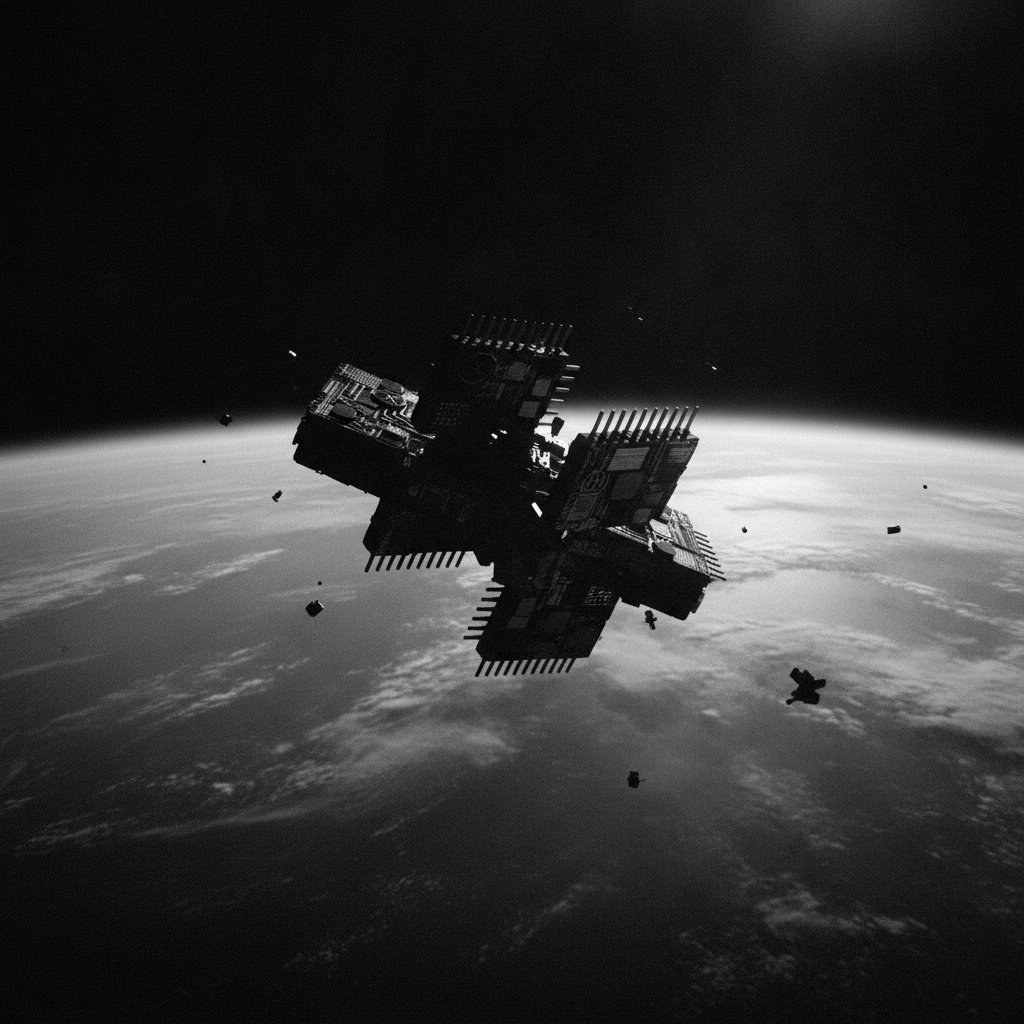
The dream of moving AI compute to Low Earth Orbit (LEO) to escape terrestrial power and cooling constraints is currently colliding with the harsh realities of physics and even harsher economics. Elon Musk may envision launching a million tons of hardware to generate 100 GW of autonomous annual power, but technical audits suggest a different outcome. An analysis by Kees van Berkel of Eindhoven University of Technology, presented at the MPSoC’26 conference, reveals that the theoretical benefits of cheap solar energy and passive radiative cooling are completely wiped out by astronomical logistics costs and networking bottlenecks.
The fundamental barrier lies in data transmission architecture. While terrestrial data centers rely on proven Clos network hierarchies, orbital constellations are forced to use mesh networks connected via inter-satellite laser links. According to van Berkel’s research, this shift critically limits bisection bandwidth—the data capacity between two halves of the network. While ground infrastructure scales horizontally, space-based compute hits a topological dead end.
Logistics barriers and network physics
Even if SpaceX successfully executes its February 2026 FCC filing to deploy a million server-satellites, the Total Cost of Ownership (TCO) problem remains unsolved.
Orbital inference might seem viable for niche applications, but training frontier models in space remains uncompetitive. Launch costs are compounded by the need for radiation-hardened electronics and managed de-orbiting systems—layers of complexity that simply do not exist on Earth.
Instead of waiting for a vacuum-sealed miracle, infrastructure leaders should focus on local compute density and sovereign inference. Orbital AI is currently a deep-tech venture bet rather than a practical solution for lowering electricity bills. As long as space logistics cost more than laying a cable to the nearest nuclear power plant, your GPUs are staying grounded.