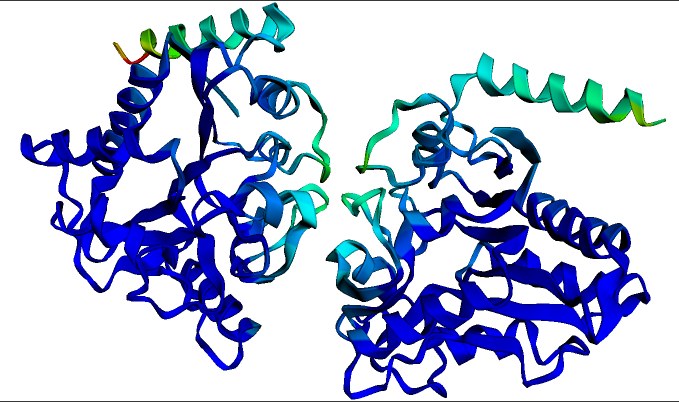
Biotech has officially moved beyond the confines of "wet" labs, evolving into a data processing discipline. Researchers are now adapting BERT and GPT architectures to decode amino acid sequences, effectively turning biology into a branch of applied linguistics. According to Matthew Carrigan, modern protein models are direct descendants of Large Language Models (LLMs), utilizing transfer learning to bypass the perennial shortage of labeled data. Just as a model trained on English literature can detect irony in a film review, protein language models leverage vast datasets to predict molecular properties with a level of precision that escapes classical methods.
Key Takeaways: From Random Search to Engineering Precision
The industry's barrier to entry has collapsed thanks to ESMFold and tools available on Hugging Face. Drug discovery now demands a high-quality software stack rather than a vast supply of chemical reagents. Fine-tuning is replacing the need to build foundational models from scratch. R&D velocity is now dictated by compute power rather than biological cycles.
The era of 2016, where models were initialized randomly and failed to grasp the context of repeating patterns, is officially over. With the advent of ESMFold and off-the-shelf tools on Hugging Face, the barrier to entry for precision drug design has plummeted. As Carrigan notes, developers can now simply use PyTorch or TensorFlow notebooks to fine-tune protein language models for specific therapeutic tasks. Infrastructure sovereignty is no longer measured by a stockpile of reagents, but by the efficiency of the software stack and the ability to perform rapid inference on complex molecular structures.
"Biological sequences are now processed using the same methods as human speech, transforming protein engineering into a transparent and scalable IT process."
For R&D executives, this represents a paradigm shift: there is no longer a need to build foundational models from the ground up. The focus has shifted to fine-tuning for niche applications, radically slashing the cost and timeline of pharmaceutical development. We are witnessing the transition from the accidental discovery of compounds to rigorous engineering calculations. The industry's pace is no longer set by the biological clock, but by computational capacity and the quality of pre-trained transformers.