Quantum computing is stuck in limbo, suspended between Richard Feynman’s 1981 flashes of genius and the grim reality of the “prototype graveyard.” While Google and IBM struggle to isolate finicky superconducting qubits in conditions more sterile than deep space, PsiQuantum is going for broke. Their strategy is to bypass the lab-toy phase entirely and skip straight to a system the size of a data center. At the core aren't magic crystals, but photons racing through a labyrinth of optical switches. This isn't just a physics experiment; it's a bet on industrial scalability that has already prompted the Pentagon and the Australian government to open their checkbooks.
The Industrialization of Light and Manufacturing Pragmatism
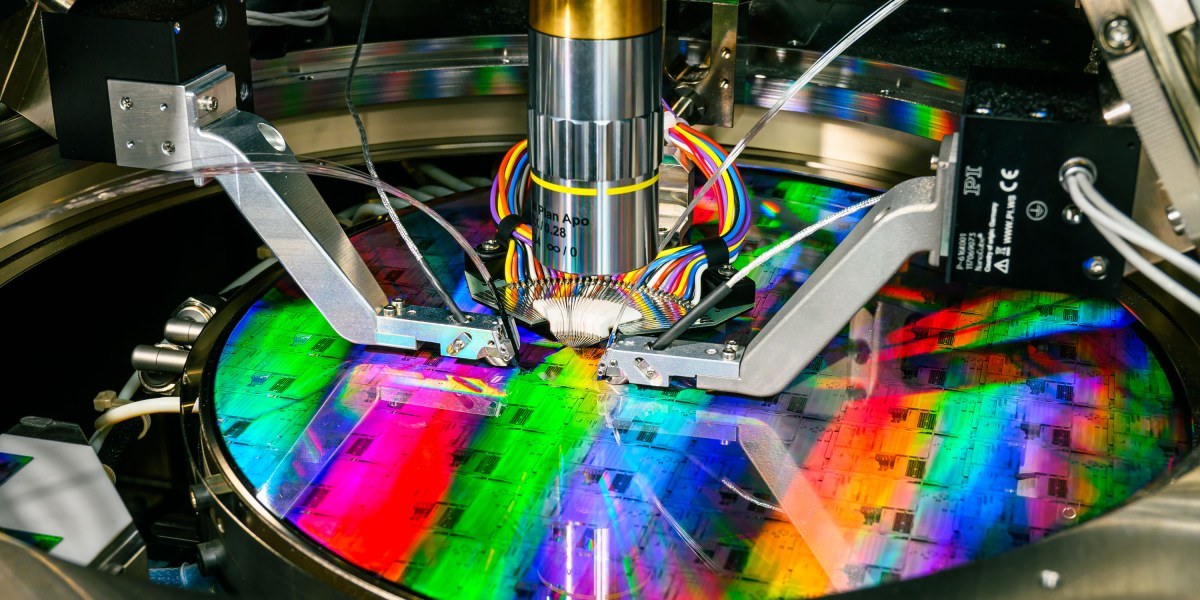
PsiQuantum’s primary edge over its peers is its rejection of “artisanal” production. Instead of building their own boutique fabrication plants, Terry Rudolph and Jeremy O’Brien’s company has integrated itself into GlobalFoundries' existing processes. The logic is simple: if you want a million qubits, you need to leverage existing semiconductor infrastructure rather than reinventing the wheel. The future machine will resemble a cold-storage warehouse more than a traditional computer: a hundred steel cabinets filled with liquid helium, housing chips that read the states of thousands of photons. Utilizing standard lithography equipment is an attempt to shatter the scaling bottleneck that has thwarted proponents of superconductors.
“We aim to reduce the simulation time for drug degradation from ten years to four minutes,” states Philipp Ernst, Vice President of Quantum Applications at PsiQuantum.
An aggressive roadmap is backed by a $1 billion funding round. Sites in Chicago and Australia are already being prepped for hardware expected to reach design capacity by 2027. The critical stake here is Fault Tolerance. By managing streams of light through optical switches, PsiQuantum is attempting to solve the error correction problem—the very barrier that separates academic papers from real-world algorithms capable of cracking modern encryption.
Geopolitics and the Moment of Truth
Nation-states have stopped viewing quantum supremacy as an academic curiosity. Today, it is a matter of national security. PsiQuantum, alongside Microsoft, has landed on the short list of companies to pass rigorous DARPA audits. The military interest is clear: the first to possess a functional quantum computer gains the keys to the world’s digital locks. However, progress in this field remains notoriously opaque. For now, we see only architectural blueprints and promises that cannot be verified until a full-scale algorithm is successfully executed.
A machine capable of changing the world will be housed in a facility that looks like a hybrid of a data center and an industrial ice cream factory.
The project is now approaching a critical threshold. Hundreds of millions in investment must either translate into working hardware or join the list of high-tech mirages. Nevertheless, the combination of GlobalFoundries’ manufacturing power, government lobbying, and massive capital elevates the photonic approach from “perpetually promising” to a leader in the commercial race. If light proves more stable than superconductors, PsiQuantum’s architectural pivot will become the new industry standard.