AI · This text was generated with artificial intelligence
Shrinking large language models to cut serving costs has historically forced an unpalatable compromise: slashed parameter counts and 4-bit weights yielded lower VRAM requirements at the expense of degraded reasoning, math, and code generation. To patch these losses, engineering pipelines rely on post-compression recovery phases, a tactic seen across open-weight models including gpt-oss, NVIDIA's Nemotron family, and Hypernova 60B.
The Flaw in Conventional Recovery Pipelines
Standard post-compression recovery recipes break down when structural pruning collides with low-bit quantization. As MultiverseComputingCAI researchers Antonio Tiene, Iker García-Ferrero, Ali Hashemi, and Bakbergen Ryskulov demonstrate in "Quantization-Aware Healing: A Practical Recipe for Recovering Compressed, 4-Bit LLMs," conventional approaches hit a hard structural ceiling. The dominant fix—quantization-aware training—injects fake-quantization operators into the forward pass and resumes fine-tuning on task losses, forcing teams to run expensive post-training phases like SFT and RLHF through noisy low-precision passes that invite numerical instability.
Quantization-aware distillation attempts to bypass this overhead by matching output logits from a frozen full-precision teacher model via Kullback–Leibler (KL) divergence. However, when an architecture undergoes structural pruning, no independently trained full-precision baseline of that pruned architecture exists. Engineering teams are left using the recovered bfloat16 checkpoint—an already degraded, distilled approximation of the original model. Distilling from this compromised teacher permanently caps the 4-bit student's accuracy at an artificially low ceiling.
Direct Distillation from Uncompressed Teachers
Quantization-Aware Healing bypasses intermediate degradation entirely. Rather than relying on the intermediate recovered checkpoint, the method distills directly from the original, uncompressed, full-precision model straight into the 4-bit student. Because KL divergence matches output probability distributions rather than internal weight topologies, teacher and student do not require matching parameter shapes or layer counts.
Under this setup, quantization ceases to be a lossy exit ramp and becomes a second supervision pass against the original teacher. The student model sidesteps hard labels entirely, absorbing richer signal distributions that the initial bfloat16 recovery phase missed while leaning on the mathematical stability of a fixed-target divergence loss.
Empirical Results and Infrastructure Impact
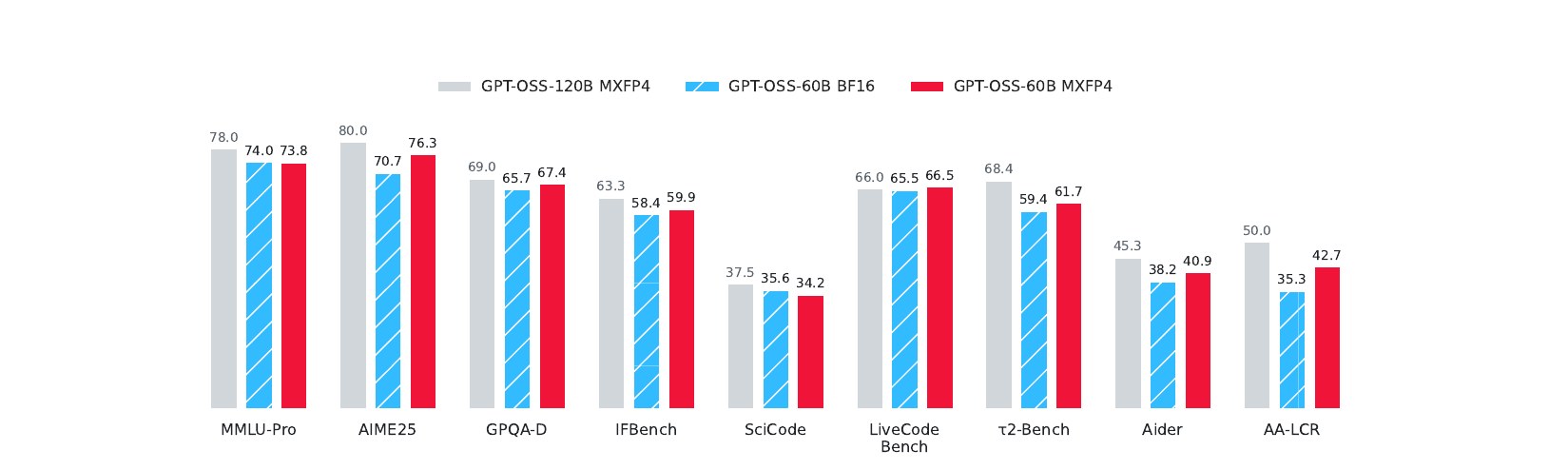
Evaluated on a GPT-OSS 120B model compressed to 60B parameters and quantized to MXFP4, the Quantization-Aware Healing pipeline yielded a 4-bit student that outperformed its own full-precision bfloat16 baseline on 7 out of 9 benchmarks. The resulting model cuts parameter counts in half and slashes baseline VRAM demands while delivering higher accuracy than the unquantized checkpoint from which it was derived.
For CTOs and ML infrastructure leaders, this inversion of the classic compression penalty rewrites the economics of on-premise and local inference. Direct uncompressed-to-quantized distillation eliminates the costly requirement of keeping oversized full-precision weights in production solely to protect reasoning capabilities, enabling dense, low-bit deployments on budget hardware without performance compromises.