The automotive industry is quietly dropping classic computer vision in favor of generative world models, a shift that exposes the structural limits of traditional software stacks. Traditional simulators for autonomous vehicles, built on rigid video game rendering engines, demand massive engineering overhead and millions in compute costs to manually model edge cases, creating a widening quality gap against real-world chaos. To bridge this gap, electric vehicle maker Rivian has acquired U.K.-based Third Dimension, absorbing its 15-person team into its autonomy and AI division led by James Philbin. Terms of the deal were not disclosed.
Founded in 2024 by Tolga Kart and Piotr Sokólski, Third Dimension previously raised $7 million in seed funding from investors including Abstract Ventures, MVP, Soma Capital, and Solari Capital. While the startup originally targeted video game development—where traditional engines struggle with the sheer economic burden of rendering real-world physics at scale—its technology converts real-world images and videos into interactive 3D simulations. For automakers, this generative approach transforms raw camera feeds into simulatable environments, drastically cutting the time and capital required to validate driver-assistance systems compared to legacy rendering pipelines.
For us, it’s about taking real scenarios, but making them simulatable
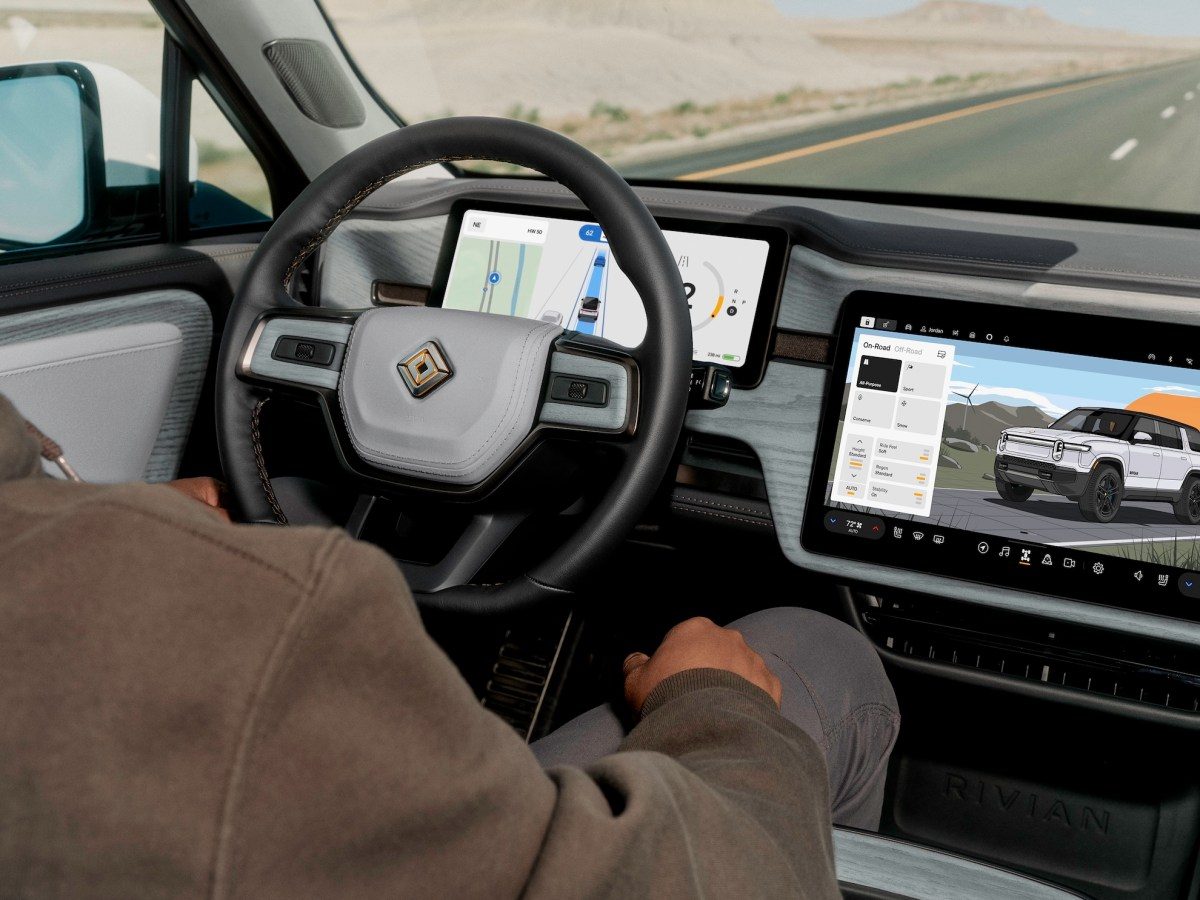
Rivian’s software roadmap depends on scaling these simulation pipelines to meet strict timelines for its commercial partnerships. The company currently deploys its Universal Hands-Free system for highway driving and plans to release an expanded version capable of handling surface streets by the end of the year, requiring ongoing driver supervision. Looking further ahead, Rivian is targeting full autonomy for the robotaxi variants of its upcoming R2 SUV, slated for commercial deployment on the Uber app in 2028. Scaling this robotaxi fleet involves severe unit economic pressures, requiring millions of validated miles without proportional growth in safety driver headcount or manual annotation costs.
The economic logic behind this acquisition is straightforward. Rivian collects more than 400,000 video sequences daily from customer fleets that have opted into external camera sharing. Processing this volume of real-world data through conventional pipelines requires immense engineering overhead and manual labeling. By integrating Third Dimension’s generative 3D modeling, Rivian converts raw fleet data directly into interactive training scenarios. This architecture signals a broader industry retreat from legacy computer vision toward generative world models, as legacy code proves too expensive and too slow to handle the long tail of edge cases on public roads.
Editorial analysis
### How the story developed
16.08.2026 — Chief Executive Dara Khosrowshahi framed the capital push as an aggregation play during the quarterly update, pointing to $2.8 billion in second-quarter free cash flow—pushing trailing twelve-month free cash flow above $10 billion for the first time; 10.09.2026 — Classified strictly as Level 2+, Autonomy+ still delegates ultimate liability to the human driver. The move directly addresses traditional simulation setups, which burn through massive engineering effort and millions of dollars in compute just to script edge cases manually. It looks like Rivian is using this acquisition to bypass the heavy engineering and compute costs tied to legacy simulation software.
Sources: our stories of 16.08.2026, 10.09.2026