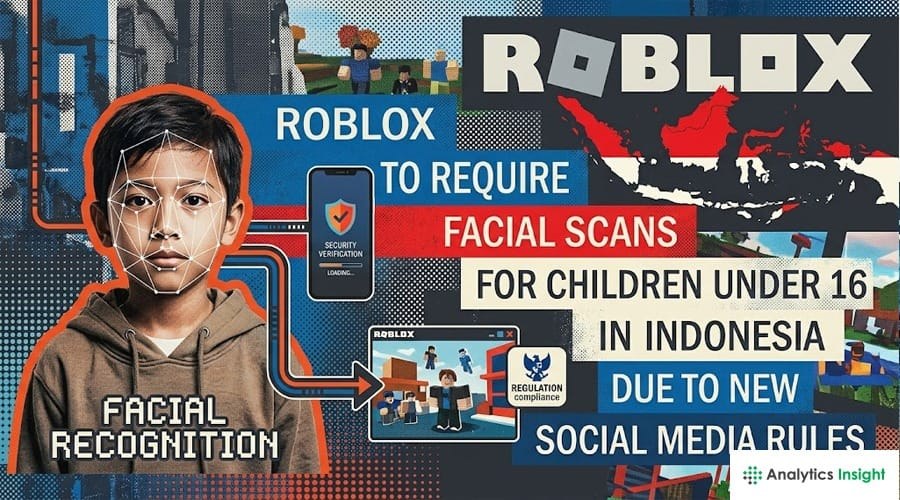
Roblox is introducing mandatory biometric verification for users under 16 in Indonesia, replacing traditional text-based forms with compulsory face scans. According to reports from Antara and Analytics Insight, this move is not a voluntary safety upgrade but a direct response to tightening Indonesian government policies. To maintain market access, the platform is deploying AI-powered facial analysis as the sole method for age verification.
While Roblox’s official stance emphasizes child safety and protection from inappropriate adult contact, the reality is more stark: metaverses are becoming testing grounds for total digital surveillance. This shift from passive filtering to active biometric harvesting poses a significant ethical dilemma. As expert Sankha Ghosh points out, facial data is not like a password that can be reset after a breach. Platforms are effectively sacrificing user privacy at the altar of regulatory compliance.
This move carries a massive business risk. Friction in the onboarding process will inevitably stall user acquisition growth. While parents might welcome the added security, teenagers are likely to migrate toward competitors with lower entry barriers—platforms where they don't have to scan their faces just to play for an hour.
The Indonesian case serves as a global blueprint for state regulation of digital ecosystems. In the absence of unified international standards, local authorities are dictating terms, forcing Big Tech to implement invasive technologies simply to survive. The era of the "honor system" for birth dates is ending. For businesses, this is a clear signal: biometrics are no longer an optional security feature but a mandatory tax for operating in fast-growing, highly regulated economies.
Roblox is betting that losing a seamless user experience will be offset by ironclad guarantees to regulators. For digital platform executives, this confirms a new status quo: AI scanners are no longer an innovation but a defensive strategy to protect their license to operate. Expect face scanning to become the industry standard for any platform targeting Gen Z and Gen Alpha, regardless of their willingness to share personal data.