AI · This text was generated with artificial intelligence
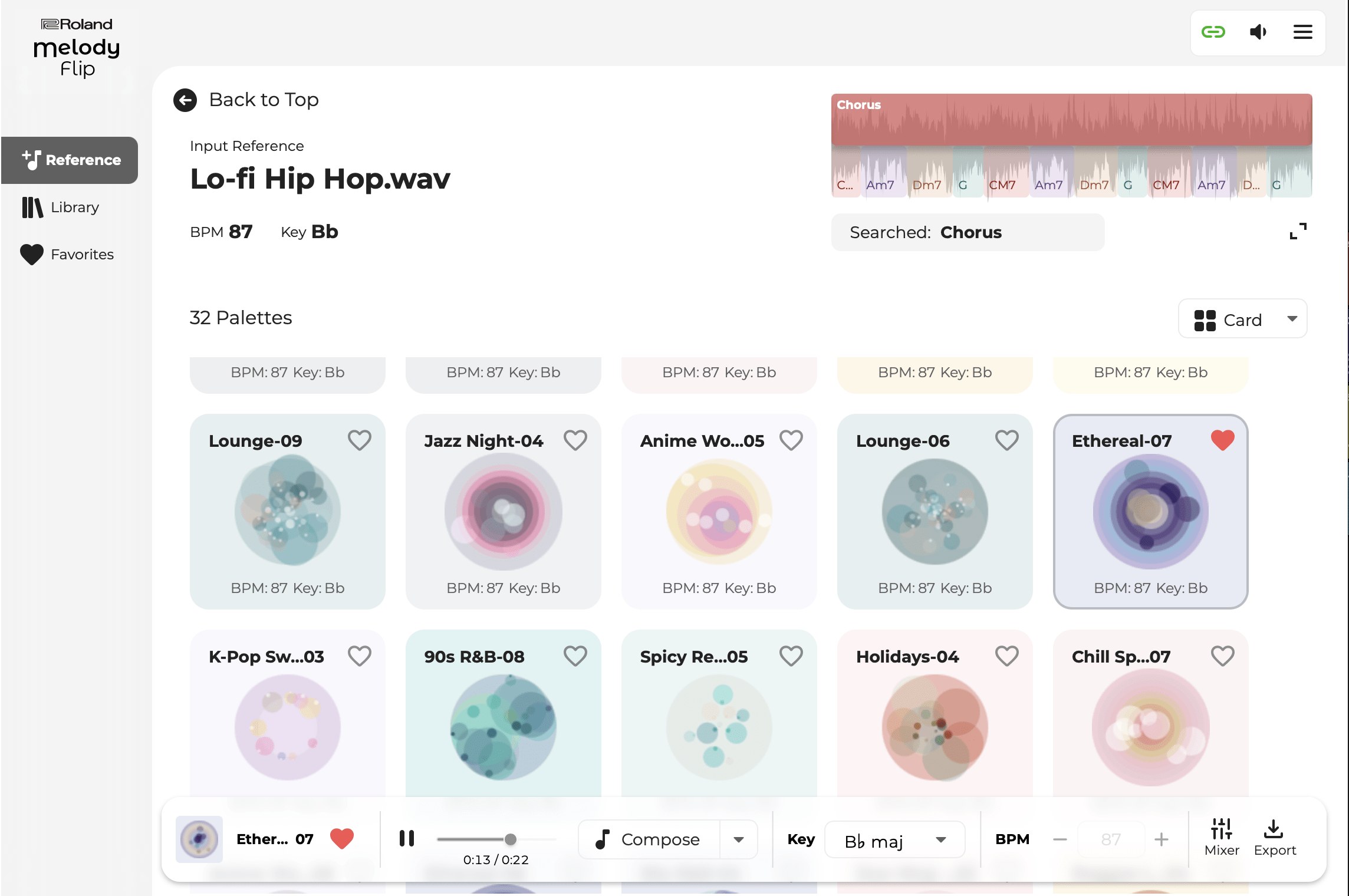
Roland has stepped into generative AI on distinctly conservative terms. With the launch of its Melody Flip plug-in for digital audio workstations, the legacy gear maker is actively avoiding the one-click consumer parlor tricks popularized by Suno and Udio. Instead of churning out fully rendered, soup-to-nuts pop tracks from a text prompt, Melody Flip functions strictly as an interactive studio copilot, relying on 250 genre palettes to spit out isolated melody sketches, basslines, and chord patterns.
The mechanical design tells the strategic story: prompt boxes are nowhere to be found. Producers dial in specific parameters—genre profile, note density, BPM, and musical key—and receive raw musical loops rendered in basic general MIDI tones that sound more like vintage '90s video game audio than finished records. The entire point is workflow integration: producers export clean MIDI data straight into their DAW timeline and route it through their own high-end software instruments and synthesis engines.
For Roland, this architecture represents a calculated defensive moat. While venture-backed platforms burn through training data to automate music creation wholesale, traditional hardware and audio software vendors face an obvious cannibalization risk. By framing generative modeling as an ideation assist for working professionals rather than a push-button replacement for musicians, Roland protects its core pro-audio ecosystem while commercializing AI within established studio pipelines.