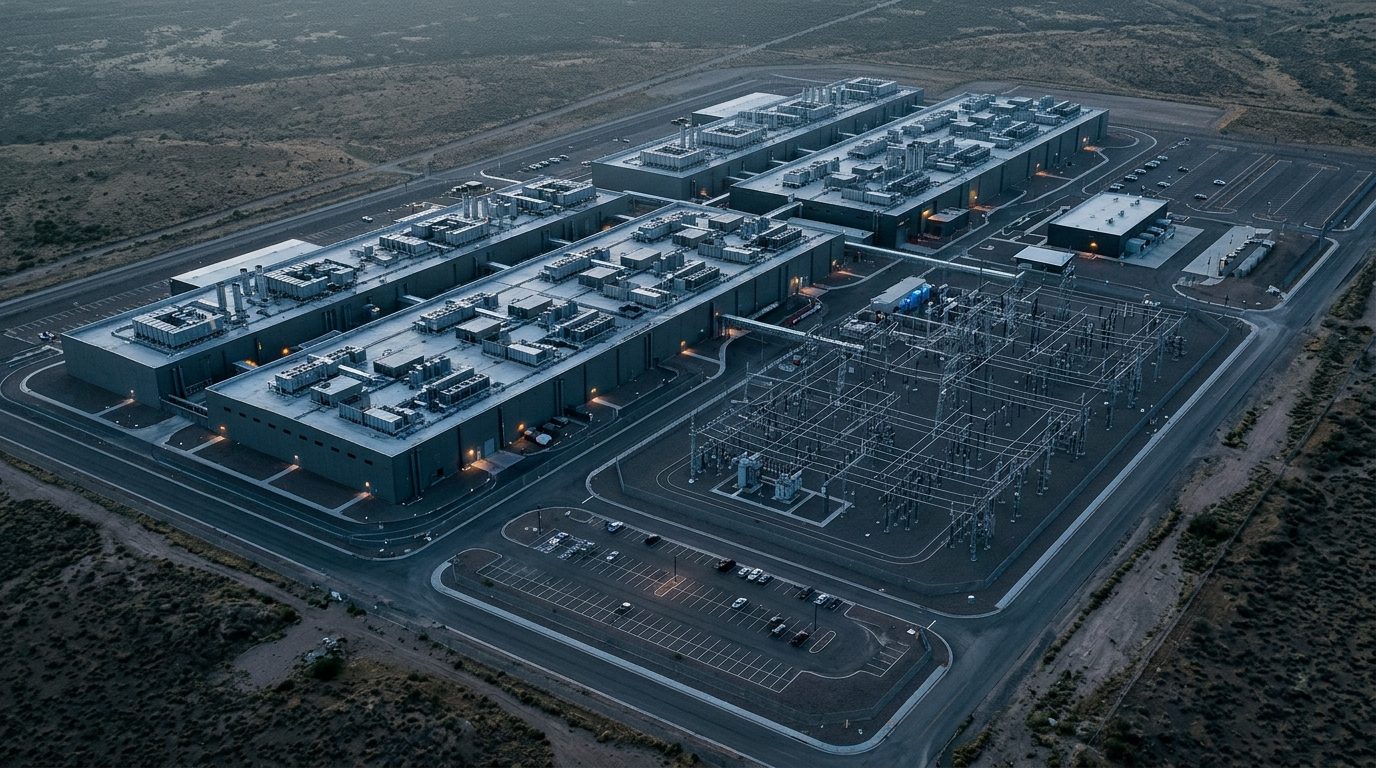
Four Tesla V100 SXM2 16GB cards deliver a combined 64 GB of video memory directly inside an enterprise server rack. Engineers operate a dense Qwen3.8-27B model with a 262,000-token context window in production using this hardware. However, the official vLLM engine refuses to run a 4-bit model on such equipment. The reason is straightforward: the V100 relies on the Volta architecture with a compute capability of 7.0, also known as SM70. The stock software stack demands modern chips, throws an error citing a minimum requirement of capability 75, and halts startup. Sourcing new accelerators locally presents severe logistical and financial friction, forcing the business to sweat its existing compute assets to exhaustion.
Legacy Volta graphics chips are forced back into service via third-party vLLM forks, bypassing strict vendor hardware restrictions. To solve the problem, the team deployed 1Cat-vLLM, an Apache-2.0-licensed vLLM fork optimized for SM70. At the physical level, Volta chips completely lack native hardware support for the bfloat16 numerical format used by most modern neural networks, lack the FP8 format for weights and context caches, and contain no standard 4-bit execution units in official software. The alternative stack bridges these gaps with proprietary workarounds.
Engineering workarounds versus software locks
The zubr model within the ZuBrIQ service is the enterprise infrastructure's sole model whose inference queries do not leave the local perimeter. Documents, prompts, and responses remain strictly confined within the circuit. The architecture builds on the cyankiwi/Qwen3.8-27B-AWQ-INT4 model—a dense 27-billion-parameter neural network featuring hybrid attention that combines linear and full attention in a 3:1 ratio, alongside multimodal capabilities. Under 4-bit INT4 quantization, model weights occupy roughly 21 GB, distributing at approximately 5.3 GB per accelerator across a four-way tensor parallelism setup.
The technical assembly runs on 1Cat-vLLM version 1.2.1 powered by Python 3.12 and system driver 580. Containerization utilizes LXC on the Proxmox platform with direct passthrough of the four compute devices, while the engine itself executes natively via a systemd service without Docker overhead.
The fork integrates 4-bit execution kernels for the Volta architecture—Marlin and TurboMind—alongside the FLASH_ATTN_V100 attention backend and CUDA Graph support.
Without manual metadata patching, the system refuses to operate during CLI utility execution. Quantization uses the compressed-tensors W4A16 format. On SM70 dies, execution proceeds through TurboMind kernels, but the default system flag remains disabled, triggering capability 75 demands from the environment. Only the forced activation of the VLLM_SM70_COMPRESSED_TENSORS_TURBOMIND=1 environment variable and explicit specification of float16 instead of the unavailable bfloat16 allow initialization to complete. Meanwhile, a cold start featuring full compilation and CUDA graph capture requires 4 to 5 minutes.
Hidden leaks and context memory budgets
How does memory allocate itself when stock software fails to accurately assess the hardware platform?
The fork's built-in loader for the SM70 architecture reports weight size as effectively zero, preventing the engine from subtracting weights from the available budget for key-value caches.
A 262,144-token context window requires approximately 4.4 GiB, prompting engineers to allocate 4.6 GB for the context cache, yielding a capacity of roughly 268,000 tokens with a minor safety margin.
Engineers had to abandon automated management in favor of fixing the buffer size via an explicit byte parameter. The infrastructure previously underwent adjustments: until September, a Qwen3-VL-4B computer vision model operated alongside it.
What is the true cost of maintaining software workarounds on aging hardware versus renting modern accelerators? The exact answer depends on the hourly rates of qualified specialists, as continuous manual fork monitoring, script modifications, and memory leak debugging demand constant engineering expenditures. Avoiding capital outlays for scarce accelerators allows the enterprise to sweat existing hardware without direct purchasing costs, yet introduces operational failure risks stemming from the fragility of software patches. Long-term commercial operation of vendor-unsupported architectures remains a compromise between strict regulatory frameworks and escalating operational overhead required to maintain a non-standard stack.
What it means
Complete data localization comes at the cost of manual software workarounds when deploying Qwen3.8-27B across four Tesla V100 accelerators. The official vLLM framework refuses to start on Volta chips with compute capability SM70, forcing engineers to run production on the third-party 1Cat-vLLM fork using TurboMind kernels. Making the setup work requires manually swapping data types to float16 and hardcoding memory buffer limits in bytes. Relying on legacy hardware forces engineers into continuous maintenance of custom workarounds just to keep modern models alive.