AI · This text was generated with artificial intelligence
Robots on city streets are no longer a novelty, but place them in a standard kitchen or a factory with an unconventional layout, and that "smart" hardware quickly turns into a paperweight. The primary bottleneck is a catastrophic deficit of high-quality training data. Attempting to teach a machine every nuance of reality by physically moving it from one location to another is economic suicide and a massive time sink. As Russ Tedrake, Toyota Professor at MIT and a lead investigator at CSAIL, notes, even with advanced physics engines, the industry is stalling: we simply cannot populate simulations fast enough with the chaos and "grime" that make up the real world.
SceneSmith Architecture: Three Agents Against the Data Drought
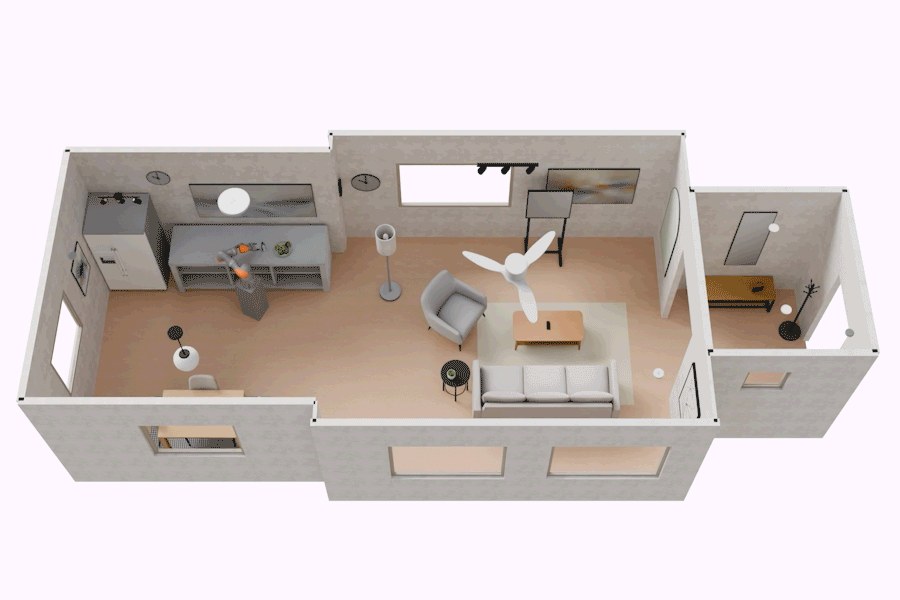
To break this cycle, a team from MIT CSAIL and the Toyota Research Institute (TRI) has introduced SceneSmith—a system where AI agents act as architects for 3D environments. Instead of manually placing every chair in a virtual hotel, engineers delegate the task to a trio of agents powered by modern Vision-Language Models (VLMs). The process operates as a closed loop: a designer agent drafts scene elements, a critic agent tears the layout’s realism to shreds, and an orchestrator moderates the debate until the result is ready to be exported into a physics simulator without human intervention.
"The system designs 3D scenes just as a human designer would," explains MIT graduate student Nicholas Pfaff. The secret lies in tapping into the vast knowledge embedded within VLMs: the model improvises object arrangements based on real-world logic it was never specifically taught.
From Manual Data Collection to Synthetic Experience Factories
During testing, MIT generated over 1,300 detailed scenes ranging from tire-cluttered garages to busy restaurants. For robotics, this represents a shift from artisanal training set production to a full-scale factory of synthetic experience. This approach effectively bridges the "sim-to-real" gap: the diversity of virtual worlds is so vast that when the software is transferred to hardware, the robot doesn't freeze at the sight of an unfamiliar workbench.
Technical audits still suggest a degree of skepticism: physical interaction accuracy remains limited by the underlying engine's capabilities. AI agents are prone to "hallucinations" in floor plans if left unmonitored. The paradigm shift is clear: primary costs in robotics are moving from hardware manufacturing to the orchestration of high-fidelity simulations.
The race for a general-purpose robot won't be won by whoever builds the best manipulators, but by whoever creates the agents capable of simulating the infinite variability of reality in seconds.