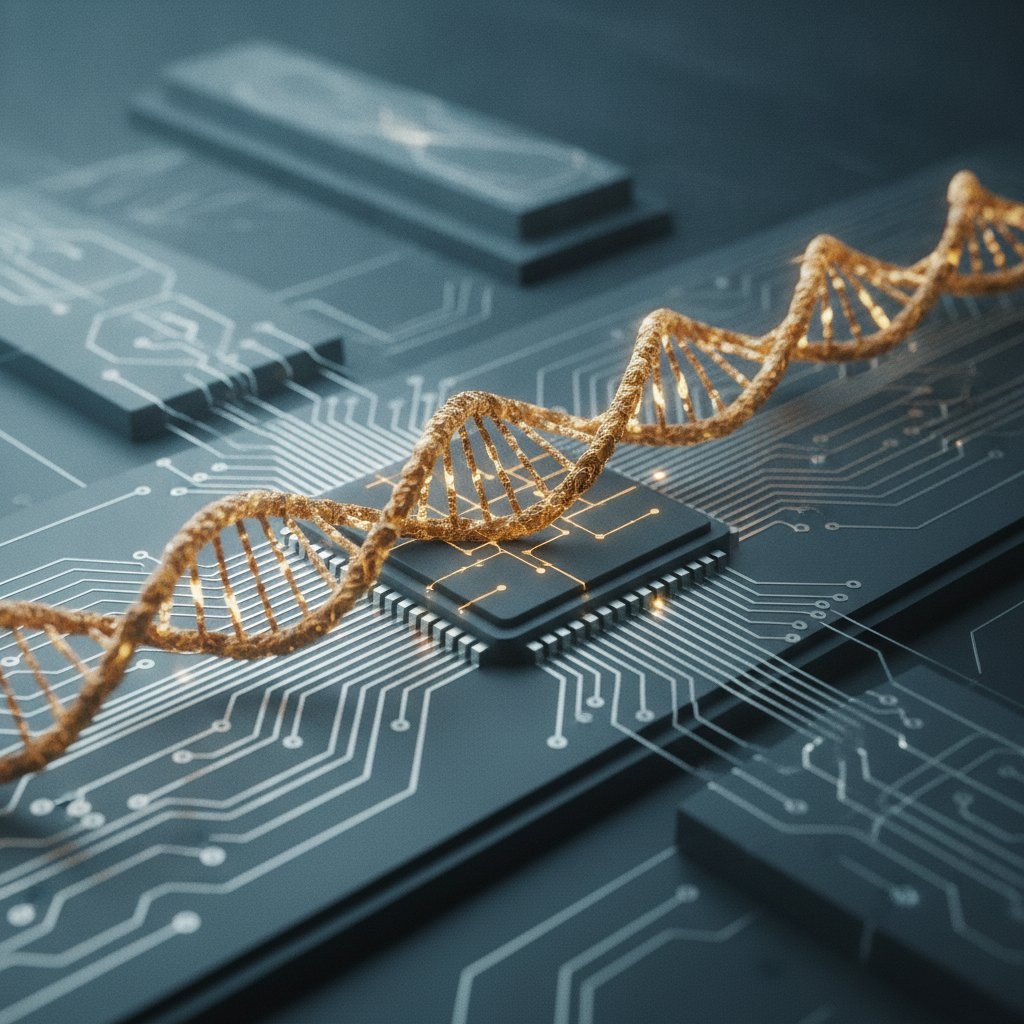
The era of brewing genetic code in toxic chemical vats is nearing its expiration date. Researchers at Harvard, collaborating with the Broad Institute and DNA Script, have unveiled a method that swaps hazardous reagents for silicon chips and precise electrical currents. This isn't just an incremental update to lab equipment; it is a fundamental shift toward enzymatic synthesis that mirrors the architecture of modern computing. By repurposing electrodes originally designed for neural recording, the team managed to write 64 different DNA sequences simultaneously. While 39 nucleotides in length might seem modest, the proof of concept is clear: biology is being refactored into a programmable hardware stack.
Funding from IARPA and Samsung Research underscores the strategic gravity of this transition. By using electricity to trigger water-based enzymes directly on a semiconductor surface, the researchers have effectively decapitated the complex logistics of traditional chemical manufacturing. We are looking at the blueprint for localized 'bio-printers' that bypass the supply chain bottlenecks currently strangling the industry. In a demonstration of this digital-to-biological bridge, the team even encoded text messages into DNA strands, proving that the move from bits to bases is becoming a direct engineering problem rather than a chemistry experiment.
For the AI sector, this technology provides the missing high-speed link between protein design and physical reality. As models become more adept at dreaming up novel therapeutics and high-density storage architectures, the bottleneck remains the 'slow' physical world. This enzymatic approach on silicon promises to bridge that gap, turning DNA synthesis into a low-friction infrastructure service. The immediate hurdle is extending the strand length, but once the chemistry is refined, the marriage of silicon and synthetic biology will likely render traditional labs as obsolete as the punch card.