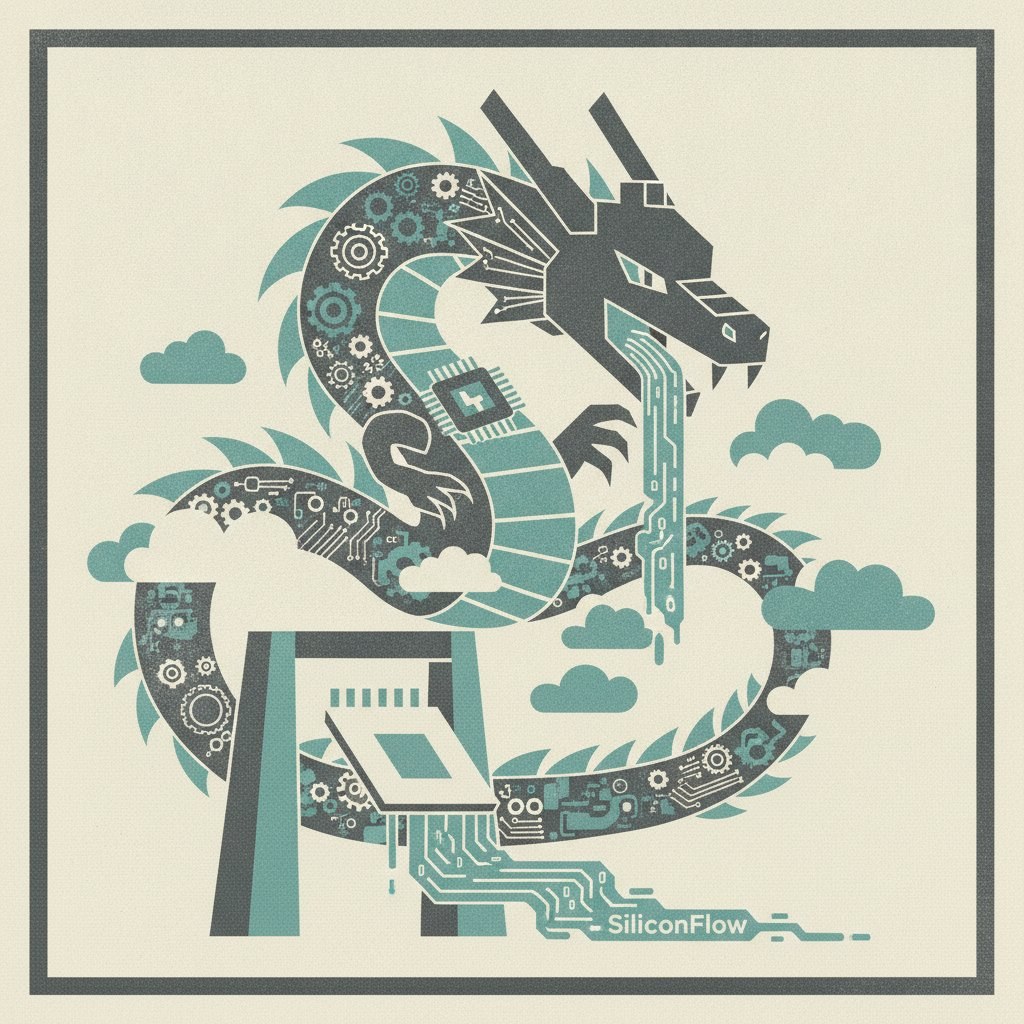
China's AI market isn't built on flashy benchmarks, but on a unique blend of cultural ethics and ironclad logistics. Here, the founder of SiliconFlow might personally meet a client at the airport and carry their bags to a taxi—in this environment, major deals aren't sealed over Zoom, but during dinner in Shanghai or Beijing. As GPTunneL co-founder Kliment Vikulov notes, "excellence meets excellence": while Silicon Valley builds digital fences, Chinese players are laying the foundation upon which, ironically, their American competitors stand.
To translate from corporate-speak to business reality: industry leaders like OpenAI, Anthropic, and Meta procure the very data used to train their models from SiliconFlow. We are talking about complex instruction datasets and manual Reinforcement Learning from Human Feedback (RLHF), without which Western "intelligence" quickly degrades. China has turned data preparation into an industrial assembly line operating with clockwork precision.
Vertical Integration vs. Cloud Illusions
The mechanics of Beijing’s superiority lie in its total control of the value chain. SiliconFlow manages the data layer and its own server farms simultaneously, providing the market with unified access to dozens of models. Meanwhile, ByteDance (the owner of TikTok and Doubao) is aggressively price-cutting, crashing the cost of generation and turning the market into a race for survival. This is no longer about copying Western tech; it is the large-scale exploitation of proprietary infrastructure capable of supporting over 200 neural networks within a single ecosystem.
"The global AI market is much tighter than it seems: leaders from the East and West know each other personally, and Chinese suppliers are deeply integrated into the value chains of Western neural networks," emphasizes Kliment Vikulov.
The pragmatism of Chinese giants is reflected in their mobility: SiliconFlow’s founder can cover Beijing, Shanghai, and San Francisco in a single week. Value has definitively shifted from simple API access toward turnkey products deployed on proprietary capacities under full control. This poses a direct threat to OpenAI's monopoly, backed not by marketing hype, but by operational efficiency and low-cost labeling labor.
Advice for those tracking OPEX: have your CTO migrate the inference of non-critical tasks to Chinese gateways. The difference in token costs compared to Western counterparts might be your best financial argument of the year.
Scale your data processing using industrial-grade Chinese pipelines. Reduce costs by leveraging ByteDance’s aggressive infrastructure subsidies. Diversify your API provider stack to hedge against Western price monopolies.