AI · This text was generated with artificial intelligence
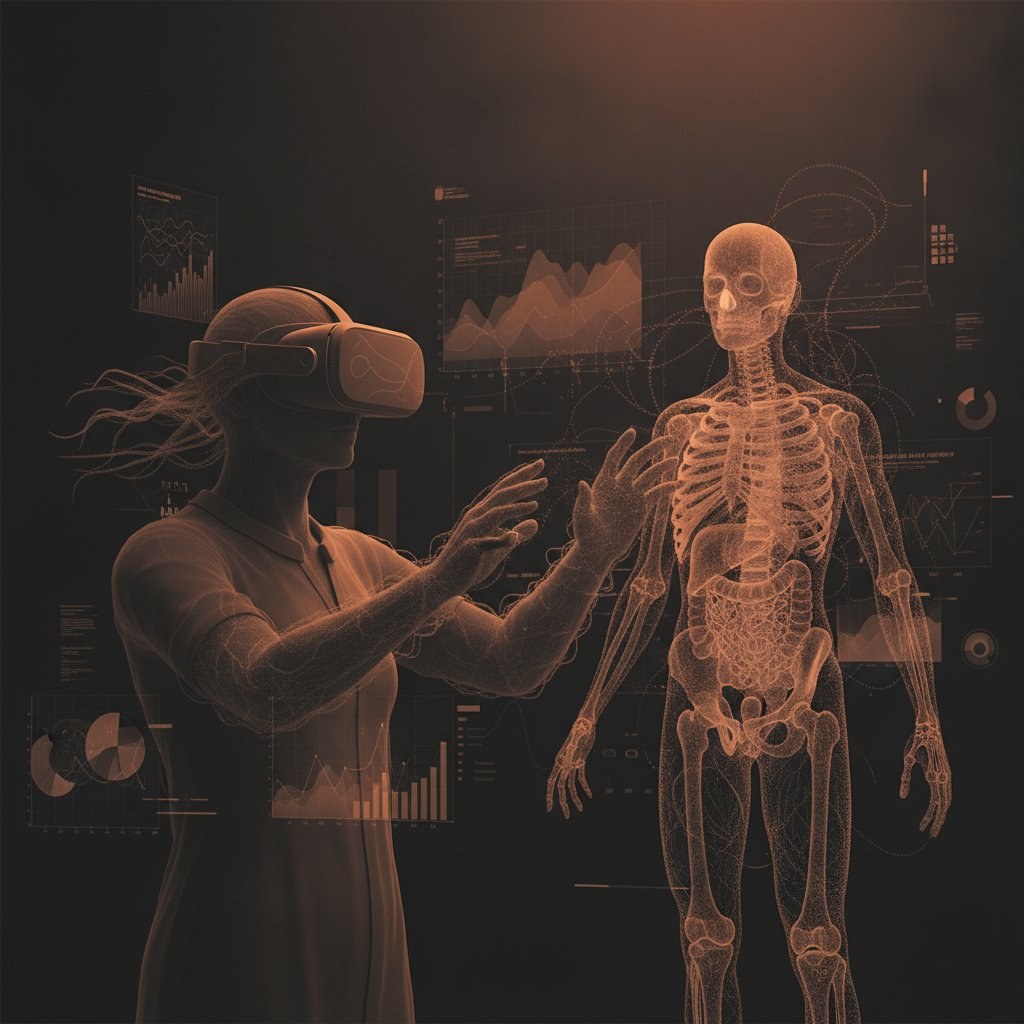
SimX, the American company whose VR platforms have effectively monopolized medical education in the US, has decided to spare students the questionable pleasure of role-playing as writhing patients or hysterical relatives. A new project to implement autonomous AI agents takes over all role-playing duties, transforming chaotic student performances into a streamlined, scalable business process. Instructors no longer need to grade the acting chops of future surgeons—the algorithm drives the scenario, logs mistakes, and delivers an impartial verdict.
The Industrialization of Medical Practice
We are essentially witnessing the systematic replacement of the human factor in training with a deterministic model. For universities, the benefit is clear: time savings and the ability to turn degree production into an assembly line. However, initial tests have exposed a fundamental flaw in the current stage of technological development: "synthetic" patients suffer from excessive rigidity. While a living person can adapt to a non-standard remark, the SimX model stubbornly sticks to its script, following a strictly defined path.
In situations requiring subtle psychological calibration, the AI resembles a streetcar that cannot veer off its tracks.
Protocol Over Empathy
Yet in field conditions—such as training paramedics for emergency situations—this flaw has unexpectedly become an advantage. In high-stress scenarios, digital "relentlessness" forces interns to act faster and more decisively, without being distracted by the personality quirks of a virtual victim. There is no room for empathy here—only protocol and reaction speed.
AI agents eliminate the need for student role-playing during simulations. The system provides objective metrics, removing instructor bias from evaluation. Rigidity in AI behavior benefits high-intensity emergency training but fails in nuanced clinical communication.
SimX developers promise that virtual assistants will free up resources from organizational routine, allowing more time for actual learning. In reality, the industry has gained an efficient tool for automated rote memorization. While technology still falters before the complexity of human reactions, the "scalable future" of medicine looks like a conveyor belt producing practitioners who work flawlessly within an algorithm but are lost outside of it. This isn't a revolution in empathy; it is its final algorithmization.