A capital allocation of USD 1.05 billion over five years marks SK Hynix's latest initiative to reinforce local chip suppliers and safeguard its hardware pipeline for the growing AI market. South Korean chipmaker SK Hynix has plans to spend 1.4 trillion won across this five-year horizon. The manufacturer aims to assist smaller businesses in developing improved materials, parts, and equipment necessary to maintain advanced semiconductor yields.
Controlling the hardware stack for high-bandwidth memory requires operational discipline not only at internal fabrication facilities but across peripheral vendors. The thesis underpinning this program is clear: financial support for domestic component makers is an operational necessity to eliminate bottleneck risks in high-performance memory production. At stake is whether smaller specialist partners can successfully close technical vulnerabilities or remain unable to scale even with substantial corporate capital.
The Capital Structure Behind Trinity Fab
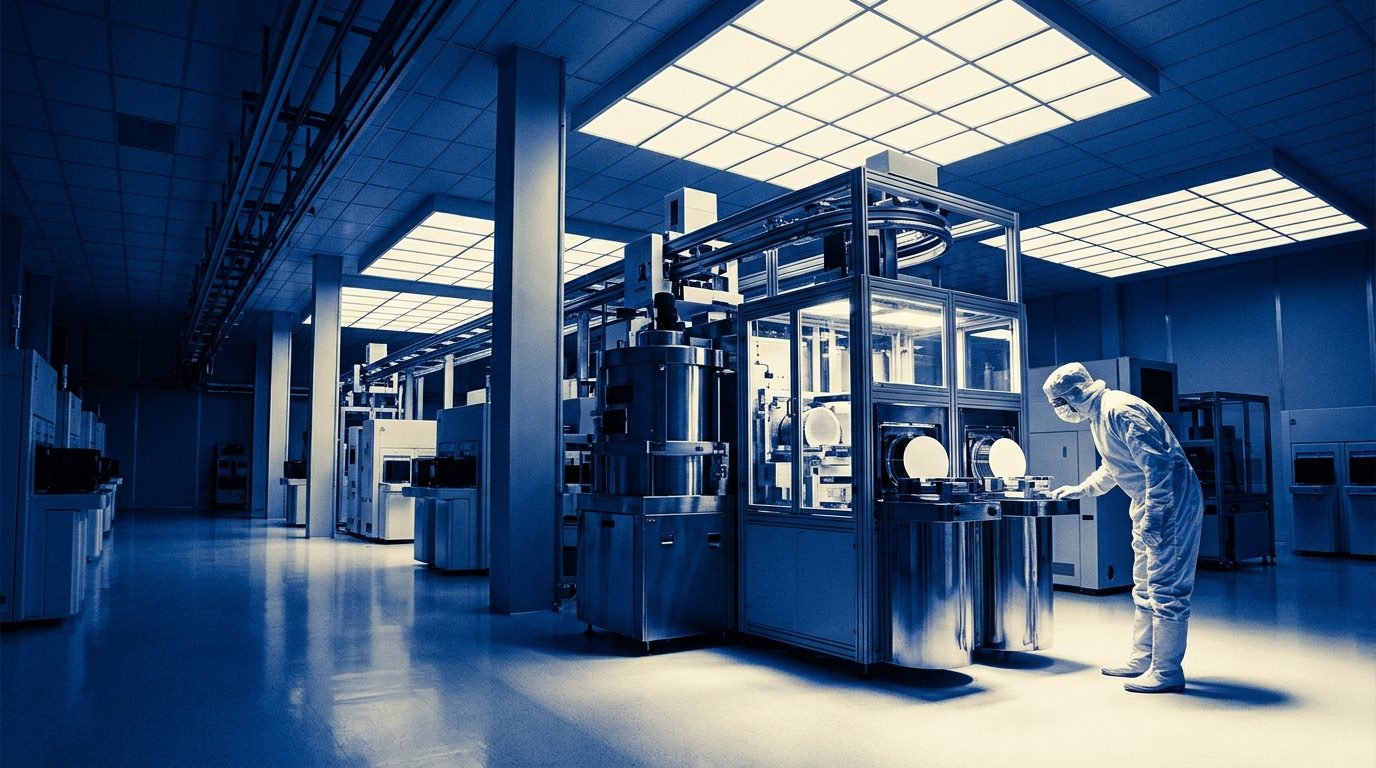
To bridge the gap between initial design and mass fabrication, SK Hynix reportedly plans to collaborate with the government to build a specialized testing center named Trinity Fab at its Yongin chip complex. Expected to open in May 2027, the facility requires an aggregate commitment of 874.6 billion won. SK Hynix will contribute 443.2 billion won to the project, while the central and local governments will provide the rest of the capital.
The facility is designed for local chipmakers to test the product before they start production on a massive scale.
Testing hardware repeatedly to fix defects remains essential because products that function in laboratory conditions regularly encounter severe failure rates during large-scale manufacturing. Smaller businesses often lack the capital reserves required to purchase testing tools independently, leaving viable component designs stranded before volume manufacturing.
To prevent suppliers from running out of capital during validation, SK Hynix has structured a broader financial mechanism. The company plans to offer low-interest loans, research funds, technical support, and financing worth 2 trillion won. These financial instruments aim to assist suppliers in advancing laboratory concepts directly into viable commercial production, mitigating yield risks and granting access to testing tools they could not otherwise fund independently.
The Production Gap Between Lab and Fab
New chip technologies demand immense capital and prolonged validation cycles, creating structural resistance for early-stage ventures. Yet for domestic component producers within the supply chain, capital alone does not bypass physical qualification barriers.
Smaller enterprises frequently struggle to manage the expenses of iterative hardware stress-testing. SK Hynix promises that Trinity Fab will eliminate this impediment by providing subsidized infrastructure before volume manufacturing begins. However, whether subsidizing state-backed fabrication capacity will translate into production-ready materials—or merely absorb billions in equipment outlays while smaller suppliers struggle with yield metrics—remains unresolved until the facility begins processing test runs in 2027.
Why it matters
A targeted commitment of 1.4 trillion won exposes the sharpest bottleneck in artificial intelligence hardware: memory giants are held hostage by the fragility of small component suppliers. Because defect rates during mass production can instantly wipe out HBM yields, smaller vendors cannot independently afford the expensive test gear needed to escape the prototype trap. To protect its chip output, SK Hynix is subsidizing partner development outright and sharing the cost of the specialized Trinity Fab testing facility with the government. Of the 874.6 billion won budgeted for Trinity Fab, central and local authorities are covering over half the bill to bridge that testing gap.