AI · This text was generated with artificial intelligence
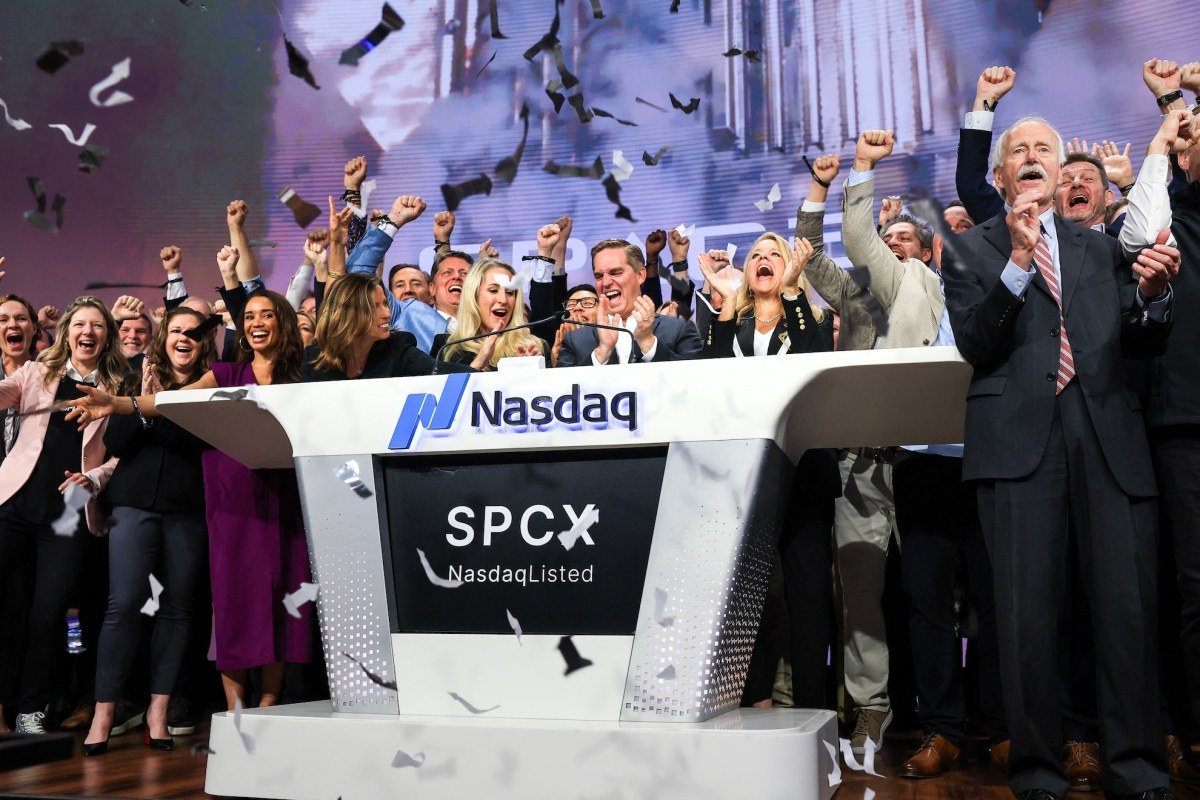
SpaceX has officially entered the public markets as a leviathan valued at nearly $2.3 trillion. The listing at $135 per share turned into an explosive rally: by the first day's close, the stock was trading at $160.95, a 19% gain. While headlines scream about Elon Musk becoming the world's first official trillionaire, the reality is more pragmatic and calculated—we are witnessing a masterclass in squeezing institutional capital. With a free float of only 4%, the midday surge to $176 was inevitable given the fourfold oversubscription reported by Bloomberg. Musk didn't just take the company public; he backed funds into a corner. Aggressive lobbying for a Nasdaq 100 inclusion within days is forcing fund managers to snap up scarce shares at any price to meet index tracking requirements.
A Liquidity Engine for AI Ambitions
This IPO represents the largest "exit" in venture capital history. According to Bloomberg, Founders Fund turned its $600 million investment into a stake worth $50 billion. The holdings of Sequoia and Andreessen Horowitz are now valued at $20 billion and $10 billion, respectively. For Musk personally, reaching trillionaire status—cemented at the $150 per share mark—provides an unprecedented personal war chest. In our view, this liquidity will serve as fuel for xAI. Billions from the sale or pledging of SpaceX stock will flow directly into H100 procurement and talent acquisition, allowing Musk to bypass the demands of traditional VCs in the race for Artificial General Intelligence (AGI).
The stock surge was no surprise: with a fourfold oversubscription, institutional players were forced to chase positions in the open market, driving prices higher.
The scale of wealth creation is staggering. Per The New York Times, 4,400 current and former SpaceX employees became overnight millionaires. Meanwhile, Robinhood is reporting record traffic as retail investors scramble for the crumbs of that 4% free float.
The Foundation for Edge AI and Market Maneuvers
Behind the market noise lies a strategic calculation. Controlling Starlink gives Musk something Google and Meta lack: ownership of global data transmission infrastructure. This provides the bedrock for Edge AI and autonomous agents capable of operating anywhere on the planet. However, the sustainability of a $2.3 trillion valuation remains questionable. Artificial scarcity has turned price discovery into a derivative of index fund demand rather than actual financial performance.
This creates a dangerous concentration of risk. If faith in the "Musk ecosystem" wavers, the current 4% leverage could work in reverse. While 96% of shares remain locked with insiders, the price looks rock-solid. But any mass unlock will turn this premium bubble into a harsh collision with reality, where space-age ambitions must finally be justified by terrestrial profits.