Streaming platforms have spent the past few years balancing the rapid proliferation of synthetic media against the core economics of catalog licensing. As generative audio tools lowered production barriers to near zero, distribution networks faced an influx of mass-produced synthetic tracks that threatened to dilute listener retention. Spotify has now drawn a hard operational line between human performers and artificial identities across its primary distribution surfaces.
The Architecture of Identity Moderation
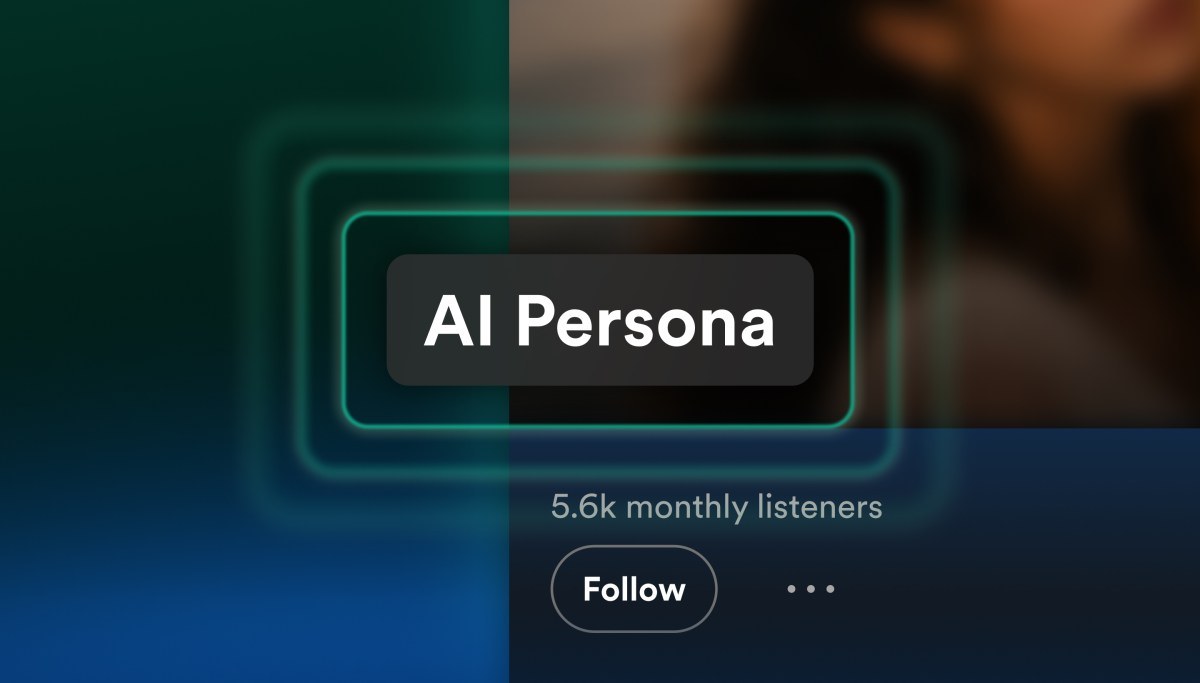
Spotify announced that it will begin tagging synthetic artists with “AI Persona” profile badges and excluding their music from editorial and algorithmic recommendations. Beginning in September 2026, public badges are scheduled to appear platform-wide. Spotify is not relying solely on voluntary declarations; it will review artist profiles directly to identify names and imagery that represent photorealistic AI-generated identities, beginning with accounts that meet predefined audience thresholds.
Once marked, the badge will appear across the artist profile banner, the About section, Search results, and playlist track rows. Music tied to an AI Persona will be excluded by default from personalized recommendations and curated playlists. Synthetic entities will retain distribution only when a user explicitly chooses to follow their profile, establishing direct following as the sole organic path to reach listeners. For generative music startups and virtual creator ventures, this effectively dismantles in-app organic discovery, forcing a pivot toward external audience acquisition models. Spotify has also noted an appeals mechanism for creators who challenge their designation.
Protecting Royalties and Catalog Deals
This operational shift expands guidelines first established in September 2025, which introduced industry-standard AI labeling and banned unauthorized voice clones and deepfakes. The segregation of AI Personas serves to protect core revenue mechanics: allowing low-quality synthetic volume to capture passive recommendation streams risks driving subscriber churn and diluting the pooled royalty funds owed to major label catalogs. Spotify explicitly tied its programming priorities to human talent, noting in its announcement that “while we believe all artists have creative choice in determining how they present themselves, Spotify’s programming is focused on elevating music from authentic artists building careers in music.”
The platform is actively marketing its own synthetic features—such as Prompted Playlists, AI DJ, and chat assistants—while cutting off automated distribution pipelines for independent virtual creators. Spotify will happily automate the curation, the remixes, and the platform disc jockey, provided the underlying royalty payouts stay neatly routed back to the major labels.