AI · This text was generated with artificial intelligence
Engineering teams scaling autonomous coding agents are running straight into a financial wall. Industry projections indicate that AI coding costs could outpace the average software engineer's salary by 2028. Token consumption is already hitting engineering budgets where it hurts: a quarter of engineering leaders currently burn between $200 and $500 per developer per month on model inference, with high-volume teams easily crossing the $2,000 threshold.
Most of this spend is squandered on low-complexity input/output operations rather than actual algorithmic reasoning. Standard developer workflows force frontier models to ingest massive codebases and generate boilerplate unit tests, burning millions of premium tokens on trivial plumbing.
Declarative Worker Modes on Ephemeral Infrastructure
Spotify tackled this inefficiency by introducing AiKA Modes within its internal developer portal, Portal. In Spotify's architecture, a mode functions as a declarative agent running on an ephemeral runtime—essentially AWS Lambda tailored for agentic execution. These modes require zero persistent infrastructure and can be configured as public company-wide tools or isolated private pipelines.
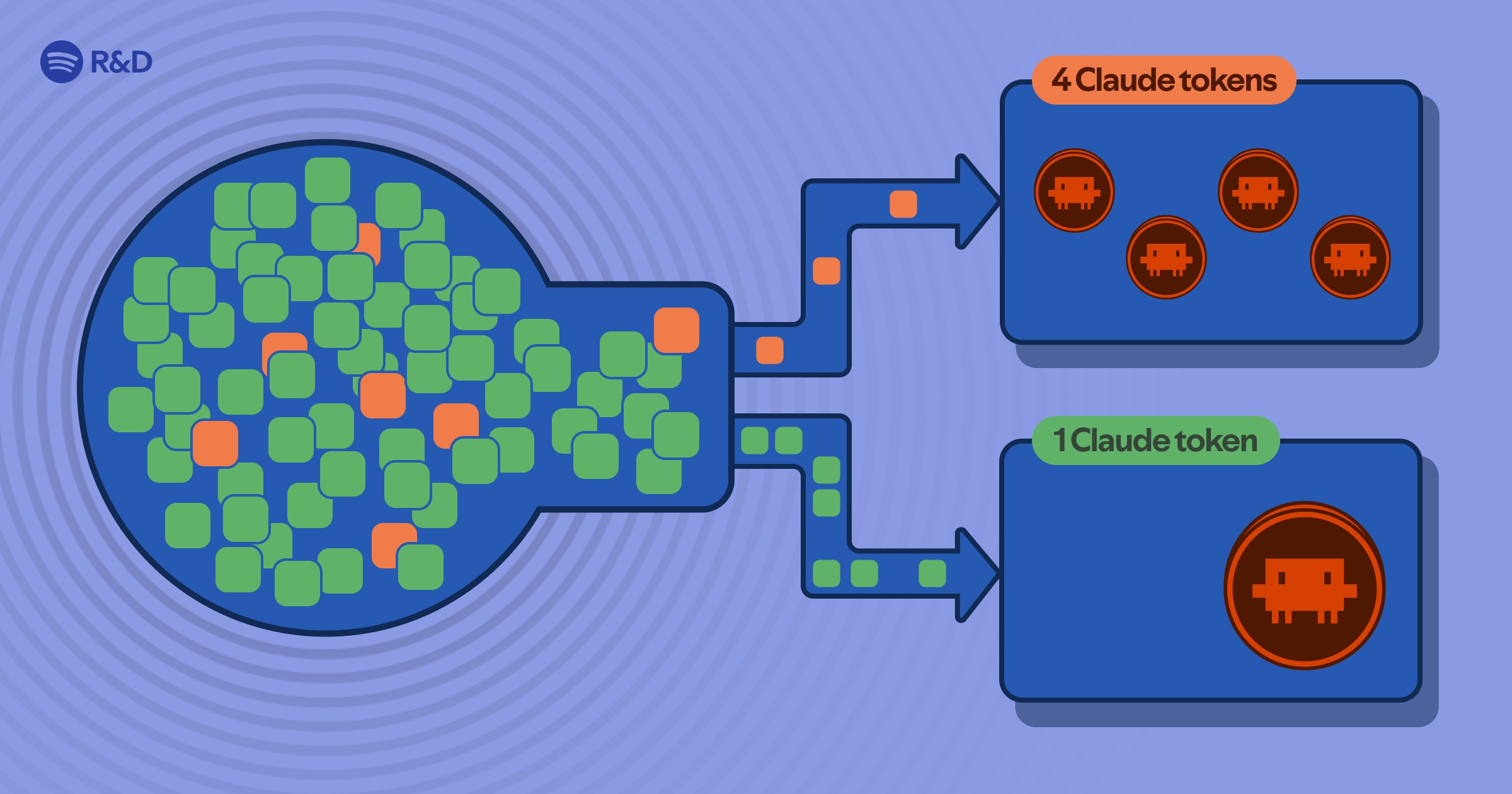
To decouple rote tasks from expensive frontier reasoning, engineers deployed two specialized worker modes powered by Gemini 2.5 Flash at a low temperature of 0.2. The bulk-reader mode digests large-scale repositories and spits out concise, structured summaries stripped of conversational fluff. The code-writer mode tackles scaffolding, type stubs, and repetitive test suites by mirroring local repository conventions without chatty commentary.
"A mode is a declarative agent that runs on an ephemeral runtime - think AWS Lambda, but for agents."
Because these ephemeral workers run at low temperatures and output strict structured code, downstream flagship models avoid wasting reasoning tokens on parsing markdown fluff or conversational pleasantries.
By offloading heavy file ingestion and boilerplate synthesis to cheap proxy agents, Spotify's Portal implementation slashed Claude Code token consumption by 90%. For CTOs looking ahead at the 2028 cost curve, the directive is clear: cut off raw, unmediated API access for developers and route routine I/O through orchestrated architectural gateways before token bills overtake engineering payroll.