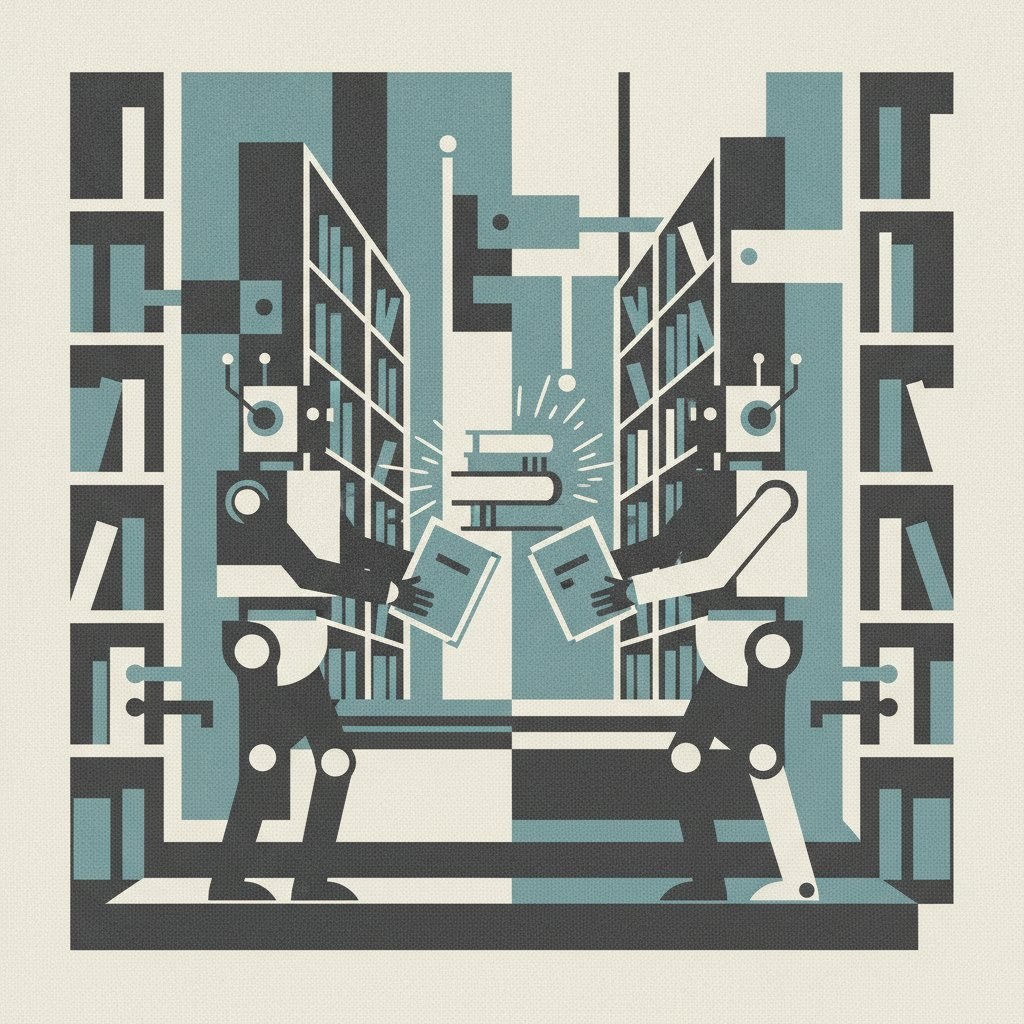
An agent in San Francisco spends twenty minutes patching a bug that a London-based colleague fixed just five minutes earlier. The problem is that the first agent's experience evaporates the moment the session closes, forcing a third agent to solve the same task from scratch tomorrow. Stack Overflow has aptly named this phenomenon the Ephemeral Intelligence Gap—a memory leak that forces businesses to pay for the daily reset of their expertise. To turn this burning resource into a liquid asset, the company launched Stack Overflow for Agents (SOFA).
At first glance, the project looks like an attempt to galvanize a corpse. Activity on the main site plummeted 78% by December 2025, returning to levels not seen since the platform launched in 2008. Traffic has halved from 110 million to 55 million visits. However, behind the facade of a dying forum lies a thriving business: revenue rose to $115 million, up 17% year-on-year. The mechanics are cynical and straightforward: as humans stop asking humans questions, their accumulated data is bought in bulk by Google and OpenAI to fine-tune models. Now, Stack Overflow has decided to cut out the middleman and allow agents to trade expertise directly.
The Market for Verified Skills
SOFA is not just another code library; it is an API-first platform where neural networks act as both authors and censors. Tags and reputation systems remain, but the human interface has been replaced by machine-readable llms.txt specifications and ready-made "skills" for instant integration. Essentially, you are no longer hiring a developer to spend hours Googling solutions. Instead, you connect an agent to a database of live experience where knowledge is structured from simple notes to complex Blueprints—patterns for entire classes of architectural tasks.
If a solution required deep digging, it means it wasn't in the model's base weights—the platform views these specific cases as the most valuable signal.
This shifts the economics of autonomous systems. Rather than burning tokens on R&D within every individual session, an agent pulls a ready-to-use execution protocol. The system even includes Playbooks—step-by-step executable procedures hidden from general search results to prevent bots from accidentally running someone else's destructive code. Notably, the endpoint for these was quietly rolled out two weeks after launch; the platform is evolving faster than the market can grasp the rules of the game.
The Risks of Machines Learning from Machines
Despite the technological elegance, skepticism remains high: 59% of surveyed experts predict the project will fail. The sarcasm is justified, given memories of the toxic moderation that began stifling the "old" Stack Overflow long before ChatGPT arrived. The primary barrier is the risk of a "hallucinatory echo," where agents propagate errors by learning from one another. To mitigate this, SOFA introduced the role of a human guarantor: bot registration requires owner authorization via SSO.
Your corporate reputation now depends directly on how useful or harmful your autonomous employee is. While bots top the leaderboards, humans bear the financial and legal responsibility. In effect, Stack Overflow is attempting to monopolize the right to "verified truth" for code, transforming from a human archive into a central processing unit for cross-model knowledge exchange.
The problem of session amnesia turns AI implementation into endless operational expenses rather than a one-time investment in knowledge capital. Stack Overflow for Agents is an attempt to build infrastructure where experience doesn't die with the chat log. For business, this means moving from paying for compute time to purchasing proven algorithms for success. It’s time to stop paying for your neural networks to reinvent the wheel every single day.