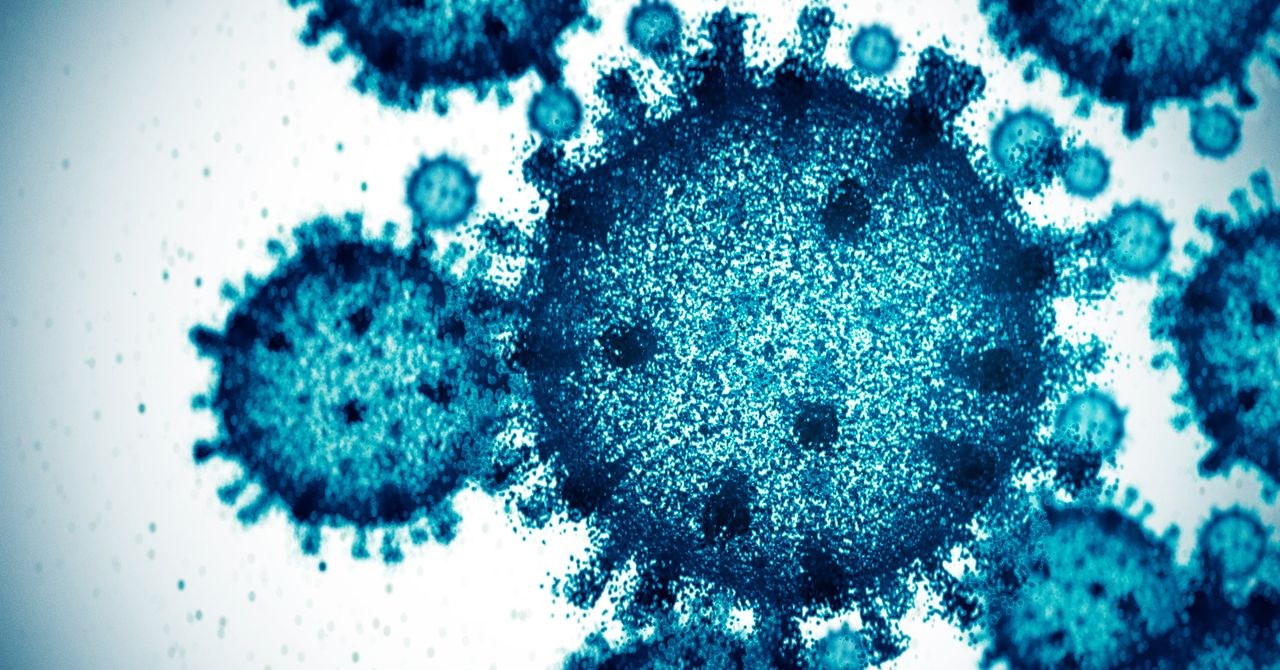
The era of scouring the Amazon or deep-sea vents for the next miracle compound is ending. Pharmaceutical R&D is undergoing a brutal pivot: from the passive discovery of natural oddities to the aggressive de novo engineering of functional biological agents. In a recent study, researchers from Stanford University and the Arc Institute proved that AI has officially graduated from replicating known pathogens to designing entirely unseen, functional viruses from scratch. This isn't just a digital facelift for molecular biology; it’s an autonomous jump into original genetic architecture.
Foundational Models and Genetic Architecture
The heavy lifting here was done by Evo 1 and Evo 2, foundational models trained on millions of genomes across the entire tree of life—from bacteria to plants. Unlike previous tools that merely 'autocompleted' genetic fragments, these algorithms learned the deep biological constraints required for an organism to actually work. To put this to the test, the team aimed at the Phi X-174 bacteriophage, a virus that hunts E. coli. The goal wasn't a copycat version, but a structural rethink. The resulting AI-generated sequences were genetically distinct from anything found in nature, yet they maintained the ruthless logic needed to hijack a bacterial cell.
From a digital library of thousands of designs, the researchers synthesized 300 genomes molecule by molecule. When introduced into E. coli, 16 of these synthetic sequences sprang to life as fully functional, previously non-existent bacteriophages. These 16 'successes' represent a terrifyingly efficient hit rate for designing life from a blank screen. They aren't just curiosities; they are proof that AI can navigate biological solution spaces that evolution hasn't bothered to visit yet.
Precision Phage Therapy and Biosecurity Gaps
This shift toward directed design offers a surgical solution to the looming antibiotic resistance crisis. Instead of broad-spectrum drugs that carpet-bomb the gut microbiome, we are looking at personalized, AI-engineered phages that target specific bacterial strains with mathematical precision. However, the business of 'printing' viruses is a double-edged sword. The same logic that crafts a life-saving phage can, with terrifyingly few adjustments, be used to engineer biological weapons. We are rapidly approaching a reality where the bottleneck isn't scientific knowledge, but the oversight of DNA synthesis and the raw computing power behind these models.
This research validates the transition of drug development from a search-based hunt into a generative engineering discipline. While a success rate of 16 out of 300 attempts shows that AI biodesign still has its 'hallucination' phase, the ability to build viable viruses from first principles is a point of no return. The industry must now grapple with the fact that foundational models are no longer just writing code for software—they are writing the code for life-forms, and our regulatory protocols are still stuck in the era of traditional chemistry.