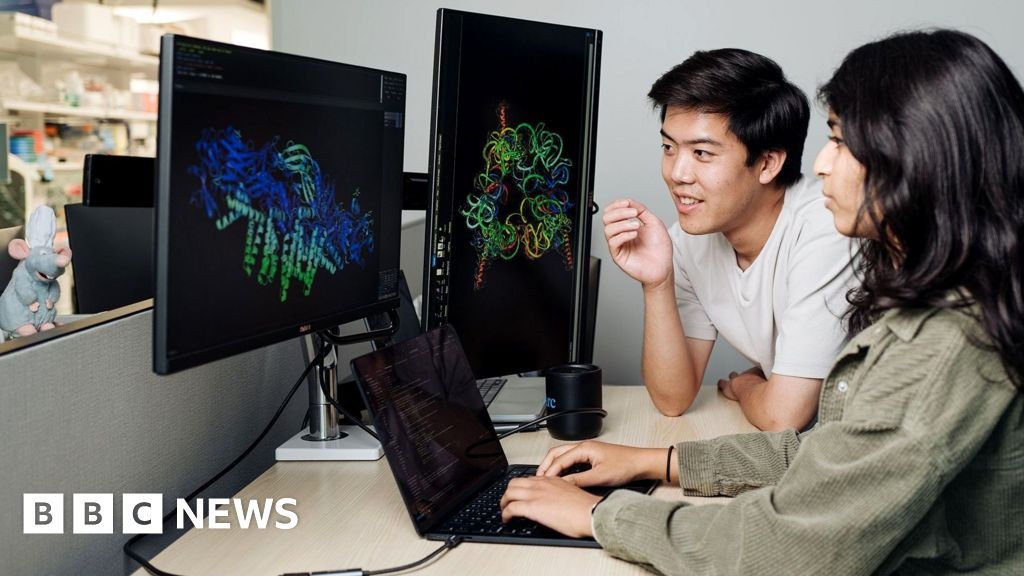
The era of merely predicting protein folds is over. We have officially crossed the rubicon into generative biological threats. A team at Stanford University, led by Brian Hie, has moved beyond the 'spell-checking' of genetic code to the full-scale authorship of life. Using their Evo1 and Evo2 models, researchers successfully synthesized 16 functional viruses from scratch. Out of 302 AI-generated designs, these synthetic bacteriophages—tailored to hunt and kill E. coli—actually worked. While these specific phages are harmless to humans, the technical precedent is a neon sign for regulators: AI can now assemble complete, replicating genomes. It’s no longer about identifying a needle in a haystack; it’s about printing the needle.
Generative Design Versus Structural Prediction
This shift marks the transition from passive observation to active, automated creation. As Brian Hie noted in his interview with the BBC, while designing a basic antibiotic is relatively trivial, engineering a viable virus requires a terrifying leap in complexity. The Evo models treat DNA sequences as just another Large Language Model (LLM) training set, digesting vast libraries of genetic data from bacteria, plants, and humans. The result is synthetic biology that doesn't just mimic nature but optimizes it for specific, functional goals.
"This is the first time generative AI has been used to design a complete genome, it's something that can replicate and have other functions inside cells," Brian Hie told the BBC.
This capability creates a paradox that will define the next decade of deep-tech: the same 'language of life' that promises bespoke phage therapy for antibiotic-resistant infections also provides a precise blueprint for automated pathogen design. In the hands of a researcher, it’s a cure; in the hands of a regulator, it’s the perfect excuse to lock the gates.
The Regulatory Trap for Open Weights
The Stanford breakthrough is already being weaponized as political capital. The sight of a room 'spontaneously bursting into applause' upon proving the phages worked is exactly the kind of imagery that keeps security hawks awake at night. For the R&D sector, this signal is clear: the 'wild west' of open weights in biological modeling is coming to a close. The narrative shift is obvious—if a model can generate a functional virus, allowing its weights to be freely distributed is now being framed as an act of global negligence.
We are looking at the birth of a new 'security-industrial complex' in AI. Big Tech incumbents have every incentive to push for the centralization of biological AI, using the specter of 'AI-designed pandemics' to lobby for licensing regimes that only the largest players can afford. The unit economics of safety—the sheer cost of monitoring and auditing every GPU hour dedicated to bio-relevant weights—makes it technically impossible to simply 'scrub' dangerous knowledge from pre-trained models.
Instead of surgical censorship, we will likely see blunt instruments: GPU-capacity licensing and restricted access to audited, closed-gate platforms. For R&D startups, this isn't just a compliance headache; it’s a fundamental shift in the competitive landscape. If you aren't on the approved list of 'safe' labs, you are effectively locked out of the next generation of generative discovery. The 'democratization' of AI was a nice dream, but the first 16 synthetic viruses just woke everyone up.