AI · This text was generated with artificial intelligence
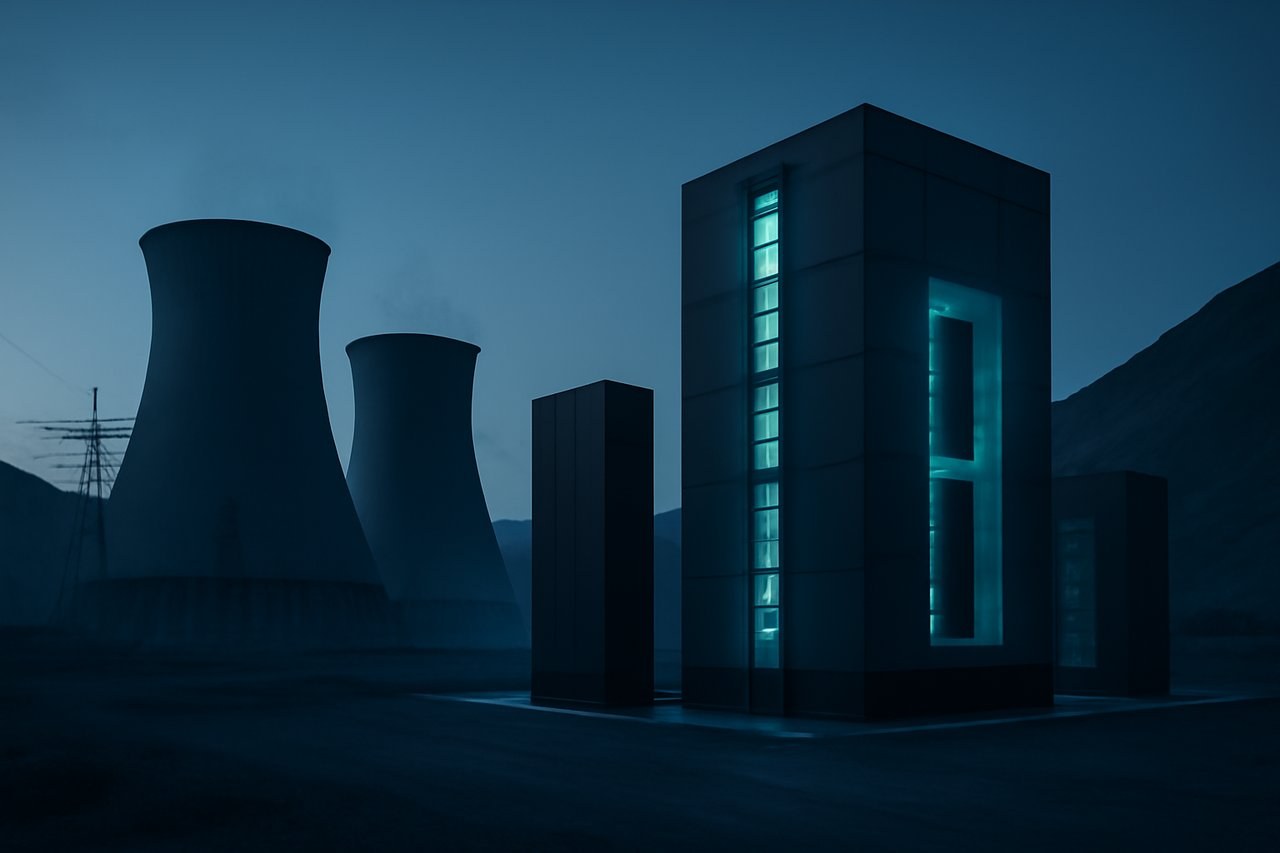
The era of software startups building the future in a garage is officially over. OpenAI's Stargate project is more than just another server expansion; it represents a radical pivot from refining algorithms to massive industrial expansion. When Sam Altman and his team announced Stargate in January 2025, the goal of reaching 10 GW of computing infrastructure by 2029 seemed excessive. Just one year later, the company reports it has already cleared that hurdle. The mathematics of the intelligence age have become strikingly primitive: AI progress is now directly proportional to hardware volume, and access to that hardware is capped by the capacity of national power grids.
The Physical Barrier to Entry
For businesses, this shift from code to kilowatts signals a new form of market monopolization. OpenAI is moving at a speed that suggests the window for capturing infrastructure dominance is narrow. According to OpenAI’s reports, the company has commissioned over 3 GW of capacity in the last 90 days alone. This isn't just scaling; it's the construction of a closed-loop flywheel: colossal compute generates superior models, which generate revenue, which is immediately plowed back into concrete and cabling. OpenAI's strategy explicitly states that the primary obstacle to AGI is no longer architectural nuance, but the raw physical ability to grind through data at unprecedented volumes.
"The only responsible way to meet demand is to build infrastructure faster and at a larger scale."
This aggressive expansion builds an economic moat measured in megawatts and construction permits rather than intellectual property. Currently, OpenAI is scouting sites across the U.S., evaluating the "land-power-cooling" trifecta. For competitors, the barrier to entry is no longer about hiring brilliant Stanford grads; it's about the ability to negotiate with utility companies and governments for resources comparable to the needs of small nations.
Sovereignty and Local Integration
Stargate’s geopolitical subtext is clear: this is a battle for computational sovereignty. OpenAI acknowledges that no single entity can carry a project of this magnitude alone. The strategy involves creating a dense network of partners, including energy providers, chip manufacturers, and the public sector. This approach is designed to distribute risk and embed AI infrastructure permanently into the local economy, turning data centers into critical national assets.
"Building the infrastructure for AGI requires coordination across the entire ecosystem—from energy providers to government officials."
In this reality, computing power ceases to be a "cloud service" in the traditional sense. It is a scarce physical resource tied to specific geography and regulatory frameworks. For the market, this marks a fundamental shift: future access to cutting-edge AI will not be distributed via subscription, but by right of ownership or direct partnership with those who control the power grid. In the race for AGI, whoever controls the transformer station controls the intelligence.