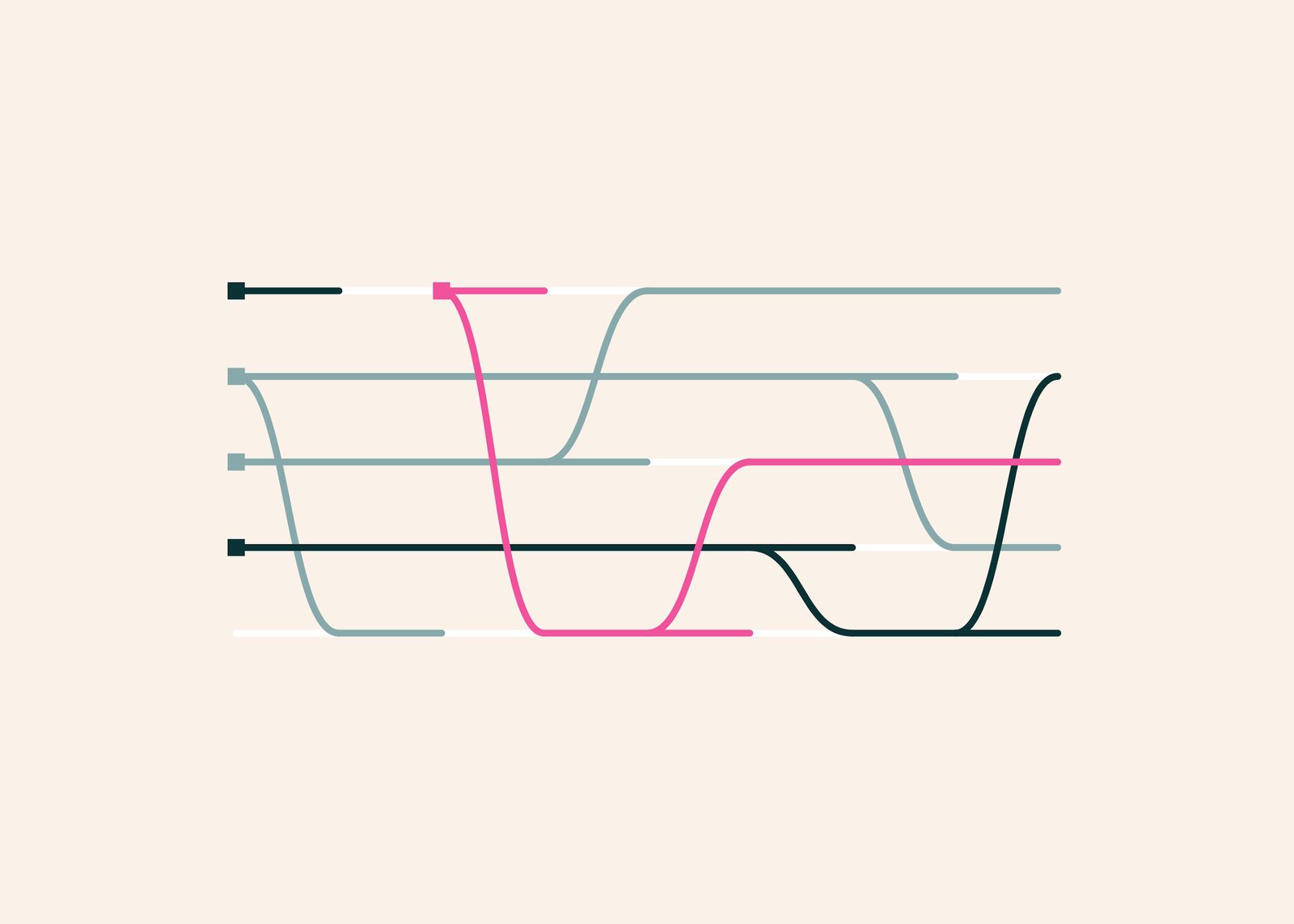
A simple assignment like let x = 4 represents the baseline of state tracking, yet keeping tabs on how values shift across long text reveals structural weaknesses in frontier language systems. Researchers have introduced StateBench, a benchmark designed to evaluate long-context state tracking by measuring how accurately models follow information about entities as they evolve across long documents. While expanding context windows are marketed as complete document solutions, the underlying mechanics struggle when simple inputs turn into extended chains of modification, directly impacting enterprise pipelines that rely on sequential data processing and multi-step record updates.
Frontier deployments encounter hard operational limits on these extended dependencies. Despite massive scale, frontier systems fail on complex updates as document lengths increase, creating distinct bottlenecks for automated workflows that must maintain strict consistency across extended operational files.
"Frontier models including Gemini 3.8 Flash, Claude Opus 5.5, and GPT-6 Sol and Luna still break down on harder forms of state tracking as inputs grow longer."
This breakdown occurs because standard transformer architectures face theoretical constraints when managing long dependency chains, creating accuracy risks for workflows that require following changing records. Critics often note that synthetic variable assignment tasks differ significantly from real-world messy documents filled with unstructured prose and ambiguous references. However, as researchers point out, these controlled tests isolate the core computational mechanics that also govern how models handle fragmented records across lengthy enterprise files, proving that scaling context windows alone does not resolve underlying architectural degradation.
Four Levels of State Complexity
StateBench structures state tracking into four difficulty levels based on Krohn–Rhodes theory, an algebraic framework that decomposes state problems over finite monoids into atomic primitives. Each tier introduces distinct operational complexity. The simplest tier involves r-trivial problems with immutable assignment where a variable's value never changes, requiring the model only to recover its initial assignment. The second tier introduces aperiodic problems with reassignment by value, where the system must locate the most recent update while discarding earlier entries.
How do models handle deeper interdependencies across documents?
They struggle as soon as updates reference prior states or other variables. The third tier comprises soluble problems featuring self-referential updates where each change modifies the current value, requiring the system to carry running totals forward. The final tier covers general finite problems that add assignment by reference, creating update dependencies like swapping variables. This mirrors the S₅ permutation challenge of tracking an object moved repeatedly under five cups.
Architectural Generalization Beyond Transformers
Direct evaluations reveal clear divides across model designs. Recurrent and hybrid models generalize much farther than transformers when trained directly on state-tracking tasks. Adding mechanisms like Gated DeltaNet layers allows architectures to maintain a running memory across long text sequences.
"We find that recurrent and hybrid models can generalize much farther than transformers when trained directly on these tasks."
In baseline evaluations, researchers tested systems including the transformer model and hybrid, which incorporates Gated DeltaNet layers over identical pretraining data.
Understanding these architectural boundaries determines whether long-context systems can reliably execute multi-step tracking tasks. When enterprise pipelines require exact record updates over lengthy files, relying entirely on standard transformer context windows creates logic degradation that scaling alone does not resolve. Addressing these bottlenecks requires tracking the development of recurrent and hybrid memory layers to ensure operational stability.
The catch
Marketing sells massive context windows as an out-of-the-box fix for documentation, yet basic variable tracking in StateBench breaks even frontier transformers. The architecture easily retrieves static assignments, but it stumbles as soon as documents introduce intermediate totals and cross-variable references. Expanding context size fails to protect multi-step enterprise workflows from accuracy degradation, where recurrent and hybrid models generalize noticeably better on long state-tracking chains. A basic permutation task across finite monoids splits the reliability of standard transformers across four distinct complexity tiers.